

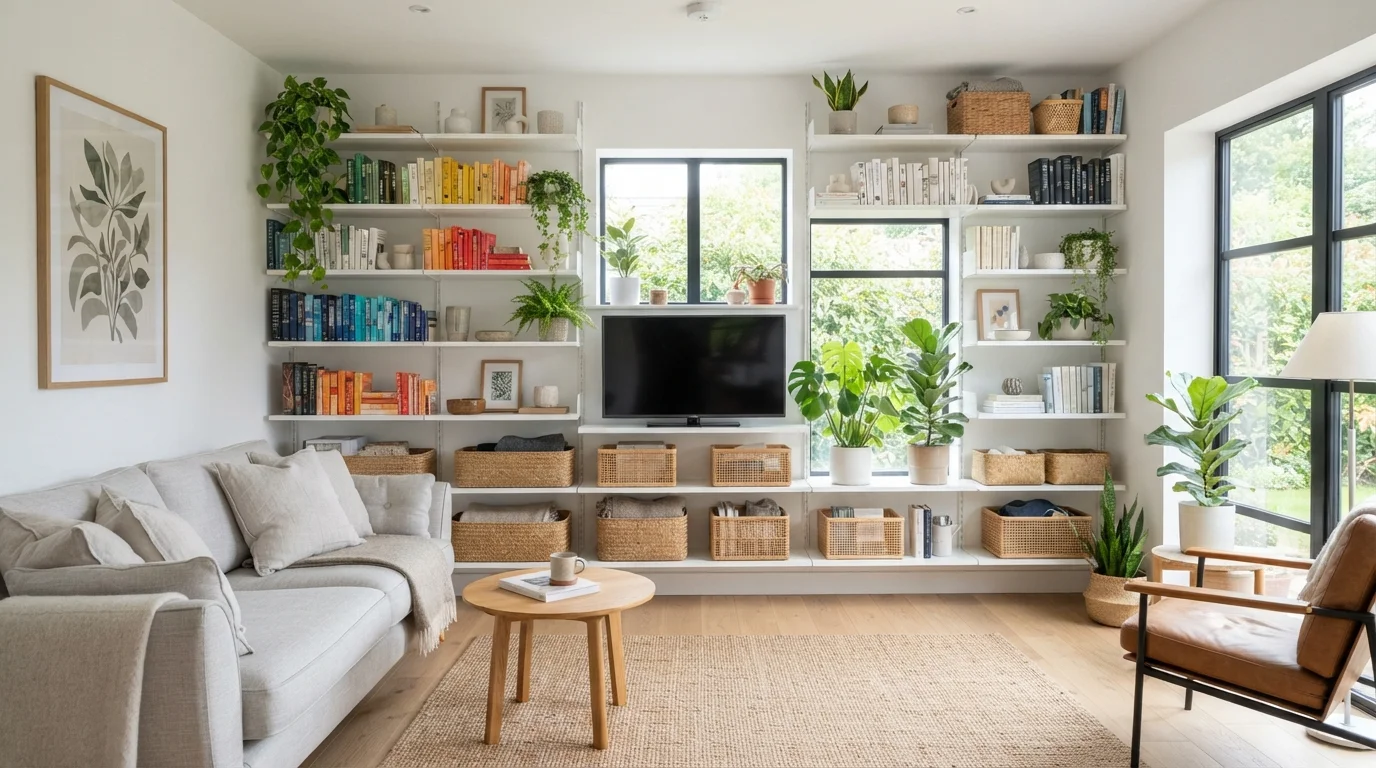
Key Takeaways
- Most homes use only the lowest third of their available wall height for storage.
- Wall-mounted shelving, hooks, and door organizers add capacity without reducing floor space.
- Vertical storage works in every room, including bathrooms, kitchens, and entryways.
- Tall furniture and floor-to-ceiling shelving create order and can make rooms feel larger.
- Consistency in organizing systems matters more than the amount of storage added.
Vertical space
Vertical space refers to the area above your floor and furniture, from waist height up to the ceiling. In home organization, it means treating walls, doors, and upper areas as functional storage zones rather than blank surfaces. Most homes use only the bottom third of their available height, leaving significant storage potential unused.
Interior designers often measure usable vertical space as everything above 18 inches from the floor, since that threshold is roughly where floor-level storage ends and wall-mounted options begin.
Why vertical space gets overlooked
When a room feels cluttered or cramped, most people look down, toward floors, counters, and drawers already packed with items. The walls stay bare. The back of the door holds a single hook, if anything. The six feet of air between the top of a bookcase and the ceiling goes unused entirely.
This happens because floor-level storage is intuitive. You set things down and they stay. But that habit consumes the most valuable real estate in any room: the area where you walk and move. Vertical storage shifts the load upward, off surfaces and out of foot traffic, without requiring a bigger home or a renovation budget.
For a broader look at building organization systems from the ground up, see the complete home organization guide.
How to read your room's vertical potential
Before mounting anything, take stock of what your walls and doors actually offer. Stand in the center of a room and look up. Note the ceiling height, any existing furniture that caps the usable wall space, and where natural light enters. A shelf blocking a window trades one problem for another.
Next, identify the three zones every room has:
- Active zone (floor to about 5 feet): everyday items, frequently grabbed, within easy reach.
- Secondary zone (5 to 7 feet): items used weekly, accessible with a short stretch.
- Archive zone (above 7 feet): seasonal, rarely needed, or decorative items stored in labeled bins.
Matching items to zones prevents the common frustration of putting something away and forgetting where it went. The archive zone rewards consistent labeling more than any other area.
Label bins in the archive zone
Any storage above eye level becomes a black hole without clear labels. Use a label maker or simple masking tape and a marker on the front face of every bin or basket in the archive zone. When you need something stored up high, you should be able to identify it from the floor without pulling everything down.
Room-by-room applications
Kitchen: Cabinet height rarely reaches the ceiling, and the gap above is usually wasted. Open shelving in that zone holds infrequently used platters, appliances, or bulk pantry items in uniform containers. A magnetic knife strip or wall-mounted rail with hooks moves tools off the counter. For a related look at where kitchen organization often breaks down at the surface level, see kitchen drawer organization.
Bathroom: Over-toilet shelving and tall ladder shelves turn dead wall space into linen and toiletry storage. A simple hook rail mounted above the door frame adds towel space without competing with the mirror or vanity. Small bathrooms especially benefit from this approach; see small bathroom upgrades for complementary ideas.
Bedroom: Floating shelves above the headboard, hooks behind the door, and tall wardrobes that reach the ceiling all add storage without shrinking the floor. In a small bedroom, this distinction matters considerably. The small bedroom storage guide covers layout strategies that pair well with vertical additions.
Entryway: A narrow wall can hold a column of hooks, a mounted shelf for keys and mail, and a shoe rack that stacks rather than spreads. That arrangement keeps the landing zone functional even in tight entries. More on designing that zone: entryway organization.
Garage: Wall panels, pegboards, and ceiling-mounted platforms handle tools, bikes, and seasonal gear that otherwise pile on the floor. This is one of the highest-payoff applications of vertical storage in any home. Garage storage system options covers how to weigh the different approaches.
What to use and what to avoid
Floating shelves work well for display and lightweight storage. Heavy items, such as cookware or stacked books, need brackets rated for the load and anchored into wall studs, not just drywall. If stud locations do not cooperate with your layout, toggle bolts rated for the weight are an alternative, but verify the load rating before mounting anything significant.
Over-door organizers are among the most renter-friendly options available. They hang without hardware and can move with you. The tradeoff is weight limits: most are designed for lightweight items like cleaning supplies, snacks, or shoes, not dense or heavy objects.
Freestanding tall shelving units offer flexibility without wall damage, but they should be anchored to the wall at the top for safety, particularly in homes with children. A unit that tips forward under load is a real hazard. Most manufacturers include a wall anchor strap in the hardware.
Avoid mounting storage so high that daily-use items require a step stool every time. That friction breaks habits fast. Reserve the highest positions for things you genuinely access once a season or less.
~8 ft
Average US ceiling height
Standard residential construction in the US uses 8-foot ceilings, though many homes have 9- or 10-foot ceilings, leaving substantial wall area above typical furniture height.
Bottom 3 ft
Where most home storage sits
Interior organization research consistently finds that the majority of household items are stored at or below counter height, leaving upper wall zones largely unused.