

Key Takeaways
- Nutrition is the study of how food provides energy and materials the body needs to function.
- Carbohydrates, protein, and fat each serve distinct roles and none of them should be eliminated.
- Micronutrients like vitamins and minerals support processes the body cannot run without.
- Simple, consistent habits matter more than following a perfect diet plan.
- Food labels are more useful once you know which numbers are worth focusing on.
- A registered dietitian is the right professional to consult for personal dietary guidance.
Start here
What nutrition actually means
Next
Macronutrients: the big three
Then
Micronutrients and why they matter
Apply it
Building practical daily habits
Sharpen your skills
Reading food labels without the confusion
When you're ready
When to seek professional guidance
What nutrition actually means
Nutrition is the process by which the body takes in and uses food to sustain life. It covers how food supplies energy, provides the raw materials for growth and repair, and supports every system from immune function to brain activity. Understanding it does not require a science degree; it requires a clear mental model of what food is actually doing once you eat it.
A common barrier for beginners is the sheer volume of conflicting advice available. One week, a particular food is framed as harmful; the next week it is celebrated. That confusion often comes from misreading single studies or taking context-free headlines at face value. For a grounded way to think about this, the article interpreting nutrition research covers how to evaluate claims before changing your habits.
The practical goal of nutrition is not perfection. It is building enough understanding to make consistently reasonable choices across an ordinary day.
Macronutrient
A nutrient the body needs in large amounts to produce energy and support basic functions. The three macronutrients are carbohydrates, protein, and fat.
Micronutrient
Vitamins and minerals the body requires in small amounts to carry out specific processes like building bone, supporting immunity, and converting food to energy.
Dietary fiber
A type of carbohydrate the body cannot digest. It supports gut health, helps regulate blood sugar, and contributes to feelings of fullness.
Added sugars
Sugars and syrups added to food during processing or preparation, as distinct from sugars that occur naturally in fruit or dairy.
Essential amino acids
Amino acids the body cannot make on its own and must obtain from food. Protein from food supplies these building blocks for muscle, enzymes, and other structures.
Percent Daily Value (%DV)
A figure on US Nutrition Facts labels showing how much of a nutrient one serving provides relative to a standard 2,000-calorie daily reference diet.
Macronutrients: the big three
Every food contains some combination of three macronutrients: carbohydrates, protein, and fat. Each one does something specific the body cannot skip.
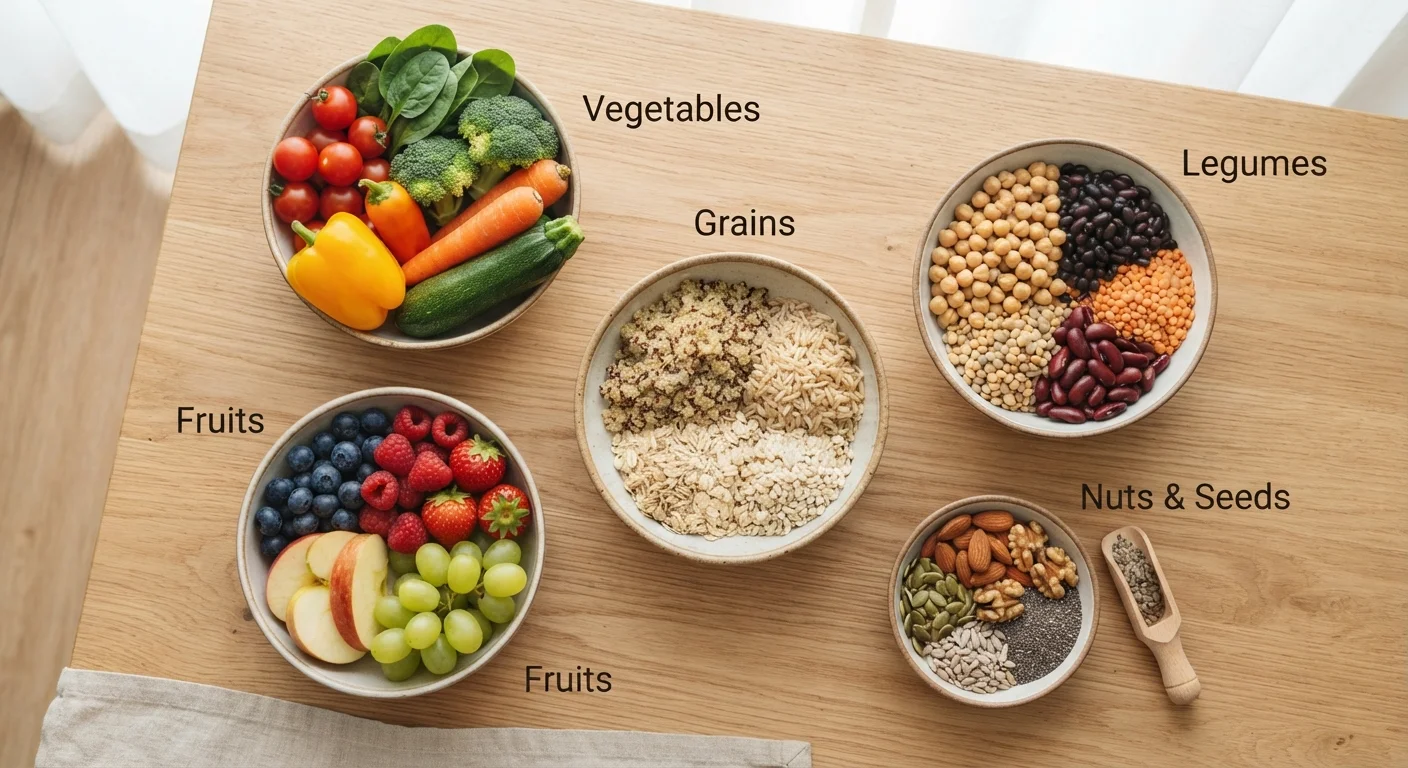
Carbohydrates are the body's main energy source. The digestive system converts them into glucose, which cells use as fuel. Fiber, a form of carbohydrate the body cannot digest, feeds beneficial gut bacteria and supports bowel health. Whole grains, legumes, vegetables, and fruits supply both digestible carbohydrates and fiber.
Protein provides amino acids, which the body uses to build and repair muscle, produce enzymes, and support immune function. Animal foods such as meat, eggs, and dairy supply all essential amino acids in one source. Plant sources including beans, lentils, tofu, and quinoa can cover the same needs when eaten across a varied diet.
Fat is necessary for absorbing fat-soluble vitamins (A, D, E, and K), maintaining cell membranes, and producing hormones. Unsaturated fats, found in olive oil, nuts, seeds, and fatty fish, are associated with better cardiovascular outcomes in observational research. Saturated fat does not need to be eliminated, but most dietary guidance suggests keeping it as a smaller share of total fat intake.
No macronutrient is the villain of your diet. Removing any one of them entirely creates gaps the body has to compensate for.
Micronutrients and why they matter
Vitamins and minerals are called micronutrients because the body needs them in much smaller amounts than macronutrients. That does not make them optional. Deficiencies in iron, vitamin D, calcium, or B vitamins, for example, can affect energy, bone density, cognitive function, and immune response in measurable ways.
The most reliable way to cover micronutrient needs for most healthy adults is eating a varied diet with plenty of vegetables, fruit, whole grains, and protein sources. No single food covers everything, which is why variety matters more than any particular superfood.
Supplements can fill genuine gaps, but they are not a substitute for dietary variety and are not without risk at high doses. A blood test ordered by a healthcare provider is the appropriate way to identify a true deficiency before starting supplementation.
Building practical daily habits
Nutrition knowledge becomes useful only when it connects to what you actually do each day. A few consistent habits tend to produce better outcomes than any rigid meal plan.
- Fill roughly half your plate with vegetables and fruit at most meals. This naturally increases fiber, vitamins, and minerals without requiring precise tracking.
- Choose whole or minimally processed versions of grains when possible. Whole-grain bread, brown rice, oats, and similar options retain more fiber and nutrients than their refined counterparts.
- Include a protein source at each meal to support satiety and muscle maintenance.
- Drink water as your primary beverage. Many people underestimate how much of their calorie intake comes from sweetened drinks.
- Pay attention to hunger and fullness cues rather than eating by the clock alone. The article understanding hunger signals explains what those cues actually communicate about the body's state.
Physical activity works alongside nutrition rather than separately from it. If you are also thinking about building movement habits, the guide starting a regular exercise routine covers that from the beginning.
Start with one change, not ten
Trying to overhaul your entire diet at once is one of the most common reasons people abandon new habits within weeks. Pick one concrete change, such as adding a vegetable to dinner or swapping a sweetened drink for water, and hold it for two to three weeks before adding another. Small, stable changes accumulate into lasting patterns far more reliably than a complete overnight reset.
Reading food labels without the confusion
The Nutrition Facts panel on packaged foods in the United States follows a standardized format regulated by the Food and Drug Administration. Knowing which numbers are most useful saves time and reduces the overwhelm that comes from staring at a wall of percentages.
The serving size listed at the top is the reference point for every number below it. If you eat twice the listed serving, every value doubles. This is where many people misread labels without realizing it.
After serving size, the numbers worth examining first are: total fiber (higher is generally better), added sugars (distinguished from naturally occurring sugars), sodium (relevant for people monitoring cardiovascular risk), and the first few ingredients (which are listed by weight and reveal what the food is mostly made of).
The percent Daily Value column uses a reference diet of 2,000 calories. It gives a rough sense of whether a food is high or low in a given nutrient, not a precise prescription for your intake.
When to seek professional guidance
General nutrition education gives you a framework, not a personal plan. A registered dietitian nutritionist (RDN) is the credentialed professional trained to translate nutrition science into guidance specific to an individual's health history, medical conditions, and goals.
Consider consulting an RDN if you have a chronic condition such as diabetes, kidney disease, or heart disease, if you are pregnant or breastfeeding, if you are managing a food allergy or intolerance, or if previous attempts to change your diet have not produced results you expected. Your primary care provider can refer you, and many insurance plans cover at least some dietitian visits.
Online nutrition content, including this article, is general health education. It does not account for your individual circumstances and should not replace a conversation with a qualified professional about decisions that affect your health.
This article is for informational purposes only and is not medical advice. Consult a qualified healthcare professional before making changes to your diet, especially if you have an existing medical condition.