

Travel Smart

Before You Fly: A Pre-Departure Checklist for International Trips

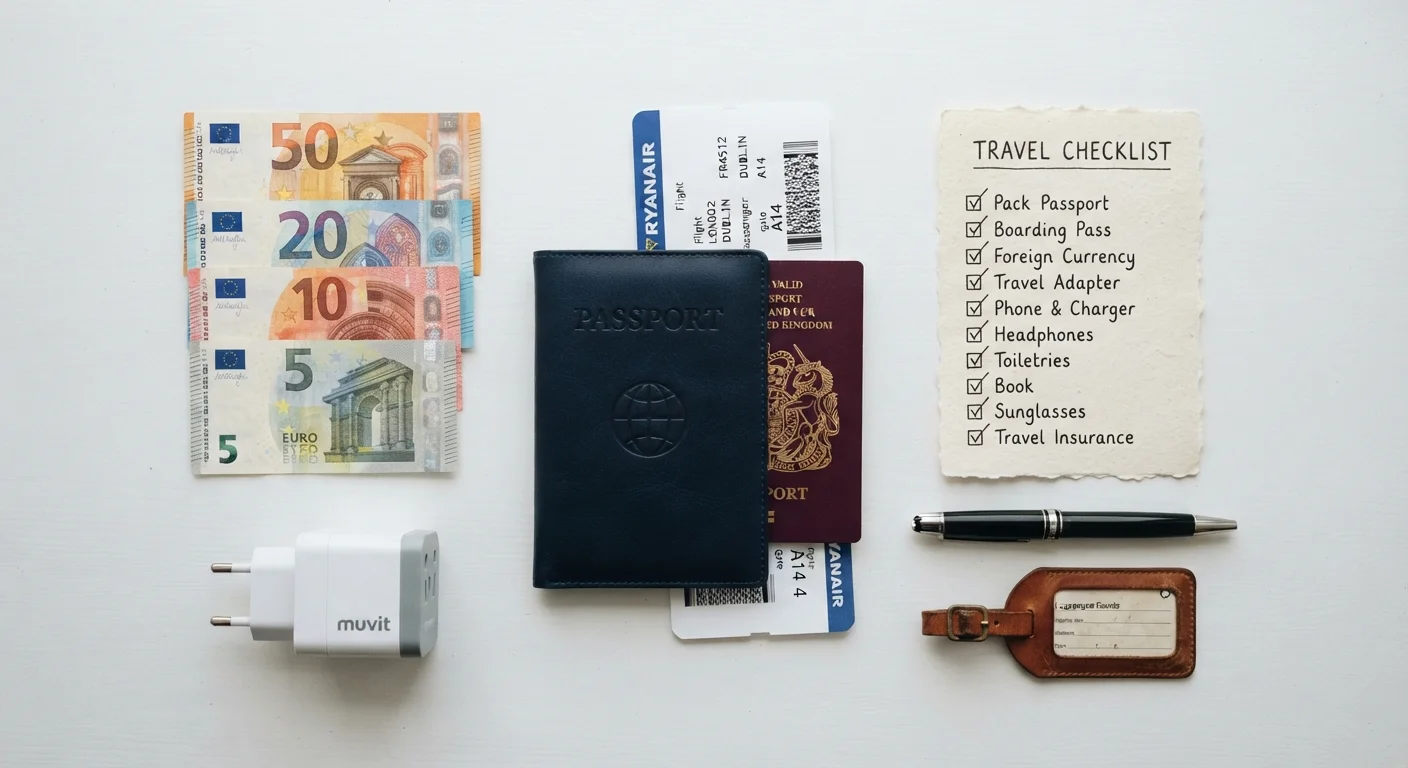
Overhead view of travel documents, passport, boarding pass, and checklist laid out neatly on a white surface

Key Takeaways

  • Passport validity requirements vary by country: many require six months beyond your travel dates.
  • Notify your bank before departure to prevent cards from being frozen during international transactions.
  • Verify entry requirements and health documentation with official government sources before you fly.
  • Digital copies of critical documents stored securely offline can save you in an emergency.
  • Travel insurance coverage details should be reviewed and understood before you need to use them.
45–90 min

Summary

28 items · 45 to 90 minutes

Why a pre-departure checklist matters

International travel involves more moving parts than a domestic trip. Visa rules, vaccination requirements, currency logistics, and carrier-specific documentation can all vary by destination, nationality, and even the purpose of your visit. Missing one item does not just cause inconvenience: it can mean denial of boarding or entry at the border.

This checklist covers the areas most likely to catch travelers off guard. Work through it at least one week before departure so you have time to fix any gaps. If your trip involves managing ongoing health needs, see the general considerations covered in traveling internationally with health conditions.

Documents and identification

Check that your passport is valid for at least six months beyond your return date, as many countries enforce this rule at the border. Must
Confirm visa requirements for your destination and apply well in advance if a visa is required: processing times vary widely. Must
Print or download your airline booking confirmation, hotel reservations, and any tour or activity confirmations. Must
Make digital copies of your passport, visa, travel insurance policy, and itinerary, and store them in a secure cloud folder or encrypted app accessible offline. Must
Leave a physical copy of your itinerary and emergency contacts with a trusted person at home. Should
Check whether your destination requires an international driving permit if you plan to rent or drive a vehicle. Should

Health and medical prep

Verify required and recommended vaccinations for your destination using the CDC Travelers' Health pages and consult a healthcare provider or travel medicine clinic at least four to six weeks before departure. Must
Carry enough prescription medication to cover your entire trip plus extra days, kept in original labeled containers in your carry-on. Must
Check whether your medications are legal in your destination country, as some common US prescriptions are restricted or banned abroad. Must
Pack a basic travel health kit with adhesive bandages, pain reliever, antidiarrheal medication, hand sanitizer, and any destination-specific items such as water purification tablets. Should
Obtain a signed letter from your physician describing any medical conditions and medications if you manage a chronic health need. Should

Finances and payments

Notify your bank and credit card issuers of your travel dates and destination countries to prevent transactions from being flagged as fraud. Must
Confirm your cards carry no foreign transaction fees, or identify which card to use for international spending. Must
Obtain a small amount of local currency before departure for immediate needs such as transport from the airport or a tip. Should
Save the customer service phone numbers for your bank and cards in a format accessible without mobile data, such as a written note. Should
Check whether your destination is predominantly cash-based or card-friendly so you carry an appropriate amount. Nice to have

Travel insurance

Confirm that you have travel insurance in place and that it covers medical evacuation, trip cancellation, and any activities planned such as diving or skiing. Must
Read the policy exclusions before you travel: coverage for pre-existing conditions, adventure activities, and pandemic-related disruptions often requires specific add-ons. Must
Save your insurance policy number and the 24-hour emergency assistance line in an accessible location separate from your phone. Should

Connectivity and devices

Confirm your phone plan includes international data or arrange a travel SIM or eSIM before departure to avoid roaming charges. Must
Pack the correct power adapter for your destination's outlet type and voltage. Must
Download offline maps, translation tools, and your airline app before leaving home. Should
Enable two-factor authentication on email and banking apps using an authenticator app rather than SMS if you may lack a local number. Nice to have

Logistics and last-minute checks

Reconfirm your flight details within 24 hours of departure for any schedule or gate changes. Must
Verify checked baggage allowances and prohibited items for your specific airline and route, as rules differ internationally. Must
Arrange transport to the airport with buffer time: international check-in and security lines take longer than domestic equivalents. Must
Put a hold on postal mail and pause any time-sensitive deliveries for the duration of your trip. Nice to have

Tools and resources to have on hand

A few practical resources make working through this checklist faster and more reliable. Confirm that you have access to each before you start.

Required

US Department of State country information pages

Check current entry requirements, safety advisories, and visa rules for your destination.

Required

CDC Travelers' Health destination tool

Identify recommended and required vaccinations and health precautions for your destination.

Required

Secure cloud storage or encrypted document app

Store and access digital copies of your passport, insurance policy, and itinerary without relying on a single device.

Optional

Offline maps app

Navigate at your destination without requiring mobile data.

Optional

Authenticator app

Access two-factor authentication for email and banking without needing SMS when abroad.

What to know about entry requirements

Entry requirements are set by destination governments, not airlines, and they change without notice. The US Department of State country information pages and the destination country's official immigration authority are the two sources to check. Do not rely on travel blogs or booking platforms for visa rules, vaccine requirements, or customs limits: verify each with an official source close to your departure date.

Official sources only for entry rules

Visa policies, vaccination requirements, and customs limits can change after blogs or travel sites publish their information. Always verify entry requirements directly with the official embassy or consulate of your destination country and with US government travel resources. Arriving with outdated information can result in denied boarding or denied entry, with no recourse from the airline or booking platform.

Once you land, airport procedures follow their own logic. Navigating international airports covers customs queues, immigration steps, and connection logistics that trip up many first-time international travelers.

If your international trip is a cruise departure, the document requirements overlap with but differ from a standard flight. The pre-departure cruise checklist addresses embarkation-specific logistics in detail.

Travel Smart Editorial Team is the collective byline for our editorial team and contributor network. Articles published under this byline or an editorial pen name are researched, written, and reviewed according to our editorial standards for clarity, consistency, and independence before publication.

View all articles by Travel Smart Editorial Team →
Disclaimer: The content on this site is for informational purposes only and is not a substitute for professional advice. Always consult a qualified professional for guidance specific to your situation.