

Key Takeaways
- A landing zone works best when it matches the actual habits of the people using it.
- Every item entering the entryway needs a specific home, or it will drift to the floor.
- Hooks, trays, and shallow shelves handle the highest-traffic categories: coats, bags, and keys.
- Maintenance takes about five minutes per week once the system is set up correctly.
- Small entryways can still support a full landing zone using vertical storage.
What you will need
Why the entryway fails first
The entryway absorbs everything that moves through the front door: shoes kicked off mid-stride, bags dropped on the first flat surface, mail set down with the intent to deal with it later. Without a deliberate system, these deposits compound. Within days, the space that should signal arrival becomes the space everyone avoids looking at.
The problem is rarely a shortage of storage. It is that the storage does not match how the household actually behaves. A coat closet three steps to the left does nothing if the habit is to drop a jacket on the nearest hook, because that hook does not exist yet. Organization in an entryway has to meet people at the exact moment they walk in, not ask them to change direction.
This guide walks through how to build a landing zone that fits your real routine. For a broader look at how these principles apply throughout your home, the complete home organization guide covers every room in detail.
What you need before you start
Gather what you have and measure what you are working with before buying anything. Most entryways need far less new hardware than people expect.
What you will need
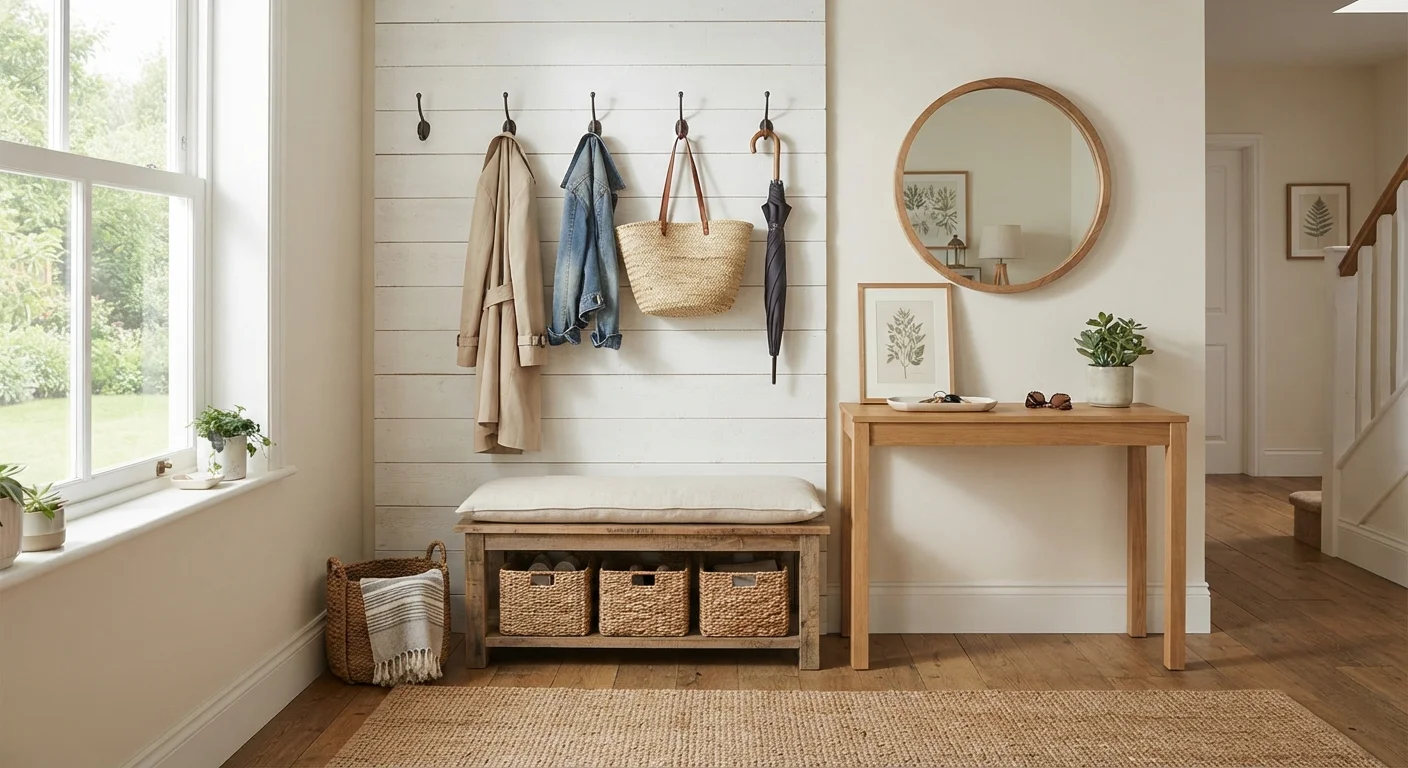
Wall hooks or a hook rail
Provides dedicated hanging spots for coats, bags, and umbrellas at the point of entry.
Entry bench or low stool
Gives a place to sit while removing shoes and can provide under-seat basket storage.
Shallow tray or dish
Corrals small items like keys, transit cards, and earbuds in one visible spot.
Shoe rack or boot tray
Keeps footwear off the floor and in a consistent place, reducing spread into the hall.
Baskets or bins
Holds category-specific items such as pet accessories, reusable bags, or sports gear.
Setting up your landing zone step by step
Follow these steps in order. Each one builds on the last, and skipping ahead tends to produce a setup that looks good for a week and then stops working.
Clear and audit the current space
Remove everything from the entryway: shoes, bags, coats, mail, and any items that have accumulated on surfaces or the floor. Set them in a nearby room so you can see the bare space and assess its actual dimensions.
Sort what you removed into three groups: things that genuinely belong in the entryway because they are used daily, things that belong elsewhere in the home, and things that can be discarded or donated. Most entryways hold at least a few items from the second and third groups. Removing those creates room for the system to work.
Define your zones
A functional landing zone has distinct areas for different categories: hanging items (coats, bags, umbrellas), footwear, small daily-carry items (keys, wallet, transit cards), and optional category bins for recurring items like sports gear or pet leashes.
Sketch a rough layout on paper before installing anything. Place hanging storage at the natural drop point closest to the door. Put shoe storage where people physically stop to remove them, not where it looks best from across the room.
Install hooks at the right height
Wall hooks or a hook rail should go at a height that matches the tallest regular user, generally between 60 and 72 inches from the floor for adults. If children also use the entryway, add a second lower row between 36 and 48 inches. This removes the habit of piling items on top of each other when a hook is out of reach.
Mount into wall studs where possible for hooks that hold heavy coats and bags. If studs are not available at your preferred location, use appropriate hollow-wall anchors rated for the expected load. For renters who cannot drill, over-door hook systems and adhesive-mounted rails rated for heavier loads are practical alternatives.
Set up footwear storage
Place a boot tray or shoe rack at the natural stopping point just inside the door. A boot tray handles wet or muddy footwear and protects the floor; a tiered rack works better for dry-use households with more shoes in rotation.
Limit the rack to footwear worn within the current week. Seasonal or rarely worn shoes belong in a closet. Leaving the rack full of options no one is currently using causes overflow and defeats the system.
Create a spot for small daily-carry items
Keys, transit cards, and similar items need a single, non-negotiable home. A shallow tray or dish on a console table, shelf, or wall-mounted ledge works well. The location should be within arm's reach of the door, so the deposit requires zero extra steps.
Do not use a drawer for this category. Items that go out of sight go out of habit, and a drawer creates a daily search. Visible and accessible is the operating principle here. If the entryway has no surface, a small wall-mounted ledge shelf solves this with minimal footprint.
Add category bins for recurring items
If the household regularly moves specific items through the entryway, such as dog leashes, reusable grocery bags, or sports equipment, give each category its own labeled basket or bin. A general catch-all bin fills up and stops working within days.
Position bins at the eye level of whoever uses them most, or on low shelves if they are for children or pet supplies. For ideas on using wall and door space for this kind of storage, see the vertical space organization guide.
Making it hold up over time
The physical setup is only half the system. The other half is deciding in advance how the space gets maintained. Assign a short weekly reset, five minutes or less, where every item that has drifted out of place goes back. This works better than waiting until the space is visibly overloaded.
Households with children or multiple adults benefit from giving each person a dedicated zone within the entryway, such as a named hook or a specific basket shelf, rather than relying on shared space that nobody feels responsible for. The guide to organizing shared living spaces goes deeper on building systems that work across different habits.
Seasonal rotation also matters. Winter adds bulkier coats, hats, and boots that take up more footprint. A landing zone sized for August will feel overstuffed by November unless you plan for that shift. Keep off-season gear in a closet or storage area and move it to the entryway only when it is actively in use.
If the entryway feels cramped no matter what you do, the vertical space organization article explains how to use wall height and door backs to multiply storage without taking up floor area.