

Key Takeaways
- A written emergency contact list should be assembled before any crisis occurs.
- Your first aid kit needs pet-specific supplies, not just human medicine cabinet items.
- Knowing your pet's baseline vitals helps you recognize when something is wrong.
- Safe transport preparation can prevent additional injury during an emergency.
- Your regular vet's records are a critical resource for any emergency clinic.
Summary
28 items · 45 to 90 minutes to build and verify your plan
Why preparation matters before the moment of crisis
A pet emergency rarely arrives with warning. A dog swallows something toxic, a cat falls from height, or a rabbit stops eating and becomes lethargic within hours. In those moments, the decisions you make in the first ten to twenty minutes can affect how quickly your pet receives care and how effectively the veterinary team can help.
This checklist walks through every layer of preparation: the physical supplies to have on hand, the information to gather now, and the steps to take when you are moving a distressed animal. It is general educational guidance and does not replace professional veterinary advice. For any active emergency, contact a veterinarian or emergency animal clinic immediately.
Building a first aid plan is also a good companion to your routine preventive care habits. Your pet's annual wellness exam is the right time to review this plan with your vet and fill in any gaps specific to your animal.
Emergency contacts
Your pet's medical profile
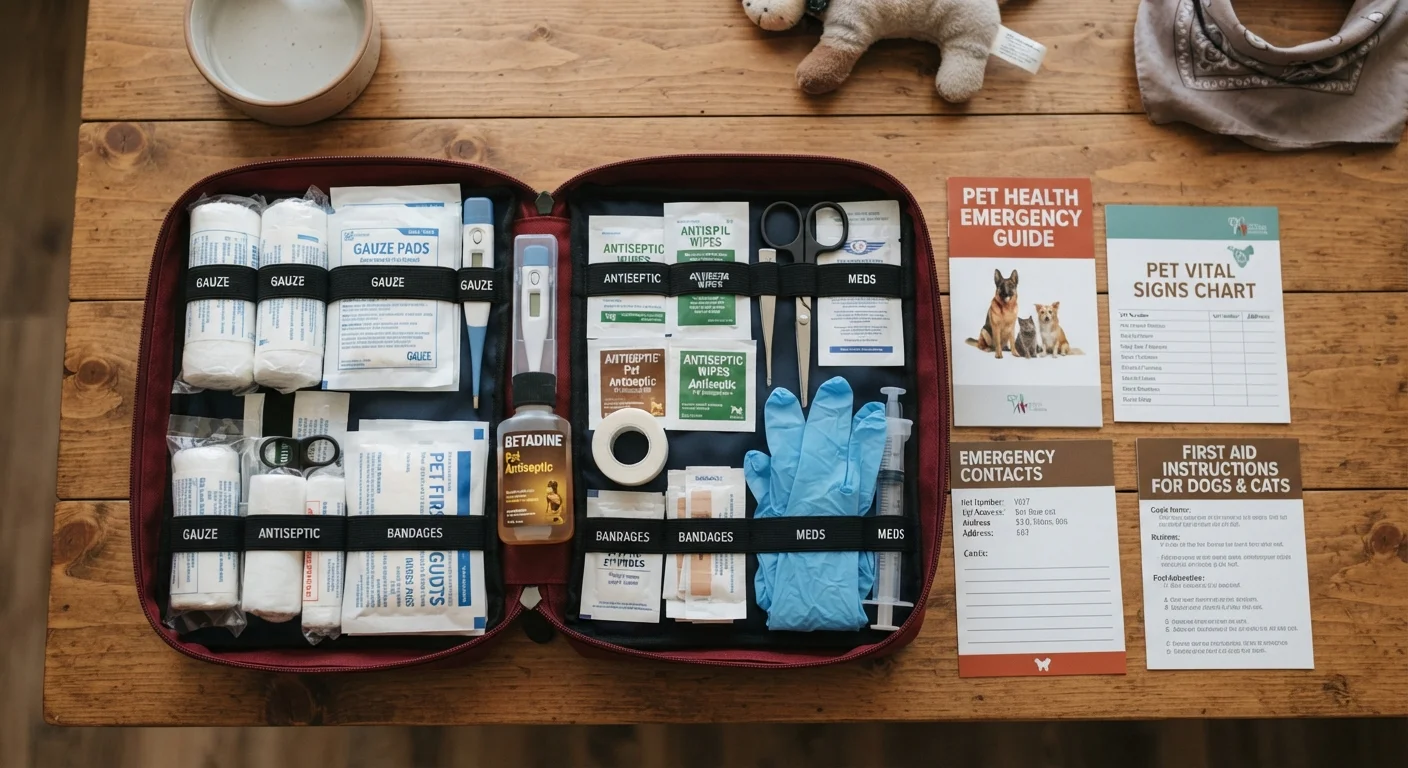
First aid kit supplies
Safe transport preparation
Tools and resources you will need
Before working through the checklist, gather the following items. Some you may already own; others are worth sourcing specifically for your pet kit.
Dedicated pet first aid kit container
A clearly labeled, waterproof box keeps all supplies together and easy to grab quickly.
Digital rectal thermometer
Measures your pet's core temperature accurately, which is one of the first things an emergency vet will ask about.
Pet carrier or crate
Confines and protects an injured or distressed animal during transport to a clinic.
Printed pet medical profile
Gives emergency veterinary staff immediate access to your pet's history, medications, and allergies.
Muzzle (species-appropriate)
Prevents biting during painful procedures or examination; required even for gentle animals in acute pain.
Sterile saline solution
Used to flush wounds, remove debris from eyes, or irrigate irritated tissue before a vet can examine the animal.
Emergency foil blanket
Helps stabilize body temperature in a pet showing signs of shock during transport.
Smartphone with emergency contacts saved
Allows hands-free calling to poison control or the emergency clinic while another person manages the pet.
Special considerations for pets with ongoing health needs
Pets managing a chronic condition require additional planning. A diabetic dog, a cat with kidney disease, or an older pet with arthritis each has specific emergency considerations that go beyond a standard first aid kit. Managing a pet's chronic condition at home covers the daily routines that also inform what belongs in your emergency plan for these animals.
Never give human medications without vet guidance
Common over-the-counter human drugs, including ibuprofen, acetaminophen, and certain antihistamines, are toxic to dogs, cats, and other companion animals. Do not administer any medication not prescribed or explicitly approved for your specific pet by a licensed veterinarian. If you suspect poisoning, call animal poison control or your vet before taking any action.
Do not assume a 'waiting and watching' approach is safe
Some emergencies, including internal bleeding, respiratory distress, and seizures, can deteriorate within minutes. If your pet loses consciousness, cannot stand, shows labored breathing, or has pale or blue-tinged gums, go directly to an emergency clinic rather than waiting to see if the animal improves.
If you share your home with multiple pets, consider building separate emergency profiles for each one. Illness in a multi-pet household can complicate triage: knowing which animal takes which medication prevents dangerous mix-ups under stress. Store each profile in a labeled folder alongside your first aid kit, and let anyone who cares for your pets know where to find it.
This article is for general informational purposes only and does not constitute veterinary or medical advice. Always consult a licensed veterinarian for guidance specific to your pet's health.