

Key Takeaways
- Vertical wall space is the most underused storage area in small bedrooms.
- Bed placement relative to the door and window has a measurable effect on how spacious a room feels.
- Consistent habits matter more than any single storage product or furniture purchase.
- Reducing visible clutter has a direct effect on sleep quality and mental calm.
- Most small-bedroom improvements require no renovation and minimal spending.
Why layout comes before storage
Before buying a single bin or shelf, the way furniture sits in the room shapes everything else. A bed pushed into a corner can free a surprising amount of floor space, but it also traps one person against the wall every night. A bed centered on the main wall, by contrast, creates two walkable sides and a visual anchor that makes the room feel intentional rather than crowded.
The single most useful principle: keep the path from the door to the bed unobstructed. That clear line is what makes a small room feel navigable rather than cramped. Anything that forces a sideways shuffle, including a chair, an open drawer, or a laundry pile, shrinks perceived space faster than actual square footage does.
Natural light placement matters too. Positioning the bed so a window is on a side wall rather than directly behind the headboard prevents glare and lets light travel deeper into the room. For more ideas on maximizing daylight, see practical ways to bring more natural light into any room.
Position furniture to keep at least two feet of clear floor path to the bed from the door.
Clear floor paths make a room feel navigable and reduce the visual noise that makes small spaces feel tight. When you can move through the room without turning sideways, the space reads as larger.
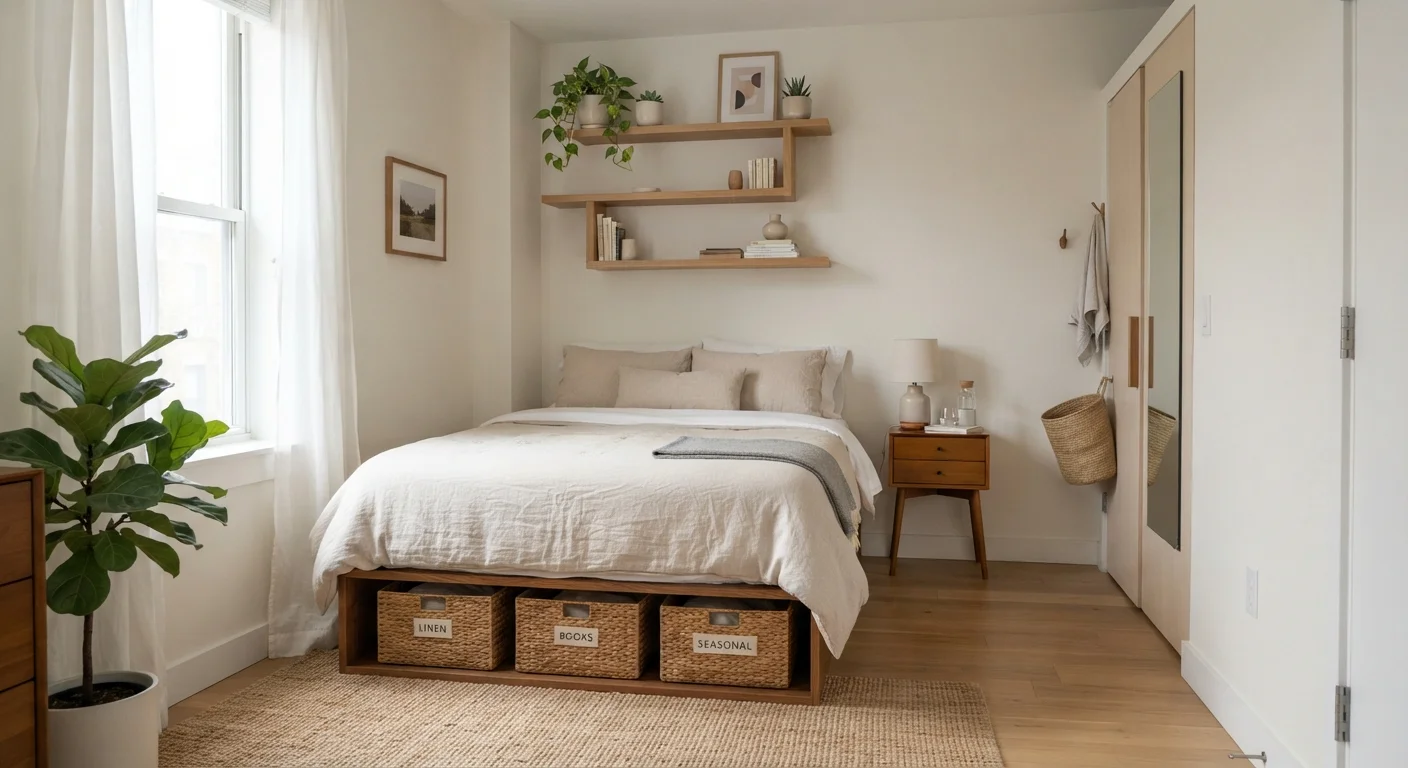
Mount shelves above door frames and windows to use vertical space furniture cannot reach.
The area above architectural openings is almost always empty in small bedrooms. Shelves there add meaningful storage without claiming any floor area.
Assign every under-bed bin a fixed category before you slide it under.
Without a category, under-bed space becomes a disorganized overflow zone that is harder to access than a closet. A clear category means you always know what is there and can retrieve it without pulling out everything.
Do a two-minute surface reset as a nightly habit before you get into bed.
Small bedrooms show surface clutter more dramatically than larger rooms because surfaces are closer together and in the direct line of sight from the bed. A brief daily reset prevents accumulation from compounding.
Rotate clothing seasonally and keep only current-season items in the main closet.
Closet density is one of the primary drivers of bedroom overflow. When off-season items occupy prime closet space, current items migrate to chairs, floors, and surfaces.
Storage that earns its place
In a small bedroom, every piece of furniture should carry storage or serve a clear function. A standard nightstand with one small drawer is often the weakest performer in the room. A nightstand with two drawers, or an open cubby underneath for a small basket, pulls the same visual footprint while holding considerably more.
Vertical space is where most small bedrooms leave the most potential untouched. Shelves mounted above the door frame, above the window, or stacked high on one wall use area that no piece of furniture can reach. The key is keeping what goes on those shelves predictable: books in one place, off-season items in another, so the height does not become an obstacle.
Under-bed storage is the largest single reserve most bedrooms have. Flat bins on wheels handle off-season clothing, spare bedding, or shoes with far less disruption than a crowded closet. If the bed frame sits too low, inexpensive bed risers create clearance. The same logic that makes under-sink cabinet organization useful applies here: awkward space becomes functional the moment it has a defined category.
Closet habits that prevent overflow
A small bedroom closet fills up faster than any other storage zone because it absorbs everything that does not have another home. Two habits prevent most of that drift. First, keep only current-season clothing in the main closet and rotate the rest into under-bed bins or a secondary location. Second, audit the closet on a fixed schedule, even a brief monthly pass to remove items that have migrated in without a clear reason.
Inside the closet, consistent grouping by category (tops together, bottoms together, outerwear separate) reduces the decision load when getting dressed and makes it immediately visible when one category is overflowing. Shelf dividers cost very little and stop folded stacks from collapsing into neighboring piles. The folding and shelf logic that works well in a linen closet transfers directly to a bedroom closet.
A small bedroom shared with a partner or roommate multiplies the organizational challenge. Dividing closet space clearly, with each person owning a defined section, removes the friction that builds when items mix. For broader shared-space strategies, organizing a home when everyone has different habits covers the negotiation side of that process.
Daily habits that hold the system together
Storage systems fail not because they were poorly designed but because maintenance never gets built into a routine. A two-minute reset before bed, returning items to their place, wiping surfaces, and depositing laundry in its bin, is enough to keep a small bedroom from sliding back toward chaos. The lower the friction for that reset, the more reliably it happens: a laundry hamper inside the closet works better than one tucked behind a door that requires moving a chair to reach.
Surfaces accumulate clutter faster than any other area. A bedroom with clear nightstands and an uncluttered dresser top reads as calm regardless of total size. Limiting each surface to a fixed number of intentional objects, a lamp, one or two items in use, a small tray to contain loose items, prevents the creep that makes rooms feel smaller over time.
A calm bedroom also supports better sleep. Clutter in the visual field has been associated with elevated stress and disrupted rest in research on home environments. For a deeper look at the sleep side of this, sleep hygiene habits that support deeper rest covers evidence-informed approaches that pair well with a calmer physical space.
If a weekend is available and the room needs a more substantial reset, weekend projects that transform a room without major renovation offers approachable ideas that require no contractor and no large budget.