

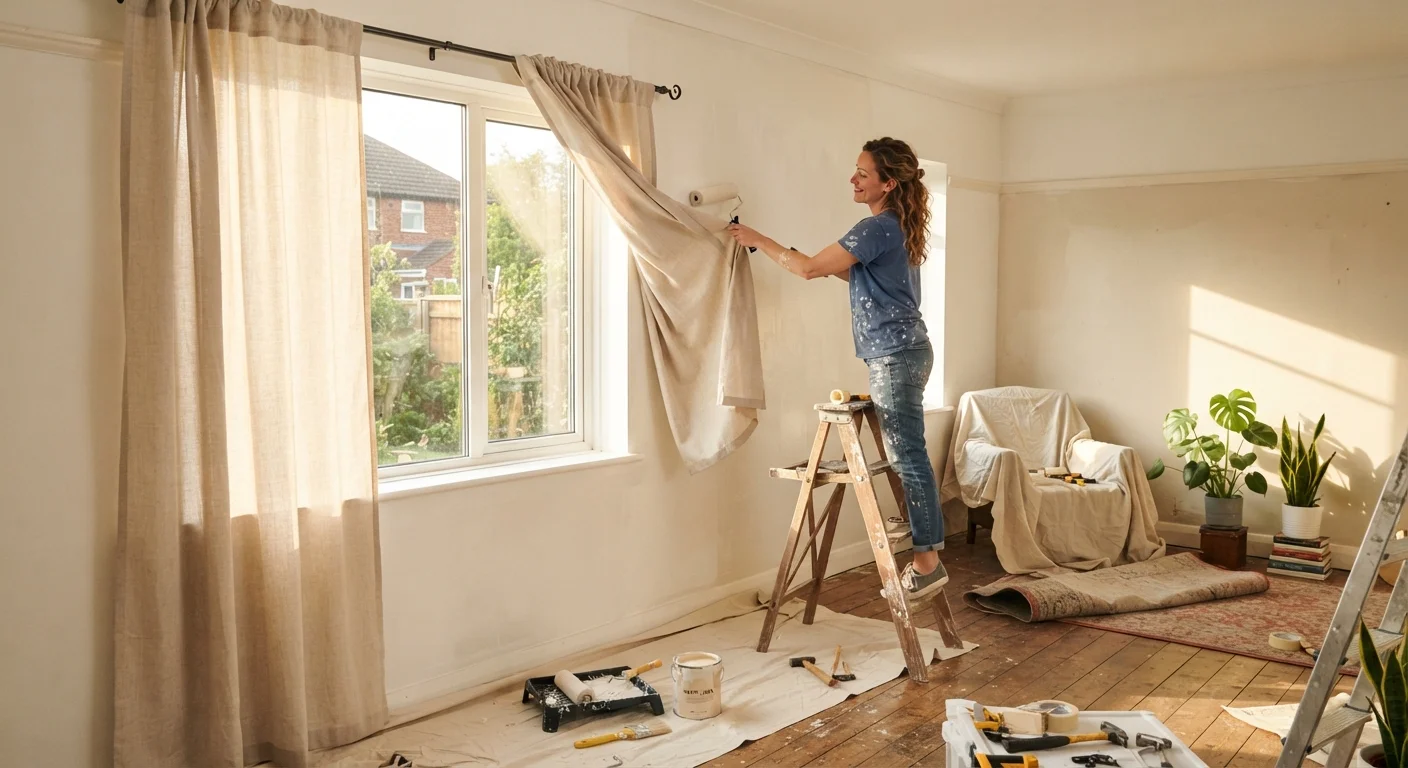
Key Takeaways
- Painting walls or an accent surface is one of the fastest, most affordable ways to change how a room feels.
- Swapping hardware, light fixtures, and window treatments updates a space without touching its structure.
- Good lighting changes the perceived size and warmth of any room more than almost any other single factor.
- Decluttering and reorganizing before adding anything new makes every other improvement more effective.
- Knowing which projects to DIY and which to leave to a licensed professional keeps work safe and code-compliant.
Why a weekend is often enough
Major renovations take months, significant money, and usually a contractor. But many of the changes that make a room feel genuinely different come down to surface, light, and organization, all areas where a motivated homeowner can make real progress in one or two days. The projects below share two qualities: they are completable over a weekend, and the difference they make is visible the moment you finish.
Before starting any project, it helps to understand where the line sits between DIY-safe work and jobs that require a permit or a licensed trade. Our guide on when to call a professional covers that clearly. For a fuller picture of planning and budgeting any improvement project, see the home improvement planning guide.
Paint one wall or a single architectural feature
A full room repaint is a weekend project in itself, but painting one wall, a fireplace surround, built-in shelving, or even a door can shift the visual weight of a room without committing to a complete overhaul. A contrasting color on the wall behind a bed or sofa creates a focal point that makes the space look deliberately designed rather than default.
Prep work determines the finish. Clean the surface, fill any holes, sand smooth, and apply primer before your finish coat. Our detailed walkthrough on interior wall painting best practices explains the techniques that separate a clean result from a patchy one.
Prep work, not the paint itself, determines whether the finish looks professional.
Replace cabinet and door hardware
Swapping drawer pulls, cabinet knobs, and door handles is one of the most cost-effective surface changes in any room. A kitchen with dated brass hardware can feel completely different with matte black or brushed nickel replacements, and the work involves nothing more than a screwdriver. Measure the existing hole spacing (called the center-to-center distance) before buying replacements so new hardware fits without drilling new holes.
The same logic applies to bathroom vanity hardware, where even a single updated towel bar or robe hook changes the perceived quality of the space.
Measure existing hole spacing before purchasing new hardware to avoid unnecessary drilling.
Upgrade window treatments
Curtains and blinds affect both the light quality in a room and how large it feels. Hanging curtain rods close to the ceiling line and extending them wider than the window frame makes windows appear taller and the room more spacious. Lightweight linen or cotton drapes in a neutral tone work in most rooms; blackout lining adds function in bedrooms without changing the visible fabric.
Replacing a dated plastic mini-blind with a woven wood shade or a simple Roman blind takes under an hour per window and changes the texture of the whole room.
Hanging rods close to the ceiling and wider than the window frame makes the room feel taller.
Improve the lighting layers
Most rooms rely too heavily on one overhead fixture that produces flat, unflattering light. Adding table lamps, floor lamps, or plug-in sconces introduces multiple light sources at different heights, which changes the atmosphere of a room more than almost any other single change.
If the existing overhead fixture is dated, replacing it with a new one is a manageable weekend task, but it does involve working with electrical wiring. Unless you are comfortable and experienced with residential electrical work, this is a job to hand to a licensed electrician. The physical swap of a like-for-like fixture, with the breaker off and wiring confirmed dead with a voltage tester, is within the skill range of a careful DIYer. Any work that involves adding a new circuit or moving wiring requires a permit and a licensed professional in most jurisdictions.
Multiple light sources at different heights change a room's atmosphere more than a single overhead fixture can.
Refresh grout and caulk in tiled areas
Grout and caulk in bathrooms and kitchens discolor over time, and the result makes even clean surfaces look neglected. Scrubbing existing grout with a dedicated grout cleaner and a stiff brush often restores a surprising amount of brightness. Where grout is cracked or stained beyond cleaning, applying new grout over the old (on floor tiles especially) is a manageable DIY task with a grout saw, new grout, and a float.
Replacing caulk around a bathtub, sink, or backsplash takes a few hours including dry time, and the visual difference in a bathroom is immediate. Remove the old caulk fully with a plastic scraper and caulk remover, let the surface dry completely, then apply a fresh bead of mold-resistant caulk in a single smooth pass.
Fresh caulk around a bathtub or sink is one of the fastest ways to make a bathroom look clean and cared for.
Add or rearrange shelving
Floating shelves installed on a solid wall (anchored into studs or with appropriate wall anchors for the load) create both storage and display space without taking up floor area. In a living room, a set of floating shelves can replace a bulky bookcase. In a kitchen, open shelves near the cooking area make frequently used items more accessible.
Rearranging existing furniture and shelving costs nothing and often has an outsized effect. Pulling furniture away from walls, experimenting with diagonal placement in a bedroom, or moving a bookcase to a different wall can make a room feel new without buying anything. Try a layout on paper before moving heavy pieces.
Pulling furniture away from walls and rearranging it costs nothing and often transforms how a room feels.
Making the most of what you do
Every project on this list works better when the room is already organized. Painting around clutter wastes time, and new lighting cannot compensate for visual chaos. Before you buy a single item, work through a room-by-room declutter so improvements land cleanly. Small rooms especially benefit from this sequence; for bedroom-specific strategies, the small bedroom storage and layout guide is worth reading first.
Start with the room that frustrates you most
If you are unsure which room to tackle first, choose the one you use most and enjoy least. Visible progress in a high-traffic space builds momentum for the next project. Photograph the room before you start so the before-and-after comparison is clear when you finish.
Bathrooms respond particularly well to weekend-scale attention. Targeted changes to fixtures and finishes can make a compact bathroom feel larger and more finished, as covered in our small bathroom upgrades guide.