

Key Takeaways
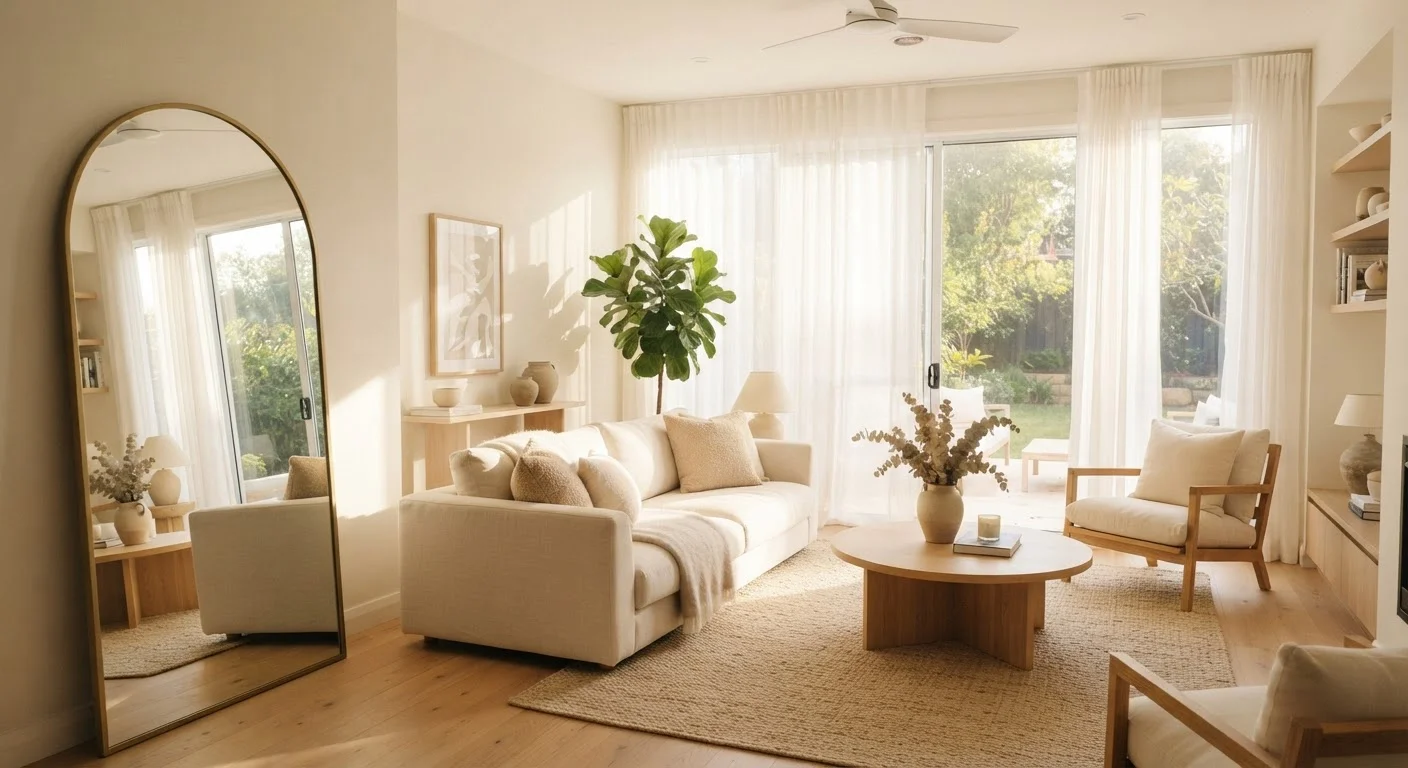
- Mirror placement opposite or adjacent to windows can significantly multiply perceived light in a room.
- Window treatments are often the fastest, lowest-cost change you can make to improve natural light.
- Light-colored walls, ceilings, and floors reflect more daylight than dark finishes.
- Furniture arrangement affects how light travels through a room and should not be overlooked.
- Skylights and solar tubes are structural solutions worth considering for chronically dark spaces.
- Cleaning windows regularly makes a measurable difference in how much light enters a room.
What you will need
Why natural light matters in everyday spaces
Natural light changes how a room feels, how colors read, and how spacious a space appears. It also affects mood and alertness in ways that artificial lighting cannot fully replicate. The good news is that most homes have untapped potential to admit and distribute more daylight, without expensive structural work.
The strategies below range from free (rearranging furniture) to moderate-cost (installing a solar tube) and apply to renters and homeowners alike. Start with the low-effort options and work up from there based on how much change you need.
For readers also working on compact spaces, the same principles that improve light often make rooms feel larger. See our small bathroom upgrade ideas for how light and finish choices interact in tight quarters.
What you will need
Getting the room ready
Before making any changes, assess each room at different times of day. Note where light enters, where it stops, and which surfaces are absorbing it rather than bouncing it around. Take a few minutes to identify these three things:
- Which windows are obscured by heavy curtains, blinds, or nearby furniture
- Which walls and surfaces are dark or cluttered
- Whether any outdoor vegetation, awnings, or screens are blocking window glass
This quick audit shapes which steps will give you the most return for your effort.
Streak-free glass cleaner or white vinegar solution
Removes film and mineral deposits from window glass to maximize light transmission.
Large mirror (full-length or wide format)
Reflects and redistributes natural light from windows across the room.
Sheer curtain panels and ceiling-height curtain rod
Replaces light-blocking window treatments while maintaining privacy and diffusing daylight.
Light-colored paint (LRV 70 or higher)
Increases wall and ceiling reflectance to spread daylight further into the room.
Pruning shears or loppers
Trims outdoor shrubs and low branches that obstruct window light from outside.
Step-by-step: practical ways to improve natural light
Work through the steps below in order. Each builds on the last, and many produce visible results on the same day.
Clean every window, inside and out
Grime, mineral deposits, and film on glass can reduce light transmission noticeably. Wash both panes with a streak-free glass cleaner or a diluted white vinegar solution, and wipe frames and sills so they do not scatter dirt back onto the glass. If exterior windows are hard to reach safely, a long-handled squeegee or a professional window cleaning service once a year is worth the effort.
Replace or remove heavy window treatments
Heavy drapes, dark roller blinds, and layered valances absorb and block daylight even when pulled back. Swap them for sheer linen or cotton panels that diffuse light while maintaining privacy, or remove window treatments entirely in rooms where privacy is not a concern. If you need light control, consider top-down/bottom-up cellular shades, which let you block a lower sash for privacy while leaving the upper portion open to the sky.
Position mirrors to redirect light
A mirror placed directly opposite a window bounces daylight back across the room and can effectively double the perceived brightness. Larger mirrors work better than small ones for this purpose. Lean a full-length mirror against a wall facing the window, or hang a wide mirror at window height. Mirrored furniture surfaces and glass cabinet doors produce a similar, softer effect throughout the day.
Switch to light-reflective wall and ceiling colors
Dark or saturated wall colors absorb light; pale neutrals and whites reflect it. If repainting is within your budget, choose finishes with a light reflectance value (LRV) above 70 for walls in light-starved rooms. Ceilings painted bright white reflect the most diffuse light downward. Glossier paint sheens (eggshell, satin) reflect more light than flat finishes, though they also show surface imperfections more readily.
Rearrange furniture to clear the light path
Tall bookcases, armoires, or sofas positioned in front of or beside windows interrupt the natural flow of light into the room. Move large, dark pieces to walls that do not receive direct light. Keep the floor area near windows clear, and use lower-profile furniture in those zones. Open shelving near windows, rather than solid cabinets, allows light to pass through rather than stopping at a flat surface.
Use light-colored or reflective flooring and rugs
Floors cover a large surface area and affect how light bounces around at the lower half of a room. Light hardwood, pale tile, or polished concrete reflects more daylight than dark stains or deep-colored carpet. If replacing flooring is not feasible, a large light-toned area rug over dark flooring achieves a similar effect. Avoid rugs with heavy, dark patterns in rooms that already feel dim.
Trim exterior vegetation blocking windows
Overgrown shrubs, tree branches, and dense hedges directly outside windows reduce light before it even reaches the glass. Prune back any vegetation that sits within a few feet of window openings. In some cases, removing a single large shrub can transform a room from shadowy to genuinely bright. If the vegetation belongs to a neighbor or is subject to local ordinances, check the rules before cutting.
When to consider structural changes
If a room stays dark even after exhausting the decorative options, a structural solution may be the right path. The two most common options are skylights and solar tubes (also called sun tunnels).
A skylight cuts through the roof and ceiling to admit direct overhead light. It requires a licensed contractor, permits in most jurisdictions, and a waterproofing detail that must be done correctly to avoid leaks. Costs vary considerably by region, roof type, and skylight size. Solar tubes are a smaller-scale alternative: a reflective tube channels daylight from a small roof dome down through the ceiling, typically costing less than a full skylight and requiring less invasive installation. Both options add light without consuming wall space.
Before committing to either, check with your local building department about permit requirements. Any work that penetrates the roof or ceiling structure should be handled by a qualified professional. See our home maintenance guide for more on what to inspect before starting structural work.