

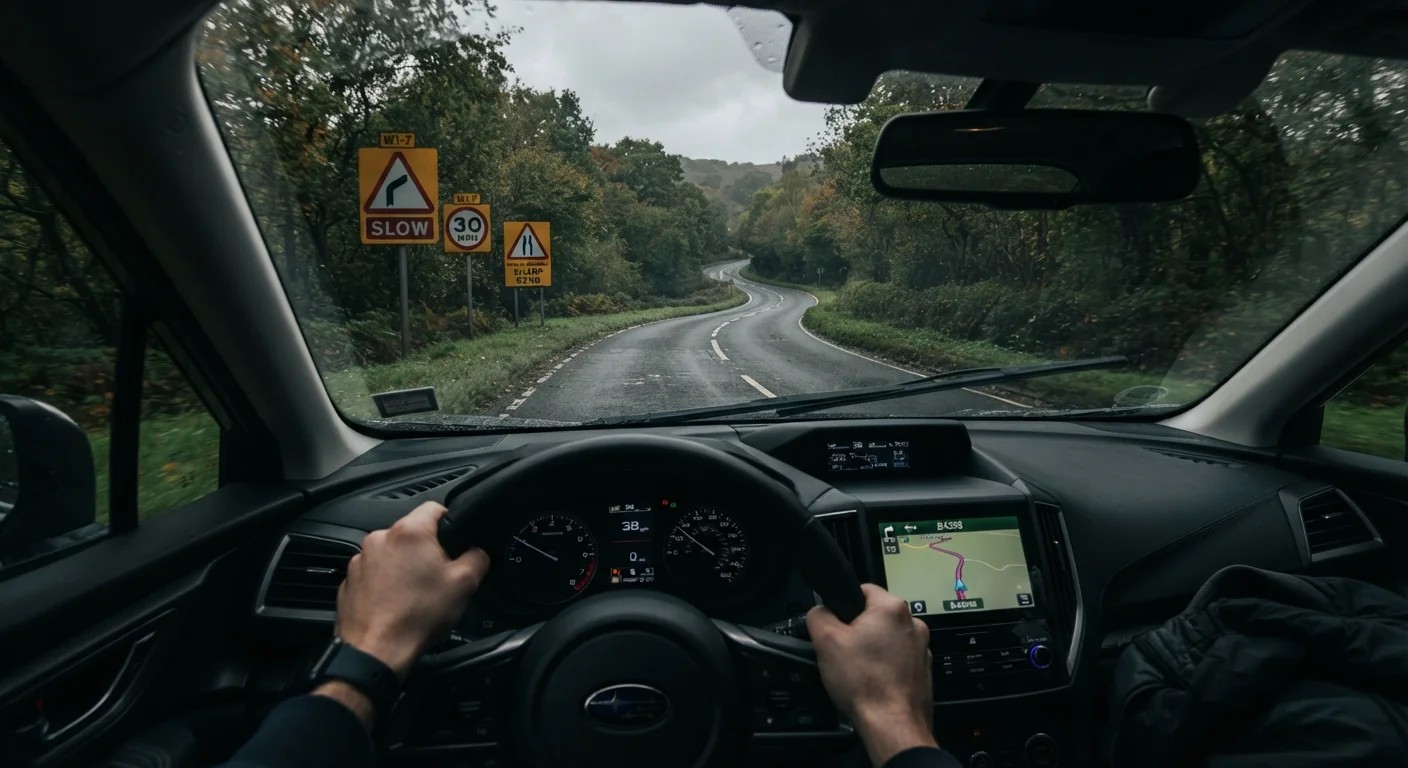
Key Takeaways
- Slowing down on unfamiliar roads gives you more time to read signs and react to hazards.
- Pre-trip route review reduces the number of decisions you must make while moving.
- Pulling over safely is always better than making a rushed navigation decision at speed.
- Increased following distance compensates for not knowing what lies around the next bend.
- Fatigue compounds the risks of unfamiliar roads, so plan rest stops before you need them.
Why unfamiliar roads raise risk
On roads you drive regularly, you already know where the sharp bend is, which junction has poor sightlines, and where the speed limit drops. That background knowledge frees up mental capacity. On an unknown route, every feature is new, which raises the cognitive load considerably. You are processing road geometry, signs, other traffic, and navigation simultaneously.
This is not just a matter of confidence. The National Highway Traffic Safety Administration has consistently identified driver distraction and insufficient hazard recognition as factors in crashes, and unfamiliar routes produce both. Intersections are particularly dangerous: a driver who does not know whether a road is one-way, or whether a priority rule applies, is more likely to hesitate or move at the wrong moment.
Urban and rural environments add different pressures. City and country roads demand different attention strategies, and an unfamiliar route may cross both within a single journey. Accepting that the road ahead requires more deliberate effort is the first adjustment to make.
Prepare before you leave
The most effective way to manage an unfamiliar route is to reduce how much of it is truly unknown before you start driving. Spend five to ten minutes studying the route on a map rather than just entering a destination into a GPS device. Note major junctions, any motorway or highway transitions, and towns you will pass through. This gives you a mental skeleton of the journey so you are not entirely dependent on turn-by-turn audio.
Check your vehicle before departing. A pre-trip inspection covering tyres, fluids, and lights matters more on an unfamiliar road because you cannot predict where the nearest service station will be. A tyre problem or low fuel warning on an unknown road is harder to manage than on one you know well.
If you are travelling at night, review the route with that in mind. Night driving on unfamiliar roads combines two compounding risk factors: reduced visibility and unknown road geometry.
Adjustments to make while driving
Reduce speed below what feels instinctively comfortable. On a familiar road, your brain fills in gaps based on memory. On an unknown road, it cannot, and your reaction window shrinks. A lower speed gives you more time to read a sign, identify a hazard, or respond to an unexpected junction.
Increase your following distance beyond the standard two-second gap. If you do not know whether the road ahead curves sharply or whether a junction is coming up, you need more space to slow. A three-to-four second gap is reasonable on an unfamiliar road, particularly on rural routes where hazards such as animals, farm vehicles, or gravel can appear without warning.
Watch for signs earlier and with more intent. Some signs are misread even by experienced drivers, and an unfamiliar road is more likely to present signs you encounter less often. If you miss a sign, slow gradually rather than reacting abruptly.
If you need to check your GPS or a map, pull over fully before doing so. A brief stop costs less than a wrong turn at speed, and far less than a collision caused by a moment of distraction.
Slow down beyond your instinctive comfort level on roads you do not know.
Memory fills in gaps on familiar routes, making driving feel automatic. Without that background knowledge, slower speeds compensate for the longer time needed to read and respond to new information.
Study the route on a map before departure, not just on a GPS screen.
A GPS gives instructions one at a time, which keeps you dependent on the device throughout the journey. A prior map review gives you a mental framework so that you understand the route rather than just following it.
Pull over fully before consulting a map or re-entering navigation.
Glancing at a phone or screen while moving on an unknown road means you lose attention precisely when you have the least margin for error. A brief stop eliminates that risk entirely.
Increase your following distance to at least three seconds on unfamiliar roads.
You do not know whether a sharp curve, sudden speed change, or hidden junction lies just ahead. Extra space gives you time to brake smoothly rather than react sharply.
Approach junctions and roundabouts more slowly than you normally would.
Priority rules and lane configurations vary by location. Without prior knowledge of a junction, a slower approach gives you time to read the situation before committing to a movement.
Managing navigation without losing focus
GPS guidance is useful, but it demands its own share of attention, particularly when audio instructions conflict with what you see ahead. Set your route before moving and keep the screen in a position where a glance takes less than a second. Avoid re-routing while in motion on an unknown road.
If you miss a turn, continue to the next safe place to stop or turn around. Abrupt lane changes or reversing on a road you do not know are more dangerous than adding a few minutes to the trip. Reversing in unfamiliar areas carries its own hazards, especially in locations where you cannot see what is behind you.
Roundabouts catch many drivers off guard on unfamiliar routes. Roundabout lane rules confuse even experienced drivers, and entering one without knowing your exit position compounds the confusion. Approach more slowly than you think necessary, and yield to circulating traffic before you commit to an entry.
If you feel your concentration slipping, treat it seriously. Fatigue impairs reaction time as seriously as alcohol, and the extra mental effort of navigating an unknown road accelerates tiredness. Stop at the first safe opportunity rather than pushing through.