

Key Takeaways
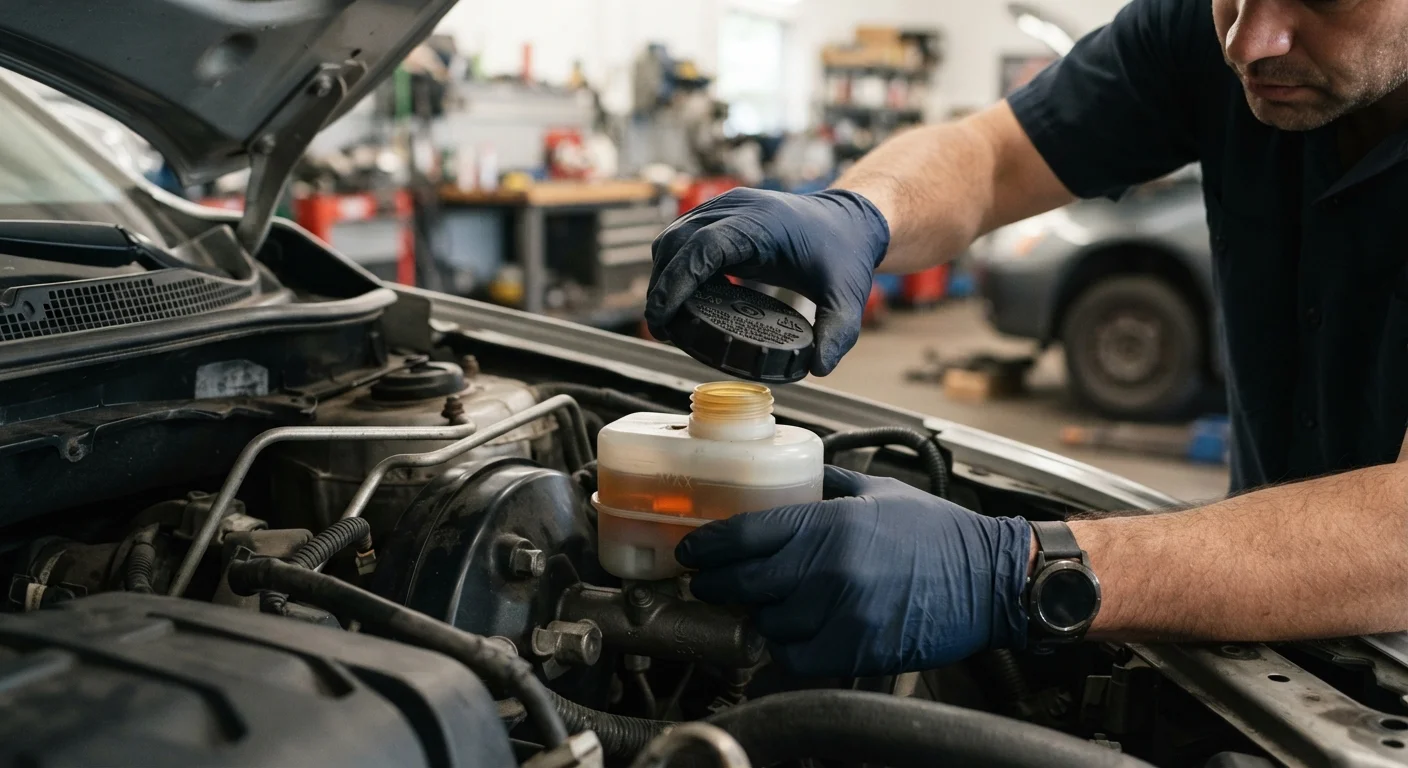
- Brake fluid absorbs moisture over time, lowering its boiling point and reducing stopping power.
- Most manufacturers recommend changing brake fluid every two years or 30,000 miles, whichever comes first.
- Neglecting brake fluid can lead to brake fade, spongy pedal feel, and caliper corrosion.
- A brake fluid flush typically costs between $70 and $130 at most US repair shops.
- The fluid's color and a simple moisture test can indicate whether a change is overdue.
Why brake fluid gets overlooked
Most drivers check their oil, notice when washer fluid runs dry, and eventually respond to a low coolant warning light. Brake fluid rarely gets the same attention. It lives in a sealed reservoir, it does not burn off through use, and it has no dashboard warning light in most vehicles until something is seriously wrong.
The oversight is understandable, but it carries real consequences. Brake fluid is hygroscopic, meaning it continuously absorbs moisture from the air. That absorbed water lowers the fluid's boiling point over time. In normal driving this may not matter much, but during hard braking, repeated stops on a long downhill grade, or emergency situations, heat builds rapidly in the brake lines. Fluid that has absorbed too much moisture can boil before it should, forming vapor bubbles that compress instead of transmitting force. The result is brake fade or a pedal that suddenly feels soft and unreliable.
Brake fluid maintenance sits alongside other hydraulic system upkeep that drivers tend to postpone. If you want a useful comparison, the power steering fluid guide covers how a similar oversight plays out in another hydraulic system.
What the neglect actually costs
The financial side of ignoring brake fluid is not limited to the flush itself. When water-contaminated fluid sits in a system long enough, it corrodes brake calipers, wheel cylinders, and steel brake lines from the inside. Caliper replacement runs anywhere from $150 to $400 per corner at most US shops, and that cost climbs fast if multiple corners are affected. Steel line replacement, which requires routing new lines through the undercarriage, can push into the $300 to $700 range depending on how much of the system needs attention.
Brake pad and rotor wear also accelerates when calipers begin to stick due to corrosion, because a sticking caliper keeps light pressure on the rotor even when you are not braking. Drivers sometimes attribute the resulting uneven wear to the pads or rotors themselves without realizing the fluid and caliper are the root cause. For context on reading wear patterns, the brake pad thickness guide explains what uneven wear actually indicates.
$70-$130
Typical US brake fluid flush cost
General service pricing reported by US automotive repair industry sources for a standard brake fluid flush at an independent shop.
3.7%
Moisture content that causes boiling point drop
DOT 4 fluid with approximately 3.7% water content can see its boiling point fall from 446 degrees F to around 311 degrees F, per fluid specification data.
2 years
Recommended change interval by many manufacturers
A two-year change interval for DOT 3 and DOT 4 brake fluid appears in the maintenance schedules of many major vehicle manufacturers.
Beyond hardware costs, there is the safety dimension. Brake performance degradation rarely announces itself clearly before an incident. Tyre condition interacts with braking distance in a similar way; the tyre maintenance article shows how two overlooked maintenance items compound each other when it matters most.
How to stay ahead of the problem
The most reliable approach is to follow the interval in your owner's manual. Many manufacturers specify a change every two years regardless of mileage, though some vehicles with DOT 5 (silicone-based) fluid have different requirements. If the manual is unavailable, a two-year or 30,000-mile interval is a widely accepted general guideline in the US automotive service industry.
A technician can test brake fluid moisture content in minutes using an electronic tester or test strips. These tools measure the boiling point of the fluid directly. Fluid that has dropped below its rated minimum boiling point should be replaced. Color alone is not a reliable indicator, because DOT 3 and DOT 4 fluids can look darker than new fluid while still performing adequately, and some contaminated fluid still looks pale amber.
Brake fluid replacement is not a DIY task for most drivers. Bleeding the system properly requires specific tools and, depending on the vehicle, a scan tool to open electronic caliper pistons. A qualified mechanic should handle the job. Keeping a log of the service date makes it straightforward to stay on schedule, the same discipline that prevents deferred maintenance from affecting a vehicle's long-term value, a subject the car depreciation article addresses directly.
If the vehicle has drum brakes at the rear, the fluid reaches those wheel cylinders as well. The drum vs disc brake overview explains how each system uses hydraulic pressure and why both depend on clean, uncontaminated fluid to operate correctly.