

Key Takeaways
- Power steering fluid transmits hydraulic pressure that reduces the physical effort needed to steer.
- The fluid degrades over time and can absorb moisture, leading to seal damage and pump wear.
- A low fluid level is often the first sign of a leak somewhere in the system.
- Whining or groaning sounds during turns are common early warnings of fluid or pump problems.
- Many modern vehicles use electric power steering, which has no fluid reservoir at all.
- Checking the reservoir takes less than a minute and can prevent expensive repairs.
Power steering fluid
Power steering fluid is a hydraulic fluid that transfers force from the steering wheel to the steering gear, making it easier to turn the wheels. It flows through a pump, hoses, and a steering rack or gearbox to multiply the driver's input. Without it, the hydraulic assist system cannot function, and steering becomes extremely difficult.
Most power steering systems use a dedicated hydraulic fluid, though some vehicles accept automatic transmission fluid (ATF) in its place. Always check the vehicle owner's manual before topping off, as using the wrong type can damage seals and the pump.
How the hydraulic power steering system works
Most vehicles built before the mid-2010s use a hydraulic power steering system. A belt-driven pump pressurizes the fluid and sends it through hoses to a steering rack or recirculating-ball gearbox. When you turn the wheel, a rotary valve directs that pressurized fluid to push the steering gear in the appropriate direction. The pump cycles continuously whenever the engine runs, whether you are steering or not.
The fluid in this circuit does two things: it carries pressure, and it lubricates every moving part it contacts, including the pump vanes, valve housing, and rack seals. A fluid that is clean and at the correct level keeps those surfaces protected. One that is degraded or low leaves metal components in direct contact with each other under significant load.
For comparison, other hydraulic fluids in your vehicle serve similar functions in different systems. Brake fluid also relies on hydraulic pressure, and like power steering fluid, it absorbs moisture over time in ways that quietly degrade performance.
How power steering fluid degrades
Fresh power steering fluid is typically clear, light amber, or red, depending on the formulation. Over time, heat cycles break down the additive package that protects seals and metal surfaces. Oxidation darkens the fluid and can leave it looking brown or black. Rubber particles shed from aging hoses and seals add to the contamination.
Moisture intrusion, though less pronounced than in brake fluid, also occurs. Water lowers the fluid's boiling point and promotes corrosion inside the pump and rack. A foamy or milky appearance is a strong indicator that water has entered the system, often through a deteriorating reservoir cap seal.
Check fluid level when the engine is cold
Power steering fluid expands when hot, so a reading taken immediately after driving may appear higher than the actual resting level. Check the reservoir before starting the engine for the most accurate reading. Wipe the dipstick or check the external MIN/MAX markings with the vehicle on level ground.
The fluid level itself rarely drops unless there is a leak. Power steering is a closed system, so a reservoir that needs regular topping off is telling you there is a breach somewhere in the hoses, pump, rack seals, or fittings. Topping off without finding the leak source only delays the repair.
Transmission fluid faces similar contamination patterns, including heat degradation and moisture absorption, which is why both fluids benefit from periodic inspection rather than a set-it-and-forget-it approach.
Warning signs that something is wrong
The most common early symptom is a whining or moaning sound from the pump when turning, particularly at low speeds or when the wheel is turned to its full lock position. This noise often means the pump is working harder than it should, either because fluid is low or because the fluid has lost its lubricating properties.
Heavier steering effort is another indicator. If a car that once turned easily now feels stiff or notchy, the hydraulic circuit may not be generating enough pressure. A steering wheel that vibrates or feels loose can point to worn rack seals allowing pressure to bypass internally.
Visible fluid on the driveway, typically a thin, oily patch under the front of the vehicle, can indicate a hose or rack seal leak. Red or amber spots are easier to identify; darker degraded fluid can be mistaken for oil. A mechanic can pressure-test the system to locate a leak precisely.
30,000 mi
Typical power steering fluid inspection interval
Many vehicle manufacturers suggest inspecting power steering fluid condition around this mileage, though the owner's manual remains the authoritative source for each specific vehicle.
$100-$250
Approximate cost of a power steering flush
Labor and fluid costs for a professional power steering flush at a repair shop typically fall in this range in the US, varying by vehicle type and region.
$500+
Estimated cost of power steering pump replacement
A pump that runs dry due to low or degraded fluid can fail completely; replacement parts and labor commonly exceed this figure at independent repair shops.
Checking and maintaining the fluid
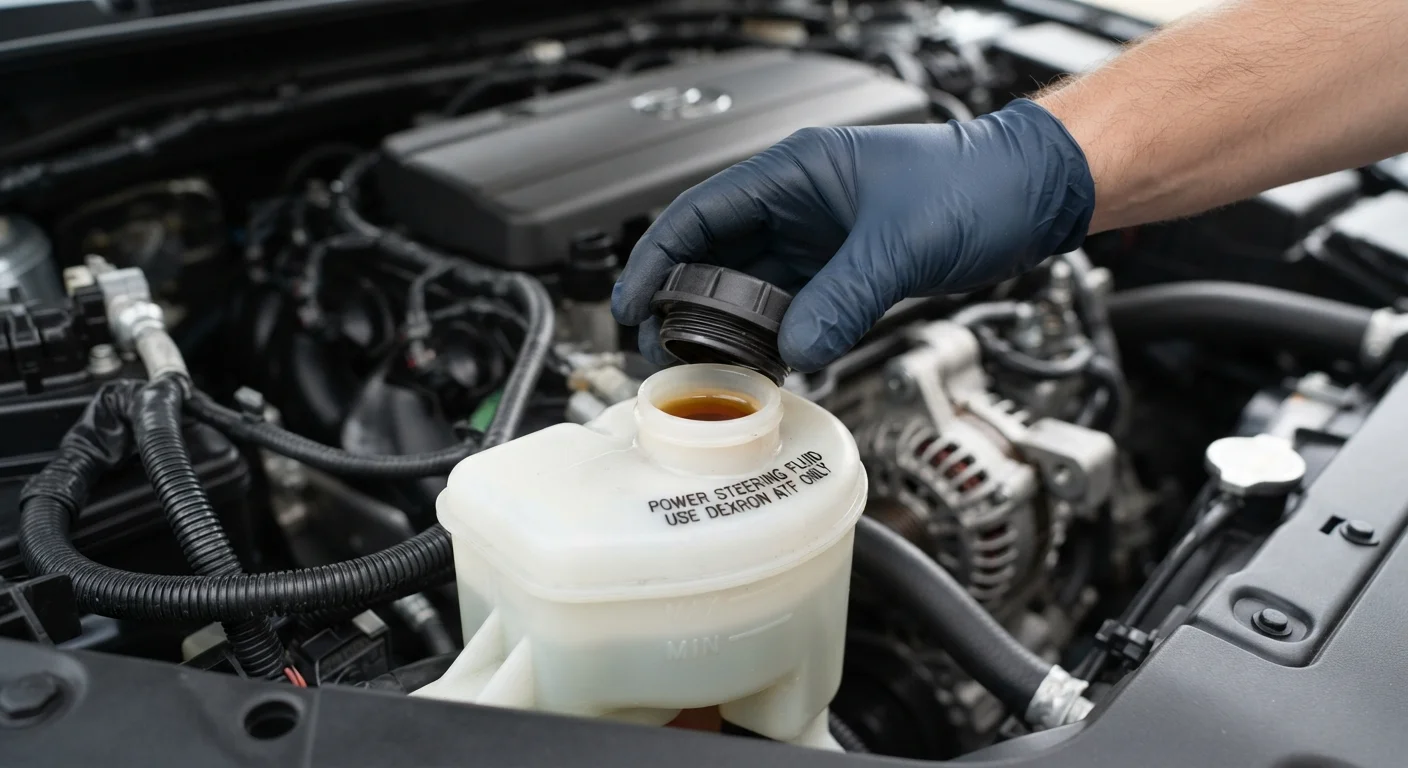
The power steering reservoir is typically a small, translucent plastic tank mounted near the front of the engine bay, often labeled with a steering wheel icon. Most reservoirs have MIN and MAX markings visible from the outside, so checking the level takes only a few seconds without opening the cap.
To assess fluid condition, wipe a small amount on a white cloth after removing the dipstick-style cap. Dark brown or black fluid with a burnt smell indicates it is time for a flush. Clean fluid should appear light and translucent. If the fluid looks foamy or has a milky tint, have the system inspected promptly.
A full system flush, where old fluid is evacuated and replaced with fresh fluid, is the correct approach when fluid is contaminated. Simply topping off with new fluid on top of degraded fluid does not restore the additive package. A qualified mechanic can perform a flush as part of routine maintenance.
Other cooling and fluid systems in your vehicle benefit from the same regular attention. The cooling system is another area where infrequent inspection leads to preventable failures.