

Key Takeaways
- Tread depth below 4/32 inch noticeably increases wet-road stopping distance.
- Under-inflated tyres generate excess heat, accelerating wear and blowout risk.
- Over-inflation reduces the tyre's contact patch, lowering grip during braking.
- A tyre pressure check takes under five minutes and should be done monthly.
- Neglected tyre maintenance costs more in premature replacements than routine care does.
Tyre maintenance and road safety
Tyre maintenance refers to the regular checks and adjustments that keep a vehicle's tyres in safe operating condition, including monitoring tread depth, maintaining correct air pressure, and inspecting for visible damage. When these tasks are skipped, tyres lose the grip and structural integrity they need to stop, steer, and handle emergency manoeuvres safely. The result is longer stopping distances, reduced wet-weather traction, and a higher chance of sudden tyre failure.
In the US, federal safety standards (FMVSS) set minimum tyre performance thresholds, but those minimums represent the floor, not the ideal. A tyre worn to the legal limit of 2/32 inch tread depth can stop significantly longer on wet pavement than a tyre with 4/32 inch or more.
What tread depth actually does
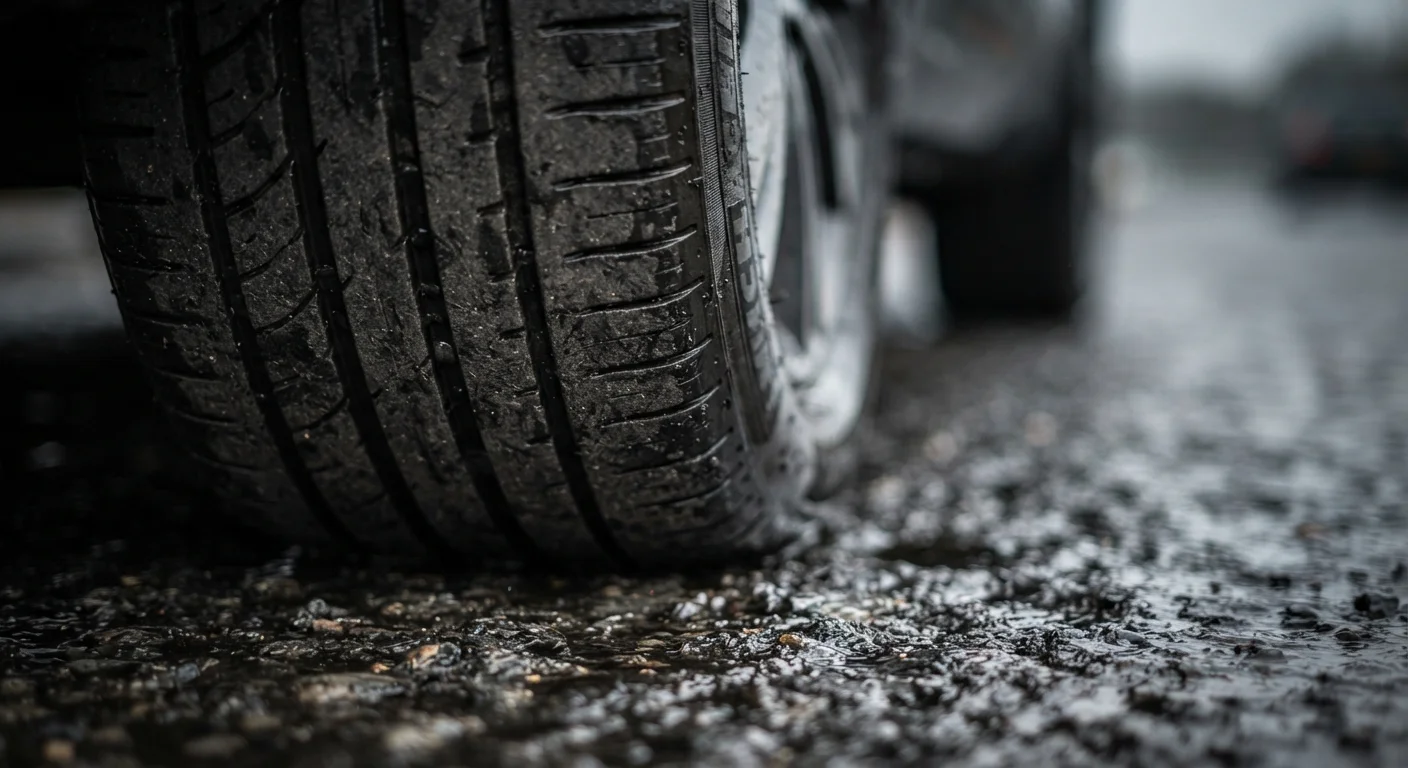
Every tyre has a pattern of grooves cut into its surface. Those grooves are not decorative; they channel water out from under the tyre so the rubber stays in contact with the road. On a wet surface, a tyre with adequate tread displaces several gallons of water per minute at highway speeds. When tread wears down, that capacity drops, and the tyre starts to ride on a thin film of water rather than the road itself. This condition, hydroplaning, can occur at speeds as low as 35 mph on standing water when tread is severely worn.
The commonly cited legal minimum of 2/32 inch gives drivers a false sense of safety. A tyre at that depth on wet pavement can take significantly more distance to stop than one with 4/32 inch remaining. That difference, sometimes 50 feet or more at highway speed, is the gap between stopping safely and a collision.
Tread wear is not always uniform. Improper wheel alignment causes one edge to wear faster. Under-inflation wears both outer edges while leaving the centre relatively intact. These uneven patterns mean a tyre can fail the 4/32 inch threshold on part of its width while appearing adequate elsewhere. A visual check from the front of the vehicle will not catch this; running your fingers across the full width of each tyre will.
Tyre pressure: the most overlooked variable
Air pressure is the foundation of tyre performance, and it changes constantly. Every month, a tyre loses roughly 1 to 2 PSI through normal permeation. Cold weather accelerates that drop. A tyre that was correctly inflated in summer may be 5 to 8 PSI low by January without a single slow leak involved.
Check pressure when tyres are cold
Always measure tyre pressure before driving, or at least three hours after the vehicle was last used. Driving heats the air inside the tyre and raises the reading by several PSI, which can mask an under-inflation problem. A cold reading against the door-jamb specification gives you an accurate baseline.
Under-inflation forces more of the tyre's sidewall to flex with every rotation. That flex generates heat, and heat is the primary cause of tyre blowouts. The National Highway Traffic Safety Administration (NHTSA) has noted that significantly under-inflated tyres are a factor in a substantial share of tyre-related crashes each year. Over-inflation carries different but equally real risks: a smaller contact patch, reduced ability to absorb road impacts, and faster centre-tread wear.
The correct pressure for a vehicle is printed on the door jamb sticker, not on the tyre sidewall. The sidewall number is the tyre's maximum rated pressure, not the operating target. Using that number instead of the manufacturer's specification can put tyres 10 or more PSI above the safe range.
For a broader look at how routine checks like this fit into overall vehicle upkeep, see car maintenance guidance on keeping vehicles safe between major services.
Blowouts and the conditions that cause them
A tyre blowout at highway speed is one of the more dangerous situations a driver can face. The sudden loss of pressure pulls the vehicle sharply toward the affected tyre, and drivers who overcorrect by steering hard or braking abruptly often lose control entirely. The correct response, maintaining steering input and gradually reducing speed, is counterintuitive under stress.
Most blowouts are not random events. Chronic under-inflation, driving on a tyre with a slow leak, ignoring visible sidewall bulges, and running tyres well past their age limit (generally six to ten years, regardless of appearance) are the conditions that make blowouts probable rather than possible. A sidewall bulge indicates the internal cord structure has already failed; that tyre can let go without warning.
Age matters even when tread looks fine. Rubber compounds degrade with time and UV exposure. A tyre manufactured more than six years ago, stored or driven, should be inspected by a qualified technician, and most manufacturers recommend replacement by ten years. The manufacture date is moulded into the sidewall as a four-digit DOT code: the first two digits are the week, the last two the year.
Brake fluid condition is another maintenance item that degrades silently over time, much like tyre age, and carries similar safety implications for stopping performance.
The financial cost of ignoring tyres
Tyre neglect adds cost in several ways that are easy to underestimate. A tyre running 20% under-inflated wears out measurably faster than one at correct pressure, because the extra sidewall flex accelerates heat-related compound breakdown. That can shorten tyre life by thousands of miles, turning a $150-per-tyre investment into a more frequent replacement cycle.
Misalignment, which is both a cause and a consequence of uneven tyre wear, adds repair cost on top of premature tyre replacement. If a tyre fails catastrophically on the highway, the vehicle may sustain body, rim, or suspension damage that dwarfs the cost of the tyre itself. Rental cars, towing, and any collision costs compound quickly.
There is also the insurance and liability dimension. Driving on tyres that a mechanic or inspector has flagged as unsafe can affect how a claim is handled after an at-fault accident. Documenting regular tyre maintenance is not a legal shield, but it reflects the standard of reasonable care that affects how such situations are assessed.
Managing car ownership costs over the long run starts with preventing the expenses that compound from deferred maintenance, and tyres are one of the clearest examples of that principle in practice.