

Key Takeaways
- Indoor cats generally live longer due to reduced exposure to injury, disease, and predators.
- Outdoor cats get more natural stimulation but face serious risks including traffic, parasites, and infectious disease.
- A cat's age and health status affect how each lifestyle serves their wellbeing at different life stages.
- Mental enrichment can substantially reduce the behavioural drawbacks of indoor living.
- Neither lifestyle is universally right; location, individual temperament, and owner resources all matter.
Lower risk of infectious disease transmission
Indoor cats avoid direct contact with stray and feral cats, substantially reducing exposure to FeLV, FIV, and upper respiratory viruses that spread through close contact or shared territory.
No exposure to traffic or acute outdoor hazards
Vehicle strikes are a leading cause of sudden death in outdoor cats; indoor cats are also protected from encounters with predators, toxic plants, and neighbourhood rodenticides.
Easier monitoring of health changes
Owners can observe appetite, litter box use, and mobility daily without interference from outdoor activity, making early identification of illness more likely.
Reduced parasite burden
Without soil, prey, or other animal contact, indoor cats carry significantly fewer fleas, ticks, and intestinal parasites, even when preventive treatment is applied inconsistently.
Higher risk of weight gain and related disease
Reduced movement combined with consistent food access makes obesity common in indoor cats, which links to diabetes, arthritis, and a shorter healthy lifespan despite greater safety.
Sensory under-stimulation without active enrichment
Indoor environments lack the automatic variety of the outdoors; without deliberate enrichment, cats may develop repetitive or stress-related behaviours including over-grooming and aggression.
Transition stress for previously outdoor cats
Cats with established outdoor habits, particularly adults, can find sudden indoor confinement stressful, and adjustment without gradual introduction may worsen behavioural problems.
Greater owner responsibility for stimulation
The burden of meeting all exploratory, predatory, and social needs falls entirely on the household, requiring consistent time and environmental investment that not all owners can sustain.
Our Verdict
Indoor living extends average lifespan and reduces acute health risks, but only when owners provide consistent mental and physical enrichment. Outdoor or supervised outdoor access suits confident, physically healthy cats in lower-traffic, lower-disease-risk environments. The most honest answer is that context shapes the right choice more than any single rule.
Owners willing to actively enrich their cat's environment who live near roads, in urban areas, or in regions with high disease or predator pressure will generally find the indoor lifestyle produces better long-term health outcomes.
How lifespan figures compare
Veterinary epidemiology data consistently shows indoor cats live longer on average than cats with regular outdoor access. Average indoor cat lifespan figures cited in feline medicine literature typically range from 12 to 18 years, while free-roaming outdoor cats average closer to 5 to 7 years, largely because outdoor environments carry a concentration of acute risks that compound over time.
Those numbers do not mean every indoor cat thrives or that every outdoor cat dies young. They reflect population-level patterns shaped by traffic, infectious disease, toxin exposure, and predation, all of which are far more frequent outdoors. An outdoor cat in a rural setting with low road traffic faces a different risk profile than one navigating a dense suburban neighbourhood.
For a fuller picture of how injury, disease exposure, and lifespan interact across both lifestyles, see our health trade-offs comparison.
12-18 yrs
Average indoor cat lifespan
Feline medicine literature commonly cites this range for cats kept exclusively indoors, compared with roughly 5-7 years for free-roaming outdoor cats.
~60%
US cats estimated to be overweight or obese
The Association for Pet Obesity Prevention has reported in its national surveys that a majority of domestic cats are above their ideal body condition score.
Advantages of keeping cats indoors
The case for indoor living is strongest on measurable health grounds. Cats kept exclusively indoors are not exposed to feline leukaemia virus (FeLV), feline immunodeficiency virus (FIV), or feline infectious peritonitis through contact with stray or feral cats. Parasite burdens from fleas, ticks, and intestinal worms are also substantially lower without preventive treatment being the only barrier.
Indoor cats are protected from vehicle strikes, which are among the most common causes of sudden death in outdoor cats. They are not exposed to rodenticides, antifreeze, or toxic garden plants that a roaming cat might encounter. Owners also have a clearer view of changes in eating, drinking, and toileting habits, making early detection of health changes easier.
Lower risk of infectious disease transmission
Indoor cats avoid direct contact with stray and feral cats, substantially reducing exposure to FeLV, FIV, and upper respiratory viruses that spread through close contact or shared territory.
No exposure to traffic or acute outdoor hazards
Vehicle strikes are a leading cause of sudden death in outdoor cats; indoor cats are also protected from encounters with predators, toxic plants, and neighbourhood rodenticides.
Easier monitoring of health changes
Owners can observe appetite, litter box use, and mobility daily without interference from outdoor activity, making early identification of illness more likely.
Reduced parasite burden
Without soil, prey, or other animal contact, indoor cats carry significantly fewer fleas, ticks, and intestinal parasites, even when preventive treatment is applied inconsistently.
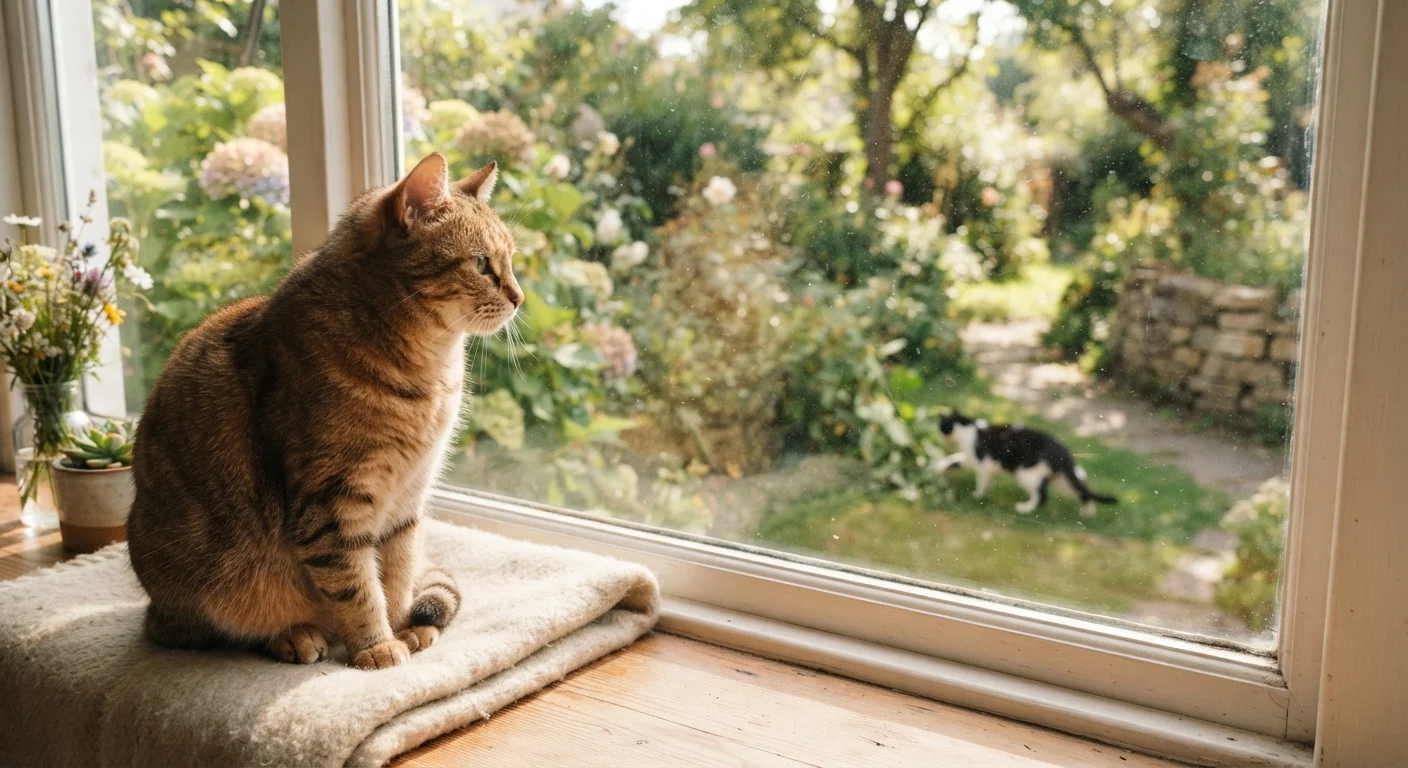
Behavioural needs are fully addressable indoors when owners invest in the right resources. Puzzle feeders, vertical climbing structures, window perches, and regular interactive play sessions meet core feline instincts. The evidence behind environmental enrichment for indoor cats shows that these interventions genuinely reduce stress and boredom-related behaviour problems.
Disadvantages of the indoor lifestyle
The main drawbacks of indoor living are behavioural and metabolic. Without access to the sensory variety that outdoor environments provide automatically, indoor cats can develop chronic under-stimulation. This appears as repetitive behaviours, excessive vocalization, over-grooming, or redirected aggression toward people or other pets in the household.
Weight gain is a real concern. Indoor cats typically move less than outdoor cats, and in multi-cat households or with ad-libitum feeding, caloric intake can drift well above daily requirements. Obesity then links to diabetes, joint disease, and shorter lifespan, which partially erodes the longevity advantage of indoor living. The health risks of excess weight in cats are worth understanding before assuming an indoor lifestyle alone keeps a cat healthy.
Higher risk of weight gain and related disease
Reduced movement combined with consistent food access makes obesity common in indoor cats, which links to diabetes, arthritis, and a shorter healthy lifespan despite greater safety.
Sensory under-stimulation without active enrichment
Indoor environments lack the automatic variety of the outdoors; without deliberate enrichment, cats may develop repetitive or stress-related behaviours including over-grooming and aggression.
Transition stress for previously outdoor cats
Cats with established outdoor habits, particularly adults, can find sudden indoor confinement stressful, and adjustment without gradual introduction may worsen behavioural problems.
Greater owner responsibility for stimulation
The burden of meeting all exploratory, predatory, and social needs falls entirely on the household, requiring consistent time and environmental investment that not all owners can sustain.
Cats that were raised outdoors or had extensive outdoor access as kittens may find permanent indoor confinement stressful, particularly if the transition happens later in life without a gradual adjustment period.
Life stage considerations
A cat's age shapes how each lifestyle serves them. Kittens have a critical socialisation window, and their early experiences, whether indoors with controlled exposure or outdoors with broader stimulation, influence their temperament across their whole life. Socialisation in the first weeks of life matters far more than the indoor-outdoor question at that stage.
Adult cats between roughly one and seven years have the physical resilience to tolerate outdoor risks better than seniors, but they are also at peak predatory drive and most likely to roam far from home, increasing exposure to traffic and territorial conflict with other cats.
Senior cats, generally those over ten years, benefit most from indoor predictability. Cognitive changes, sensory decline, and joint stiffness make outdoor navigation genuinely hazardous. For ageing cats specifically, nutrition and routine matter more than access to outdoor space, and reviewing an ageing cat's diet with a veterinarian is a practical first step once they pass ten years old.
Senior cats and outdoor safety
Cats over ten years old frequently experience reduced vision, hearing decline, and joint pain that make outdoor navigation more hazardous than it was in their younger years. Cognitive changes can also cause disorientation, increasing the risk of a senior cat becoming lost or injured. If an older cat has had outdoor access throughout their life, a gradual reduction combined with indoor enrichment adjustments is generally less stressful than an abrupt change. A veterinarian familiar with your cat's history is best placed to advise on timing and approach.
Play also shifts with age. What satisfies a two-year-old cat differs significantly from what a twelve-year-old needs. The role of play across a cat's life stages covers how to adapt interactive sessions as cats age, which is particularly useful for indoor owners trying to keep older cats engaged without overexerting them.
Finding the right approach for your cat
Many owners settle on a middle path: indoor living with supervised outdoor access through a secured garden, a cat enclosure (sometimes called a catio), or leash walks for cats trained to harness. These arrangements let cats experience natural light, grass, and outdoor scent stimulation while significantly reducing the most serious outdoor risks.
Temperament matters considerably. Some cats show chronic restlessness and frustration when denied outdoor access; others appear entirely content on a windowsill. Watching for stress signals, changes in appetite, over-grooming, or altered sleep patterns gives owners practical information about whether their current arrangement is working.
Whichever lifestyle a cat has, the basics remain constant: regular veterinary check-ups, appropriate parasite prevention, a diet matched to their age and activity level, and daily interaction that meets their social and cognitive needs. Keeping up with preventive care does more to extend healthy years than the indoor-outdoor question alone.
This article is for general informational purposes only and is not a substitute for professional veterinary advice. Consult a licensed veterinarian about decisions specific to your cat's health, history, and circumstances.