
Environmental Enrichment for Indoor Cats: Keeping a Confined Cat Mentally Active

Key Takeaways
- Indoor cats need active mental stimulation daily, not just physical space to exist in.
- Puzzle feeders engage a cat's hunting instinct and slow down eating, reducing frustration.
- Vertical space and scent variety address distinct behavioural needs that floor-level environments ignore.
- Rotating toys and changing the layout periodically prevents habituation and restores novelty.
- Recognising boredom early prevents stress-related health and behaviour problems from developing.
Why confinement alone is not enough
An indoor cat is safer from cars, predators, and infectious disease than a cat that roams freely. But safety from physical harm does not automatically produce a cat that is mentally well. Cats have a predatory behavioural sequence built in at a neurological level: locate, stalk, chase, pounce, catch, bite, and consume. Indoor life interrupts most of that sequence most of the time.
When that sequence has nowhere to go, cats may redirect it toward furniture, other pets, or their owners. Alternatively, they may simply stop initiating behaviour altogether, sleeping far more than is healthy and becoming increasingly reactive to minor disturbances. Repetitive or destructive behaviour is often the first visible signal that a cat's environment is not meeting its cognitive needs.
Environmental enrichment is the practical answer: deliberately structuring a living space to give a cat more of what its nervous system expects. The goal is not to turn an apartment into a jungle. It is to provide enough variety, complexity, and opportunity for agency that the cat's behavioural needs are addressed each day.
Enrichment practices that have behavioural support
The following practices draw on what feline behaviour research and veterinary behaviourists describe as consistently effective. No single item works for every cat, and individual responses vary considerably depending on age, health, and personality. How a cat engages with enrichment also changes across life stages, so adjustments over time are normal.
Introduce puzzle feeders for at least one meal per day.
Cats are hardwired to work for food through stalking and problem-solving. Presenting meals in a bowl removes that entire behavioural sequence, which can lead to restlessness and overeating. Puzzle feeders restore a small but meaningful version of that hunt.
Add vertical space at multiple heights throughout the home.
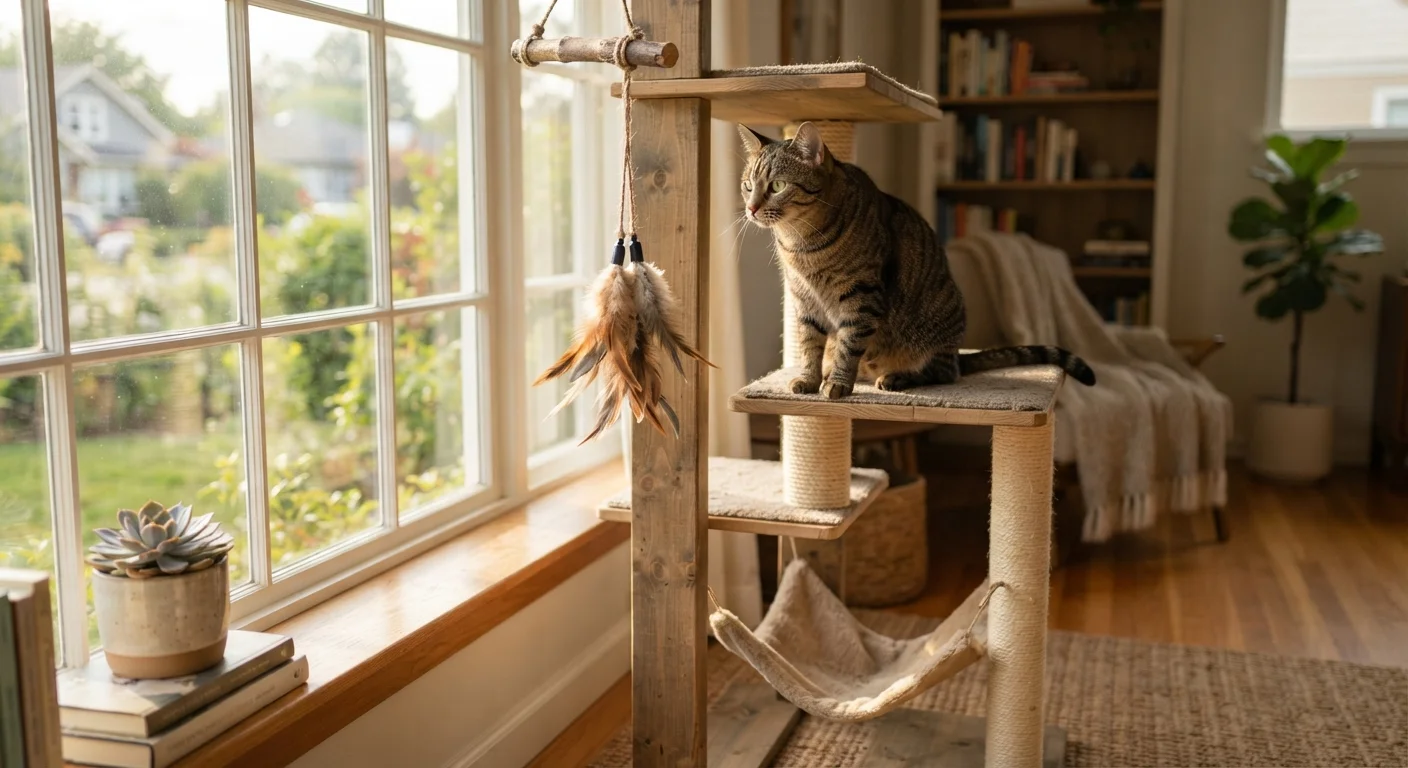
In a natural setting, cats use height to survey territory, feel safe, and avoid conflict with other animals or people. A flat floor plan denies this. Tall cat trees, wall-mounted shelves, and cleared window ledges expand the cat's perceived territory without adding floor space.
Rotate toys on a weekly schedule rather than leaving all of them out.
Cats habituate quickly to familiar objects. A toy that was exciting on Monday becomes invisible by Friday if it stays in the same spot. Rotating toys on a structured schedule reintroduces novelty without buying anything new.
Use scent enrichment deliberately, not just as a fragrance.
Cats process their environment through smell far more than humans do. Introducing novel, safe scents activates investigative behaviour and occupies a cat for longer than most physical toys alone. Catnip is the well-known option, but silver vine, valerian root, and dried herbs such as rosemary can also provoke interest in cats that do not respond to catnip.
Schedule two short interactive play sessions each day using wand or lure toys.
Passive enrichment (puzzle feeders, perches, scent items) cannot fully replace the arousal pattern of an active hunt with a moving target. Wand toys allow the owner to replicate prey movement, which engages a cat's full predatory sequence: stalk, pounce, catch, and carry.
Owners of kittens or young cats may notice that enrichment needs are especially high during the first two years. Understanding what a kitten's behaviour is communicating can help owners calibrate the right level of stimulation rather than guessing.
Making changes that stick
The common mistake with enrichment is introducing several new elements at once and then abandoning the effort when the cat seems indifferent after a day or two. Cats take time to investigate unfamiliar objects and may ignore something completely on first encounter before engaging with it on the third or fourth day.
Consistency matters more than variety for its own sake. A cat that has reliable access to two or three well-chosen resources (a sunny perch, a daily puzzle feeder, and one interactive session) will generally show fewer stress behaviours than a cat surrounded by items that nobody maintains or rotates.
The health trade-offs between indoor and outdoor life are worth understanding fully, but enrichment done consistently closes much of the behavioural gap that indoor confinement creates.
Enrichment is not a substitute for veterinary care
Behavioural changes such as overgrooming, persistent hiding, or sudden aggression can reflect medical conditions rather than boredom. If enrichment efforts do not improve your cat's behaviour within a few weeks, a veterinarian or certified feline behaviourist is the appropriate next step. This article provides general educational information, not personalised veterinary advice.