

Key Takeaways
- Transmission fluid lubricates, cools, and in automatics, acts as hydraulic fluid for gear changes.
- Dark color, a burnt smell, or visible particles are clear signs the fluid has degraded.
- Slipping gears, rough shifts, or delayed engagement are symptoms that warrant immediate inspection.
- Most manufacturers recommend a fluid check or change every 30,000 to 60,000 miles, though this varies widely.
- Using the wrong fluid type can cause transmission damage; always match the specification in your owner's manual.
Transmission fluid
Transmission fluid is a specialized lubricant that circulates through your vehicle's transmission system. It reduces friction between moving gears and components, carries heat away from the transmission, and helps maintain smooth gear shifts. In automatic transmissions, it also acts as a hydraulic fluid that powers the gear-change mechanism.
Automatic transmission fluid (ATF) and manual transmission fluid are different products with distinct viscosity and additive profiles; using the wrong type can damage the system.
What transmission fluid actually does
The transmission is one of the most mechanically complex systems in a vehicle, containing dozens of precision-machined parts spinning and meshing under load. Transmission fluid does several things at once to keep that system functional.
Its primary job is lubrication. Metal components inside the transmission move against each other constantly, and without a fluid film between them, friction would generate heat fast enough to cause seizure within minutes. The fluid coats those surfaces and prevents direct metal-to-metal contact.
Cooling is the second function. The transmission generates substantial heat, particularly during towing, stop-and-go driving, or aggressive acceleration. Transmission fluid absorbs that heat and, in most vehicles, routes it through a cooler (often built into the radiator or a standalone external cooler) before recirculating. For more on how your vehicle manages heat across multiple systems, see the cooling system guide.
In automatic transmissions, the fluid has a third role: it is the hydraulic medium that physically moves the components responsible for gear selection. Pressure changes in the fluid, directed by solenoids and the valve body, trigger each gear shift. Without adequate fluid pressure, the transmission cannot complete those shifts reliably.
The fluid also contains detergent additives that suspend wear particles and contaminants, keeping them from settling on valve passages or clutch surfaces.
Signs that transmission fluid needs attention
Transmission problems rarely appear without warning. The fluid itself, and the way the transmission behaves, both give advance notice.
Color and smell
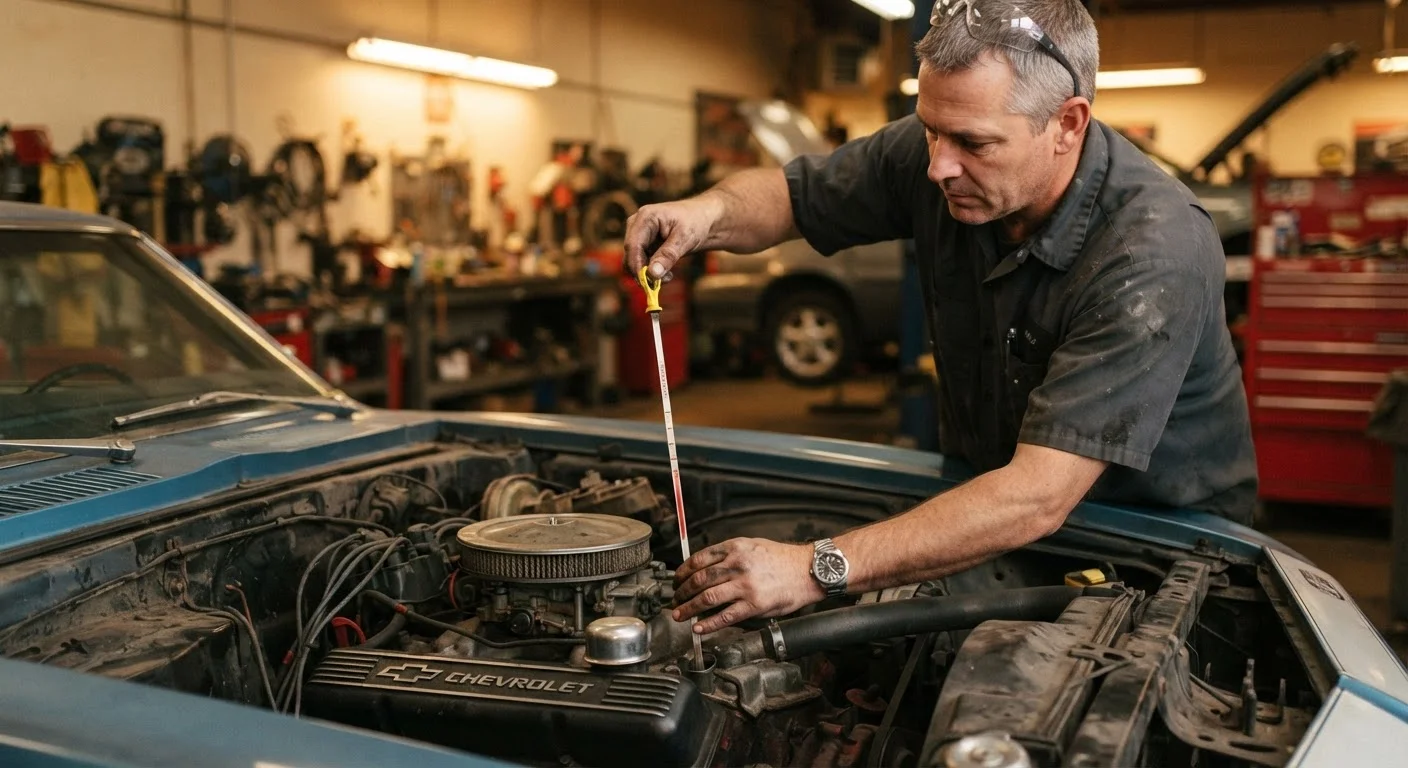
Pull the dipstick if your vehicle has one and wipe it on a white cloth or paper towel. Healthy fluid is bright red or light pink and has a slightly sweet or neutral odor. Fluid that is dark brown or black, or that smells burnt, has broken down and should be evaluated by a mechanic. Fluid with a milky or foamy appearance can indicate coolant contamination, which is a serious condition requiring immediate professional diagnosis.
Shifting behavior
Any noticeable change in how your transmission shifts is worth taking seriously. Gear slipping (the engine revs rise without a corresponding increase in speed), delayed engagement when moving from park to drive, rough or jerky shifts, and hesitation between gears are all symptoms tied to fluid condition or level. These symptoms can also point to other transmission faults, so professional diagnosis matters.
Leaks
Transmission fluid leaks leave a reddish stain on pavement, typically toward the middle of the vehicle. A slow leak can go unnoticed until the level drops enough to affect performance. If you spot a stain on your driveway, check the fluid level and have the source of the leak located and repaired.
Check your owner's manual first
Transmission fluid specifications and service intervals differ significantly between makes and models. Your owner's manual lists the exact fluid type required and the manufacturer's recommended service schedule. Following those specifications is the most reliable way to maintain the transmission correctly.
For a broader picture of which fluids and components need routine attention, the routine maintenance guide covers the full range of scheduled services.
Fluid types and change intervals
Not all transmission fluids are interchangeable. Automatic transmission fluid (ATF) comes in several specifications, and manufacturers often designate a particular type for their transmissions. Manual transmissions may call for a different gear oil entirely. Using a fluid that does not match your transmission's specification can void warranties and cause mechanical damage. The correct fluid type is listed in your owner's manual and sometimes on the dipstick cap itself.
Change intervals vary considerably. Many automatic transmissions are serviced between 30,000 and 60,000 miles under normal driving conditions, though some manufacturers publish longer intervals for vehicles they describe as having lifetime fill. Independent mechanics and transmission specialists generally treat those lifetime claims with skepticism, particularly for vehicles that see frequent towing, trailer use, or stop-and-go commuting, all of which put more thermal load on the fluid.
Manual transmissions tend to have longer service lives for their fluid, but the same principle applies: heat and load history matter more than mileage alone.
A full transmission service typically includes draining the old fluid, replacing the filter (where accessible), and refilling to the correct level. Some shops also perform a flush, which circulates new fluid through the entire system. Whether a flush is appropriate depends on the transmission's condition and your mechanic's recommendation.
Transmission fluid maintenance sits alongside other often-overlooked hydraulic systems. The power steering fluid guide and the brake fluid overview cover two other fluids that follow a similar pattern of gradual degradation.