

Key Takeaways
- Radiator fins and coolant passages degrade silently over years, often without obvious symptoms until damage is serious.
- Coolant chemistry breaks down over time and becomes acidic, corroding radiator metal and plastic tanks from the inside.
- External debris blockage reduces airflow and heat transfer, and it can be cleared without special tools.
- A basic visual inspection every oil change cycle catches most radiator problems before they escalate.
- A qualified mechanic should perform a pressure test and internal flush when coolant is due for replacement.
How the radiator actually works
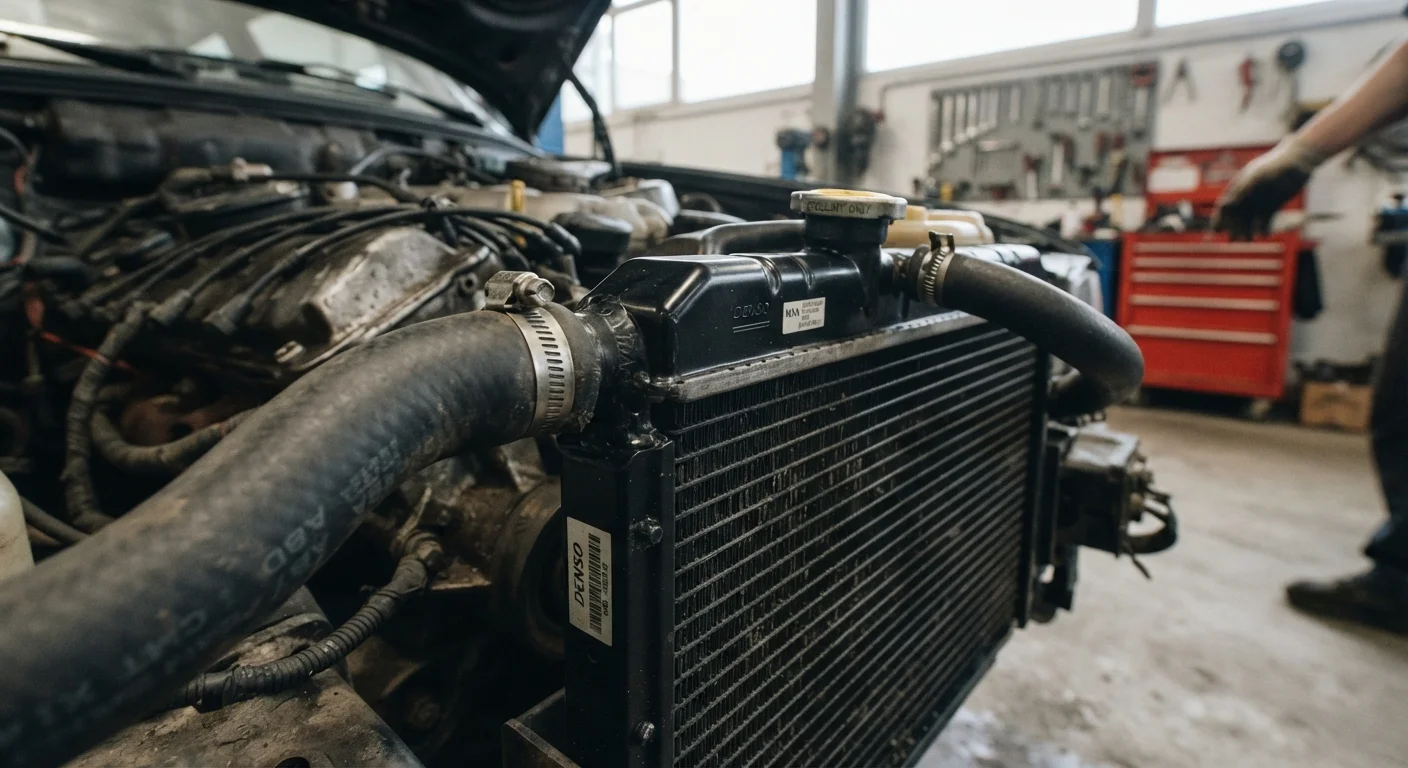
The radiator is a heat exchanger. Coolant absorbs heat from the engine block and cylinder head, then travels to the radiator, where that heat transfers into the surrounding air. Thin aluminum fins bonded to narrow tubes give the radiator a large surface area in a compact space. A fan draws air through when the vehicle is stationary; forward motion does the same job at speed.
This cycle repeats continuously while the engine runs. The thermostat regulates coolant flow to keep the engine in its optimal temperature range, typically between 195 and 220 degrees Fahrenheit for most gasoline engines. When any part of this loop fails, heat accumulates faster than the system can shed it, and engine damage follows quickly.
For a broader picture of what the cooling system fits into among your vehicle's maintenance needs, see routine car maintenance every owner should understand.
What degrades a radiator over time
Two processes erode radiator performance: external blockage and internal corrosion.
On the outside, road debris, insects, and compacted dirt reduce airflow through the fins. This is most common in vehicles driven frequently on rural roads or in areas with heavy insect activity. The degradation is gradual, so fuel economy and temperature gauge behavior change slowly enough that drivers rarely notice.
Inside the radiator, the real threat is coolant chemistry. Fresh coolant contains corrosion inhibitors that protect aluminum, steel, and the plastic end tanks many modern radiators use. Those inhibitors deplete with heat cycling. When they are gone, the coolant becomes slightly acidic and begins attacking metal surfaces and gaskets. Electrolytic corrosion can also occur when dissimilar metals in the system create a weak electrical current through the coolant. The result is pitting inside the tubes, which restricts flow and eventually causes pinhole leaks.
Misconceptions about coolant longevity contribute to many preventable failures. Coolant myths that could leave your engine overheating covers the most common ones in detail.
Inspection habits that protect your radiator
A systematic approach to inspection costs almost no time and requires no specialized equipment for the visual portion.
Check the coolant level in the translucent overflow reservoir every time you check your oil. The reservoir has minimum and maximum marks; low level between changes suggests a slow leak somewhere in the system. Never open the radiator cap on a warm engine: pressurized hot coolant can cause serious burns.
Look at the coolant color and clarity. Fresh coolant is typically green, orange, or pink depending on type, and it is translucent. Brown or oily coolant, or coolant with visible particles, indicates contamination or internal corrosion. A milky appearance can mean engine oil is mixing with the coolant, which warrants immediate professional attention.
Inspect the radiator fins from the front of the vehicle. A flashlight helps. Fins that are bent flat or packed with debris need cleaning; a soft brush or low-pressure water can clear most surface blockage. Avoid high-pressure washing directly on fins, as this bends the thin aluminum.
For anything beyond visual inspection, including a pressure test of the system or a chemical flush, a qualified mechanic has the tools to do this safely and correctly. Power steering fluid: the overlooked hydraulic system in most cars illustrates how a similar pattern of neglect affects another fluid-dependent system.
Warning signs drivers often miss
The temperature gauge is the most direct signal. If it reads higher than your normal baseline, even if it has not reached the red zone, that shift is worth investigating. Some vehicles display an engine temperature warning light instead of a graduated gauge, which gives less granular information.
A sweet smell inside or outside the vehicle after driving often means coolant is burning off somewhere on a hot surface, pointing to a small leak. Coolant has a distinctive sweet odor that is unlike oil or exhaust.
Visible puddles under the front of the vehicle, particularly after the car has sat overnight, can be coolant. Coolant is typically bright in color and slightly slippery. Water condensation from the air conditioning drain is normal and odorless; coolant is not.
Heater output that is noticeably weaker than usual can mean the heater core, which runs on the same coolant loop, is not receiving adequate flow. This symptom sometimes precedes a more obvious overheating event.
Transmission fluid: what it does and the signs it needs attention describes a parallel situation where gradual fluid degradation produces early warning signs that are easy to overlook.