

Key Takeaways
- Minimalism in home organization means keeping what serves you, not owning as little as possible.
- Decluttering is a tool within minimalism, not the definition of it.
- Functional systems matter more than visual emptiness when organizing any living space.
- Minimalist organizing works in shared homes, small rooms, and spaces with children or pets.
- The goal is reducing friction in daily life, not achieving a showroom aesthetic.
Where the confusion starts
Minimalism has a perception problem. In home design media, it often shows up as white rooms with three objects in them, or countertops so bare they look uninhabited. That visual shorthand has led many people to dismiss minimalism as impractical, cold, or only for people without children, hobbies, or real lives.
The actual organizing principle is less dramatic. Minimalism, applied to a home, means that everything present has a reason to be there. It is a filter for decision-making, not an aesthetic mandate. That distinction matters a great deal when you are trying to build systems that hold up over time.
The myths below come up repeatedly when people consider whether minimalist organizing habits would work in their homes. Most of them collapse quickly under scrutiny.
Myth
Minimalism means owning as few possessions as possible.
Fact
Minimalism means owning only what you actually use and value. The number varies by person and household.
There is no target number of objects that makes a home minimalist. A household with children, hobbies, or specific professional tools will own more than a single person in a studio apartment, and that is completely consistent with minimalist organizing. The question is not quantity but whether each item earns its space. Things that are used regularly, that hold genuine meaning, or that serve a clear function belong. Things that stay only out of guilt, inertia, or vague future plans are where the problem lives.
Myth
You have to declutter aggressively before minimalism can work.
Fact
Decluttering helps, but the habit of intentional decision-making comes first and sustains the result.
A single intensive purge without a change in decision-making habits tends to reverse within months. Items accumulate again because the underlying pattern, accepting things without evaluating whether they fit the space or the life, has not changed. Minimalist organizing works best when it starts as a filter at the point of entry: before something comes into the home, not just when things have piled up. Decluttering is still useful periodically, but it is maintenance, not the foundation.
Myth
Minimalist homes look cold and impersonal.
Fact
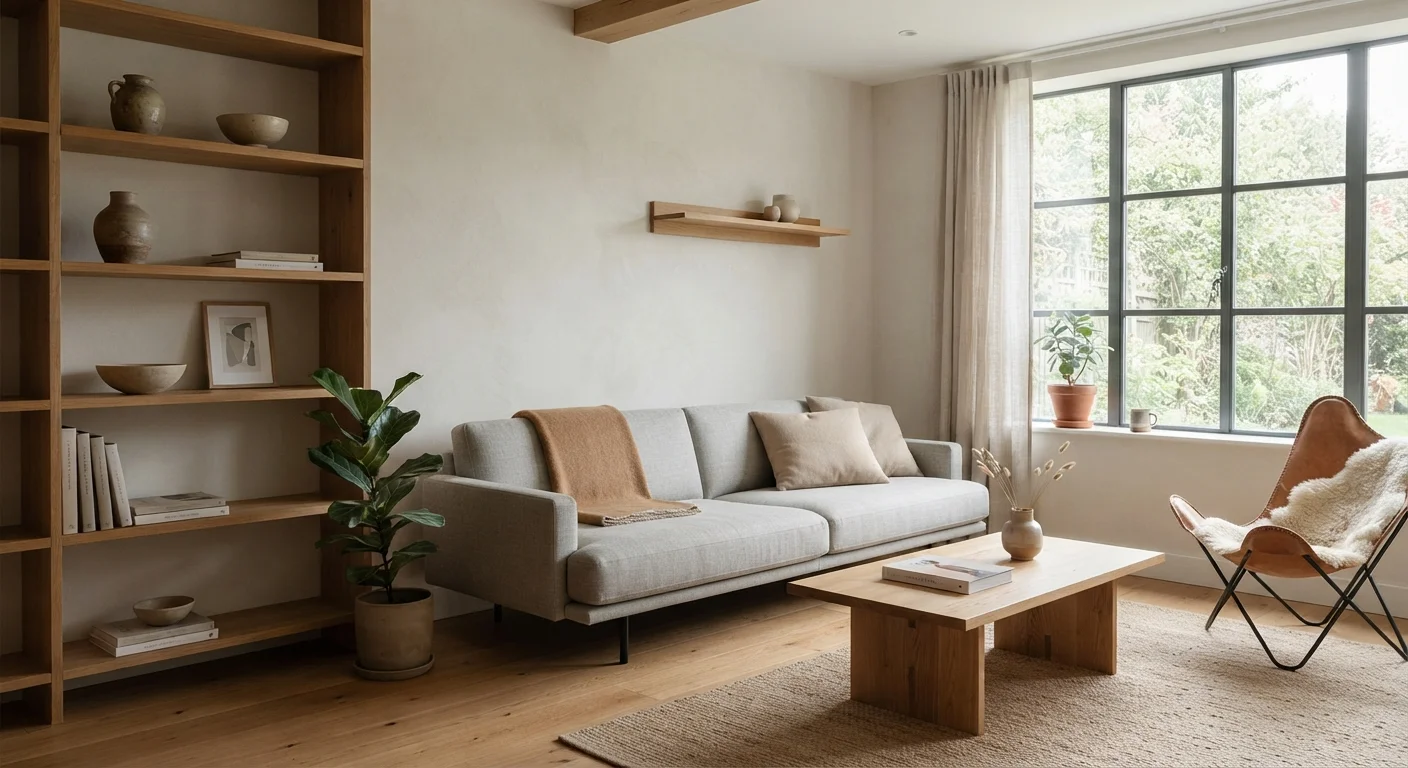
Visual warmth comes from texture, light, and meaningful objects. Minimalism does not require removing those.
The spare, monochromatic rooms that appear in design photography are styled for a camera, not lived in daily. A home can have warm wood surfaces, plants, art, family photographs, and collections of things that matter to the people who live there, and still operate on minimalist organizing principles. What changes is that decorative and personal items are chosen deliberately rather than accumulated by default. A shelf with ten objects you love reads differently than a shelf with forty objects you have stopped noticing.
Myth
Minimalism does not work in homes with children or pets.
Fact
Minimalist systems work well in family homes when they are designed for the actual people and animals who live there.
Children need toys, art supplies, books, and gear. Pets need food, bedding, and equipment. None of that conflicts with minimalist organizing as long as the systems are realistic. This means storage that children can actually use independently, rotating toys rather than displaying everything at once, and designating specific areas for pet supplies rather than letting them spread across the home. The principle is the same: a place for everything that belongs, and a honest assessment of what does not need to be there at all.
Myth
Minimalism is a one-time project.
Fact
Minimalist organizing is an ongoing habit, not a state you reach and maintain without effort.
Homes change. Households grow, shrink, shift. Work changes, hobbies change, kids age out of things and into others. A minimalist approach to organization acknowledges that the fit between what you own and how you live has to be reassessed periodically. Seasonal reviews, an honest look at what is actually being used, and a consistent habit of not letting things accumulate unchecked are what keep the system working. Treating it as a finished project is what leads to the clutter returning.
What minimalism actually does for a home
When the myths are cleared away, what remains is a straightforward organizing framework: reduce what you own to what you use and value, then create consistent homes for those things. That is it. The result is usually a space that is easier to clean, easier to navigate, and easier to maintain across seasons and life changes.
This works in small bedrooms just as well as large ones. Storage and layout habits for small bedrooms often rely on the same minimalist logic: fewer items means each one can be stored accessibly rather than buried. Vertical space becomes more useful too, since walls and doors can hold what is genuinely needed without becoming visual noise. See how vertical space can work harder in every room when you are not trying to accommodate everything at once.
Shared households benefit from the same thinking. When there are fewer objects in common areas and clearer rules about where things live, conflict over tidiness drops. Organizing shared living spaces becomes more tractable when minimalism sets a baseline everyone can agree on, even if individual standards differ.
For anyone building organization habits across their whole home, minimalism is a thread running through every room. The complete guide to home organization from scratch covers how this principle scales from a single drawer to an entire house. And if you find physical clutter manageable but digital disorder persistent, the same minimalist logic applies to files and devices. Digital clutter at home is worth addressing with the same intentionality you would bring to a cluttered closet.