

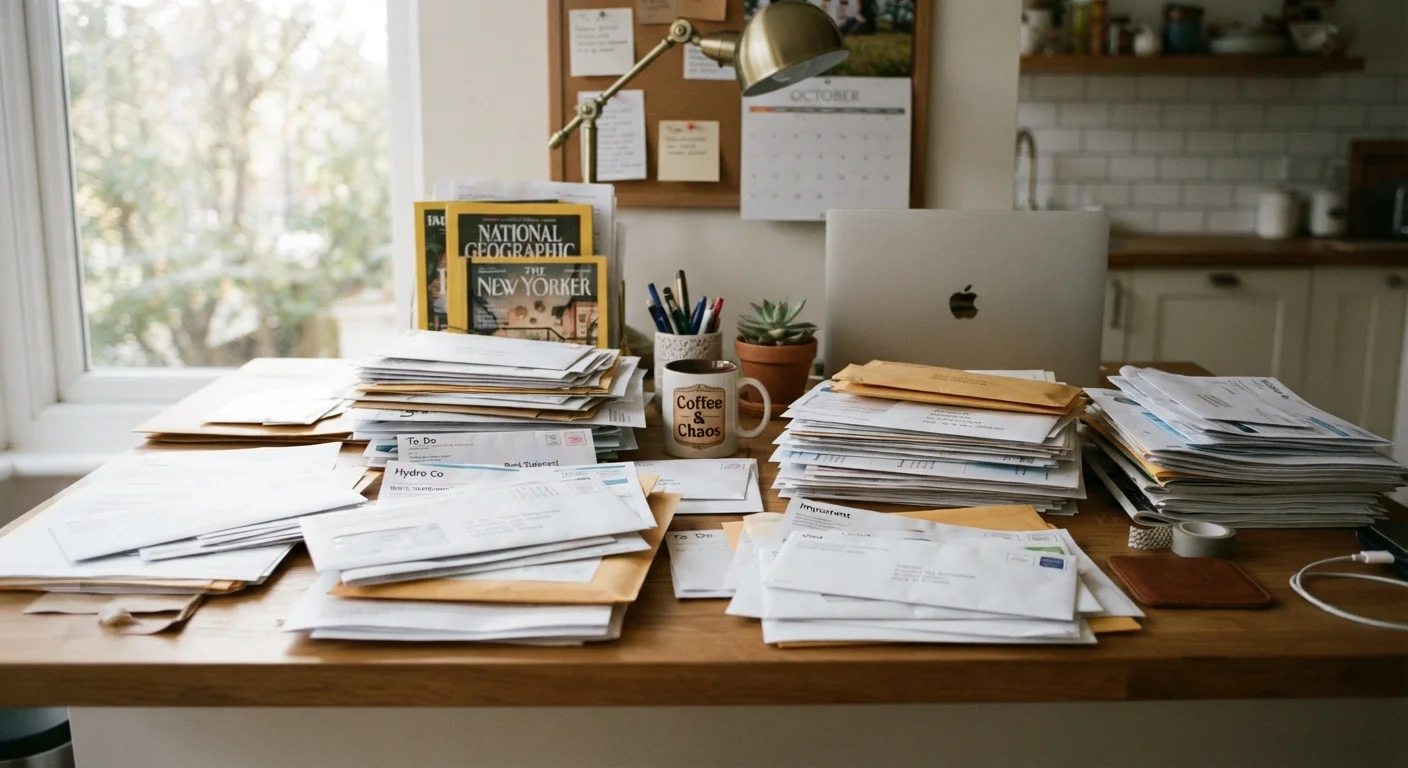
Key Takeaways
- Paper clutter grows from habits and systems, not just volume of incoming mail.
- Most households lack a designated landing spot for new paper, which is where piles start.
- Holding onto documents you no longer need is one of the most common and fixable causes.
- A simple processing routine done consistently prevents buildup more reliably than periodic purges.
- Digital alternatives can reduce physical paper load without requiring a full system overhaul.
Why paper clutter is different from other clutter
Paper does not arrive in one obvious category. In a single day, a household can receive a utility bill, a school permission slip, a takeout menu, a warranty card, and three pieces of junk mail. Each item looks different, demands a different response, and has a different shelf life. That variety is exactly what makes paper so hard to manage consistently.
Unlike old clothes or unused gadgets, paper carries an implicit urgency. Throwing away an appliance manual feels risky. Ignoring a bill feels irresponsible. So paper earns a temporary pass to sit on the counter, and temporary becomes permanent.
The good news: paper clutter is almost entirely a systems problem. Fix the system and the piles stop forming. This is also why decluttering before you organize matters so much; organizing a broken paper system just moves the problem around.
Having no single landing spot for incoming paper.
Why it happens: Most households assume paper will be sorted immediately, so no permanent spot is ever designated. In practice, paper lands wherever there is surface space.
Keeping documents long past the point they are useful.
Why it happens: The risk of discarding something important feels greater than the cost of keeping everything, so nothing leaves. This logic applied repeatedly fills drawers and boxes with irrelevant paper.
Treating the mail sort as an optional task.
Why it happens: Mail arrives daily but rarely feels urgent as a whole. Individual pieces get glanced at and set down, and the pile grows before anyone notices.
Storing paper in ways that make retrieval impossible.
Why it happens: Stacking paper in piles feels faster than filing it, and filing gets deferred until the pile is unmanageable. At that point, the task feels too large to start.
Printing or accepting physical paper when a digital version is sufficient.
Why it happens: Physical paper feels more reliable or official to many people. Opting into paperless billing or digital manuals requires a small upfront step that most people skip.
Doing a big paper purge without changing the habits that caused the buildup.
Why it happens: A visible pile creates a visible problem, so people tackle it once and consider the issue resolved. Without a daily or weekly routine, the cycle restarts within weeks.
Building habits that actually stop the cycle
The households that manage paper well share one trait: they process paper the moment it enters the home rather than letting it land and wait. This does not require a filing cabinet or a label maker. It requires a clear answer to two questions for every new piece of paper: does this need action, and does this need to be kept?
A simple three-slot system works for most households. One slot for papers requiring action this week (bills to pay, forms to sign). One slot for short-term reference (invitations, appointment reminders). One slot for items to file or shred. When each slot is checked on a set day, nothing sits long enough to form a pile.
80%
Of filed papers never retrieved again
Professional organizers commonly cite that roughly 80 percent of papers people file are never looked at again, which supports stricter upfront decisions about what to keep.
1-2 min
Time to sort daily mail at entry
Sorting mail directly at the entry point, over a recycling bin, typically takes less than two minutes per day and prevents the most common source of paper accumulation.
Paper that overlaps with financial records deserves a specific note. The everyday money habits that reduce financial stress tend to include keeping a clear, short-term record of incoming bills and statements, even if most of that tracking happens digitally. Having one known location for those documents reduces the anxiety that paper clutter often creates.
For households where different people handle different papers, the system only works if everyone agrees on where things land. The same tensions that affect shared living spaces show up in paper management. If one person sorts and another drops, piles return.
Paper clutter rarely exists alone. If counters and drawers are already strained, a room-by-room decluttering pass often reveals how paper has migrated to surfaces it was never meant to occupy. Addressing the broader space makes any paper system easier to maintain.