

| Clean title | No total-loss history, no open lien |
| Salvage title | Vehicle declared total loss by insurer |
| Rebuilt/reconstructed title | Salvage vehicle repaired and passed state inspection |
| Lien title | Active financing recorded on the title |
| Flood title | Water damage disclosed on title (varies by state) |
| Junk/dismantled title | Designated for parts or scrap only; not road-legal |
| Typical salvage threshold | 75 to 80% of market value (varies by state) |
| Value impact of rebuilt title | Commonly 20 to 40% below clean-title equivalent (Insurance and appraisal industry estimates) |
What a car title is and why it matters
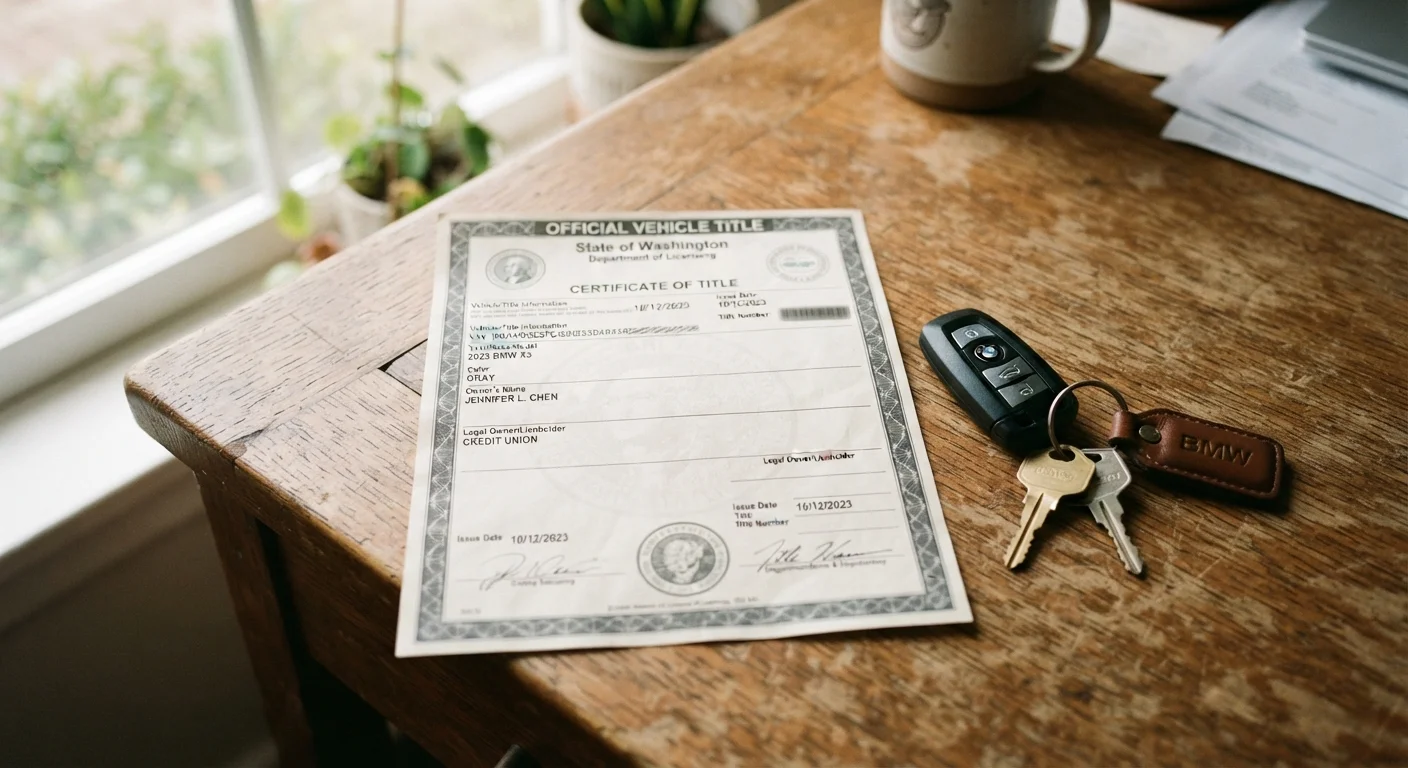
A car title is a legal document issued by a state agency, typically the Department of Motor Vehicles, that establishes who owns a vehicle. It records the vehicle identification number (VIN), make, model, year, and the name of the legal owner or lienholder. Without a clear title, you cannot register a vehicle, sell it legally, or in most cases insure it fully.
Title status directly affects a vehicle's market value, its insurability, and your ability to get financing. A lender considering an auto loan will check title status before approving funds. An insurer may decline certain coverages based on how the title is branded. Before you hand over money for any used vehicle, reading its title correctly is one of the most practical steps you can take. The vehicle history report will usually surface title issues, but you should know what each designation means before interpreting that report.
VIN
Vehicle Identification Number. A 17-character code unique to each vehicle, used to track ownership history, recalls, and title status across state systems.
Lienholder
A lender or creditor with a legal claim recorded on the vehicle title, typically because they financed the purchase. The lien must be released before the title can transfer cleanly.
Total loss
An insurance determination that a vehicle's repair cost exceeds a defined percentage of its market value, triggering a salvage designation on the title.
Title brand
A permanent notation added to a vehicle title to disclose a significant event such as salvage, flood damage, or junk status. Brands follow the vehicle across state lines.
ELT (Electronic lien and title)
A system used by some states where lien and title records are managed digitally rather than on paper, speeding up lender processing but sometimes delaying paper title issuance.
The main title types and what each one means
| Clean title | No total-loss history, no open lien |
| Salvage title | Vehicle declared total loss by insurer |
| Rebuilt/reconstructed title | Salvage vehicle repaired and passed state inspection |
| Lien title | Active financing recorded on the title |
| Flood title | Water damage disclosed on title (varies by state) |
| Junk/dismantled title | Designated for parts or scrap only; not road-legal |
| Typical salvage threshold | 75 to 80% of market value (varies by state) |
| Value impact of rebuilt title | Commonly 20 to 40% below clean-title equivalent (Insurance and appraisal industry estimates) |
Clean title
A clean title means the vehicle has not been declared a total loss, has no outstanding liens, and has no major recorded damage. It is the standard status for most privately owned vehicles. A clean title does not guarantee the car has never been in an accident; it simply means no insurer has written it off as a total loss.
Lien title
When a vehicle is purchased with financing, the lender holds a security interest recorded on the title. This is sometimes called a lien title or a title showing an open lien. The registered owner drives the car, but the lender is listed as a lienholder. Once the loan is paid in full, the lender releases the lien and the title transfers cleanly to the owner. If you are buying a used vehicle that still has an outstanding loan, the seller must satisfy that lien before or at the time of sale. For a broader look at how auto financing works, see how loans, terms, and APR affect what you pay.
Salvage title
A state brands a title as salvage when an insurance company declares the vehicle a total loss, typically because repair costs exceed a set percentage of the car's value (thresholds vary by state, commonly 75 to 80 percent). A salvage-branded vehicle cannot legally be driven on public roads until it passes a state inspection and is retitled as rebuilt or reconstructed.
Rebuilt or reconstructed title
After a salvage vehicle is repaired and passes a state inspection, it receives a rebuilt or reconstructed title. The car is road-legal again, but the rebuilt designation stays on the title permanently. Many insurers will write liability coverage on a rebuilt-title vehicle but decline comprehensive and collision coverage, which limits your protection. See what each coverage type actually protects for context on why that gap matters.
Junk or dismantled title
A junk title means the vehicle has been designated for parts or scrap only. It cannot be retitled for road use in most states. If you encounter a vehicle advertised with a junk title, it is not a candidate for regular ownership or daily driving.
Flood or water-damage title
Some states brand titles specifically for flood-damaged vehicles. Water damage can corrode electrical systems, compromise structural integrity, and create long-term mechanical problems that are difficult to detect during a basic inspection. A flood brand on a title is a material disclosure that affects value and insurability.
How title transfers work
A title transfer is the legal process of changing ownership from seller to buyer. In most states, the seller signs the back of the title, fills in the odometer reading, and provides a bill of sale. The buyer then takes those documents to the DMV, pays a transfer fee, and receives a new title in their name.
Common problems arise when sellers sign the title incorrectly, when a lien has not been released, or when the title is branded in a state with different disclosure rules than the one where the car is now being sold. Some states participate in electronic lien and title (ELT) systems, where no paper title is printed until the lien is satisfied, which can slow down private-party sales.
If you are buying a used vehicle, verify that the name on the title matches the seller's identification, and confirm there are no open liens through your state DMV or a history report. The full process is covered in the step-by-step guide to buying a used car.
How title status affects value and your decision
A salvage or rebuilt title typically reduces a vehicle's resale value significantly compared to a clean-title equivalent, with estimates from the insurance and appraisal industry commonly ranging from 20 to 40 percent less, depending on the vehicle and the extent of prior damage. The trade-off is a lower purchase price against higher ownership risk and potential insurance limitations.
For older, higher-mileage vehicles where the decision to keep or replace is already close, a branded title can tip the math considerably. The framework for deciding whether to keep or replace an older vehicle is worth reviewing in that context.
A clean title does not eliminate risk on its own. Pair any title check with a pre-purchase inspection by a qualified mechanic and a full vehicle history report before finalizing a purchase.