

Key Takeaways
- Set a total ownership budget before you shop, not just a purchase price target.
- A vehicle history report and independent mechanic inspection are both necessary steps.
- Loan pre-approval gives you a clearer negotiating position before visiting a seller.
- Title transfer requirements vary by state, so verify the process with your local DMV.
- Sales tax, registration fees, and dealer documentation charges add to the final cost.
What you will need
What the used car buying process actually involves
Buying a used car in the United States involves more than agreeing on a price. Each transaction requires verifying ownership, confirming the vehicle's history, arranging financing or payment, and completing state paperwork before you can legally drive the car. The process differs slightly depending on whether you buy from a private seller or a dealership, but the core steps are the same.
Private-party sales often have lower prices but place more of the verification work on the buyer. Dealerships add documentation fees and sometimes finance markups, but they handle most of the paperwork and are subject to consumer protection regulations that private sellers are not. Understanding both paths before you start shopping helps you evaluate listings accurately.
For ongoing costs that begin the moment you take ownership, the car maintenance hub covers the routine upkeep that keeps a used vehicle reliable long after purchase.
Budget for total cost of ownership
Purchase price is only one part of what a used car will cost you. Factor in insurance, registration, fuel, and routine maintenance from the start. For a detailed look at what new owners often overlook, see hidden ownership costs that catch first-time buyers off guard.
Step-by-step: how to buy a used car
Follow these steps in order. Skipping the inspection or title verification stages is where most costly mistakes happen.
Set a realistic total budget
Start with what you can afford monthly if financing, or the total cash outlay if paying outright. Then work backward to a purchase price after accounting for state sales tax (typically 4% to 10% depending on your state), title and registration fees, and any dealer documentation charges. Leave a buffer for the first few months of ownership costs: insurance, registration renewal, and any deferred maintenance the car may need.
Research and shortlist vehicles
Identify two or three vehicles that fit your budget, intended use, and insurance cost range. Check that parts availability and repair costs are reasonable for each model, especially if you are considering an older or less common vehicle. If you already own a car and are deciding whether to replace it, the case for keeping vs. moving on can help you weigh that decision first.
Pull the vehicle history report
Once you identify a specific car, obtain a history report using the vehicle identification number (VIN). Review it for accident records, title brands (such as salvage or rebuilt), odometer discrepancies, number of previous owners, and whether the vehicle was ever used as a rental or fleet car. For a detailed walkthrough of what each flag means, see red flags to watch for when reviewing a car history report.
Arrange a pre-purchase inspection
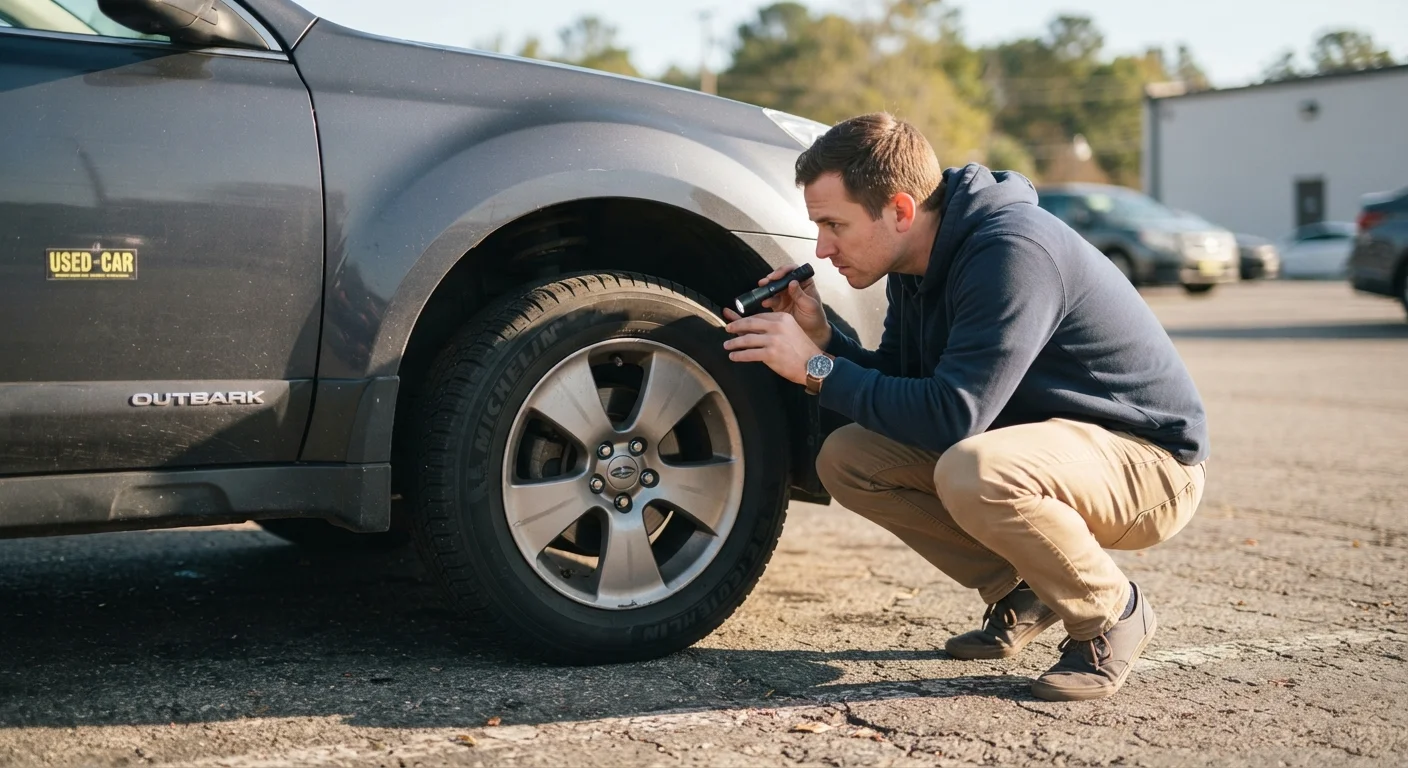
Schedule an inspection with a mechanic you choose, not one recommended by the seller. Most independent shops will complete a pre-purchase inspection for a fee that generally ranges from $100 to $200. Ask the mechanic to assess the engine, transmission, brakes, suspension, frame, tires, and any fluid or leak conditions. The written report gives you a basis to negotiate the price down or walk away.
Test drive under realistic conditions
Drive the car on both city streets and a highway if possible. Accelerate through a range of speeds, brake firmly (in a safe area), and listen for unusual sounds from the engine, suspension, or brakes. Check that all electronics function: windows, mirrors, climate controls, and any safety systems the car is supposed to have. Note any warning lights on the instrument cluster.
Negotiate the price
Use the inspection report and any history report findings as objective grounds for negotiation. On a private-party sale, the asking price is almost always negotiable. At a dealership, the out-the-door price matters more than the sticker: confirm exactly what fees are included. Get any verbal agreements about repairs or added items in writing before you sign anything.
Complete the title transfer and registration
For a private sale, both parties sign the back of the title. The buyer then submits the signed title, a completed application, proof of insurance, and the applicable fees to the state DMV to transfer ownership and register the vehicle. Requirements differ by state, so confirm the exact process and any additional forms (such as an odometer disclosure statement) with your local DMV before the sale date. Dealerships typically handle title paperwork on your behalf, but review all documents before signing.
Never skip the independent inspection
A vehicle history report does not capture every mechanical problem. Always have a trusted, independent mechanic inspect any used car before you complete the purchase. The inspection fee is typically small compared to the repair costs it can help you avoid.