

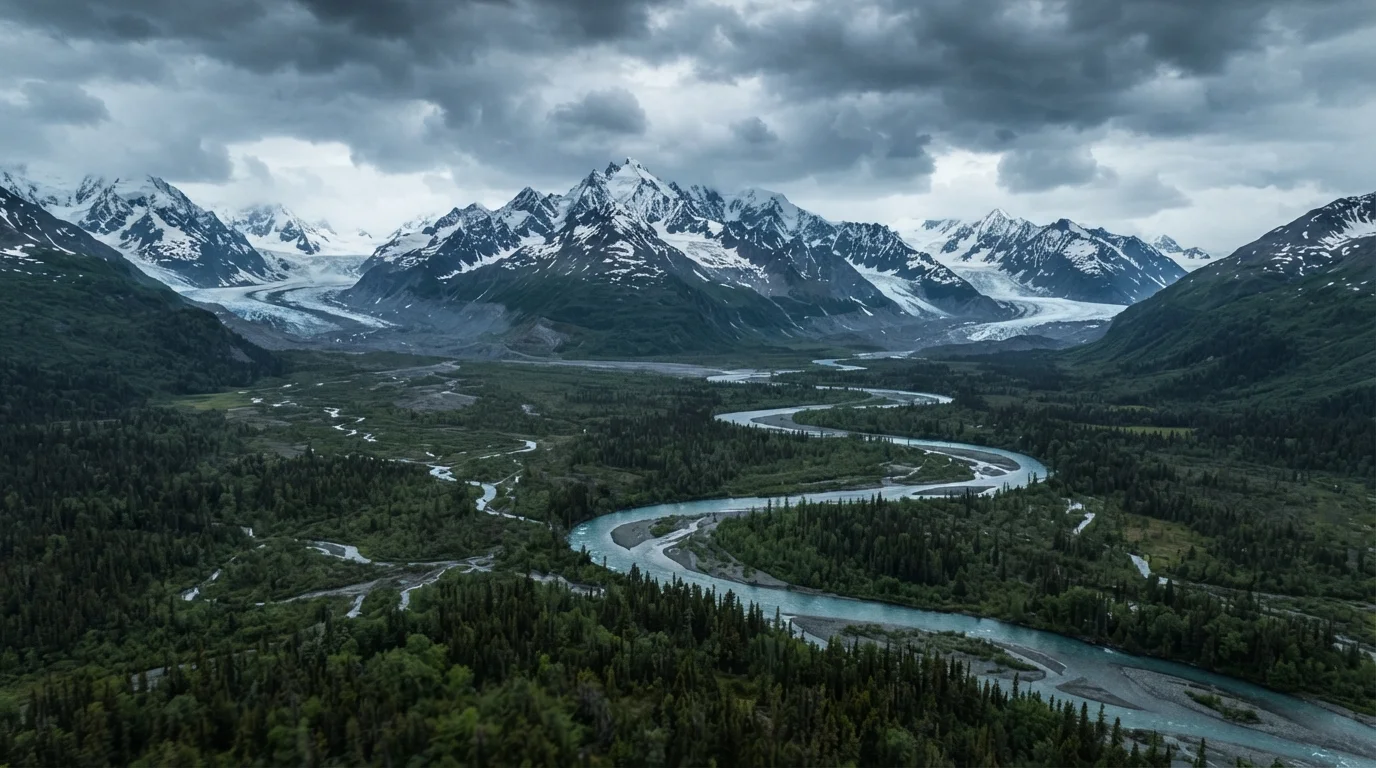
Key Takeaways
- Alaska is enormous and distances between destinations require serious planning, often involving small planes.
- Wildlife viewing opportunities are unmatched in North America, but sightings are never guaranteed.
- Summer brings long daylight hours and mild temperatures, but also crowds and higher prices.
- Budget expectations should run higher than for most other US destinations due to remoteness.
- Cruise travel is one of the most accessible ways to see coastal Alaska without complex logistics.
Wildlife encounters on a scale unlike anywhere in the US
Alaska has the largest populations of grizzly bears, caribou, and bald eagles in the United States. Concentrated viewing areas like Katmai and Denali make sightings accessible without requiring deep backcountry experience.
Extended daylight hours in summer
During peak summer, some regions see 20 or more hours of usable daylight. This gives travelers substantially more time for outdoor activities per day than any other US destination.
Glaciers and landscapes with no continental US equivalent
Alaska contains over 100,000 glaciers. Destinations like Glacier Bay National Park and the Kenai Fjords offer scenery that has no parallel in the lower 48 states.
Relatively accessible via cruise itineraries
The Inside Passage is one of the most traveled cruise routes in North America. It puts coastal Alaska's highlights within reach for travelers who prefer structured itineraries over independent logistics.
Low population density and genuine solitude
Outside Anchorage and Fairbanks, human density is extremely low. Travelers who want remote, uncrowded experiences can find them far more easily than in most US destinations.
High costs across nearly every category
Flights, guided tours, lodging, and groceries all carry a premium due to remoteness. A week in Alaska commonly runs two to three times the cost of a comparable trip to the Mountain West or Pacific Northwest.
Unpredictable weather disrupts itineraries
Coastal regions and mountain areas experience rapid weather changes. Flight cancellations, tour postponements, and trail closures due to weather are common, particularly in spring and fall.
Limited road access between major destinations
The state has approximately 14,000 miles of roads, but many destinations require small planes or boats. Inter-Alaska air travel adds both cost and scheduling complexity.
Wildlife sightings are probable but not guaranteed
Even in prime wildlife areas, animals do not follow schedules. Travelers who build a trip around a specific encounter risk disappointment if conditions shift.
Limited infrastructure outside major hubs
Cell service is unreliable beyond Anchorage, Fairbanks, and Juneau. Medical facilities are sparse in rural areas, which matters for travelers with health conditions or emergencies.
Short window for optimal conditions
The best weather, wildlife activity, and road access converge roughly from late May through early September. That leaves a narrow window for planning, and popular lodges and tours book months in advance.
Our Verdict
Alaska rewards travelers who arrive with realistic expectations, a flexible itinerary, and a tolerance for unpredictable weather and high costs. The payoff is genuine: few places in the US offer the same scale of wilderness, wildlife, and landscape. Those expecting convenience or predictability may find the experience frustrating.
Alaska is best suited to travelers who prioritize natural landscapes and wildlife over urban amenities and who are comfortable planning well in advance, adjusting plans when weather changes, and spending significantly more than a typical US trip.
What makes Alaska genuinely different
Alaska is nearly two and a half times the size of Texas, but it has fewer miles of paved road than many individual US counties. That ratio tells you something important: most of the state is accessible only by small aircraft, boat, or on foot. Getting from Anchorage to Denali is a manageable drive. Getting to Kodiak Island, the Kenai Fjords, or a remote fishing lodge is a different exercise entirely.
That physical reality shapes every other aspect of the trip. Food, fuel, and accommodation cost more because supply chains are longer. Weather windows determine whether a glacier hike or whale-watching excursion happens at all. And "plan B" often means a full day of waiting, not just a short detour.
If you are comparing Alaska to other rugged US regions, the Mountain West versus Pacific Northwest comparison gives useful context for thinking about what "wild America" actually involves at a practical level.
The genuine advantages
Wildlife encounters on a scale unlike anywhere in the US
Alaska has the largest populations of grizzly bears, caribou, and bald eagles in the United States. Concentrated viewing areas like Katmai and Denali make sightings accessible without requiring deep backcountry experience.
Extended daylight hours in summer
During peak summer, some regions see 20 or more hours of usable daylight. This gives travelers substantially more time for outdoor activities per day than any other US destination.
Glaciers and landscapes with no continental US equivalent
Alaska contains over 100,000 glaciers. Destinations like Glacier Bay National Park and the Kenai Fjords offer scenery that has no parallel in the lower 48 states.
Relatively accessible via cruise itineraries
The Inside Passage is one of the most traveled cruise routes in North America. It puts coastal Alaska's highlights within reach for travelers who prefer structured itineraries over independent logistics.
Low population density and genuine solitude
Outside Anchorage and Fairbanks, human density is extremely low. Travelers who want remote, uncrowded experiences can find them far more easily than in most US destinations.
Alaska's wildlife density is a practical matter, not a marketing claim. Brown bears gather at Brooks Falls in Katmai National Park to catch sockeye salmon in predictable numbers each summer. Humpback whales feed in the Inside Passage. Moose are common roadside sightings near Palmer and Talkeetna. These are not rare encounters that require weeks of backcountry travel.
The midnight sun is another concrete advantage. In Fairbanks around the summer solstice, the sun sets for only a couple of hours. That extra daylight expands what is possible in a single day, particularly for hiking, kayaking, and photography.
Cruise itineraries along the Inside Passage and Gulf of Alaska put glaciers, fjords, and wildlife within reach of travelers who would otherwise find the logistics too complex. If independent planning is not appealing, a cruise is a workable entry point. The honest trade-offs of solo cruising are worth reading if you are considering that format on your own.
The real challenges
High costs across nearly every category
Flights, guided tours, lodging, and groceries all carry a premium due to remoteness. A week in Alaska commonly runs two to three times the cost of a comparable trip to the Mountain West or Pacific Northwest.
Unpredictable weather disrupts itineraries
Coastal regions and mountain areas experience rapid weather changes. Flight cancellations, tour postponements, and trail closures due to weather are common, particularly in spring and fall.
Limited road access between major destinations
The state has approximately 14,000 miles of roads, but many destinations require small planes or boats. Inter-Alaska air travel adds both cost and scheduling complexity.
Wildlife sightings are probable but not guaranteed
Even in prime wildlife areas, animals do not follow schedules. Travelers who build a trip around a specific encounter risk disappointment if conditions shift.
Limited infrastructure outside major hubs
Cell service is unreliable beyond Anchorage, Fairbanks, and Juneau. Medical facilities are sparse in rural areas, which matters for travelers with health conditions or emergencies.
Short window for optimal conditions
The best weather, wildlife activity, and road access converge roughly from late May through early September. That leaves a narrow window for planning, and popular lodges and tours book months in advance.
Cost is the most consistent complaint among first-time visitors. A roundtrip flight from the continental US to Anchorage runs higher than most domestic routes, and costs compound once you factor in inter-Alaska flights, lodging, guided tours, and food. Traveling with a group can reduce per-person expenses, and the trade-offs between solo and group travel apply here just as much as they do internationally.
Weather is genuinely unpredictable. Coastal areas like Ketchikan receive over 150 inches of rain annually. Even in summer, planned outdoor activities are regularly cancelled or rescheduled. Travel insurance that covers trip interruption is a sensible precaution, though readers should review any policy terms carefully and consult a licensed agent to understand actual coverage.
Entry and safety considerations
Alaska is a US state, so no passport or visa is required for American citizens. However, travelers venturing into remote wilderness areas should review bear safety guidelines from the National Park Service before departure. For medical or emergency concerns in rural areas, evacuation logistics can be complex and costly. Verify that any travel insurance policy you consider covers medical evacuation, and read the policy terms carefully before purchasing.
Timing and seasonal trade-offs
Summer (June through August) is when most visitors arrive, and with good reason: wildlife is active, roads and trails are open, and temperatures in Southcentral Alaska regularly reach the 60s and low 70s Fahrenheit. However, popular areas like Denali see their highest crowds and prices in July.
Shoulder season, particularly late May and early September, offers a middle path. Wildflower blooms peak in late May; September brings fall foliage and fewer visitors, though some tours and lodges begin closing after Labor Day.
Winter travel is possible and the northern lights are the primary draw, but daylight hours in Fairbanks drop to under four hours near the solstice. Road conditions in the Interior become hazardous, and a significant number of visitor-facing businesses close entirely. This is not the trip for travelers unfamiliar with cold-weather preparation.
663,268
Square miles in Alaska
According to the US Census Bureau, Alaska is the largest state by area, larger than the next three largest states combined.
Over 150 in.
Annual rainfall in Ketchikan
Ketchikan, in Southeast Alaska, is one of the wettest cities in the United States, according to National Weather Service climate data.
~2 million
Visitors per year
Alaska sees roughly 2 million visitors annually, with the majority arriving between June and August, according to the Alaska Travel Industry Association.