

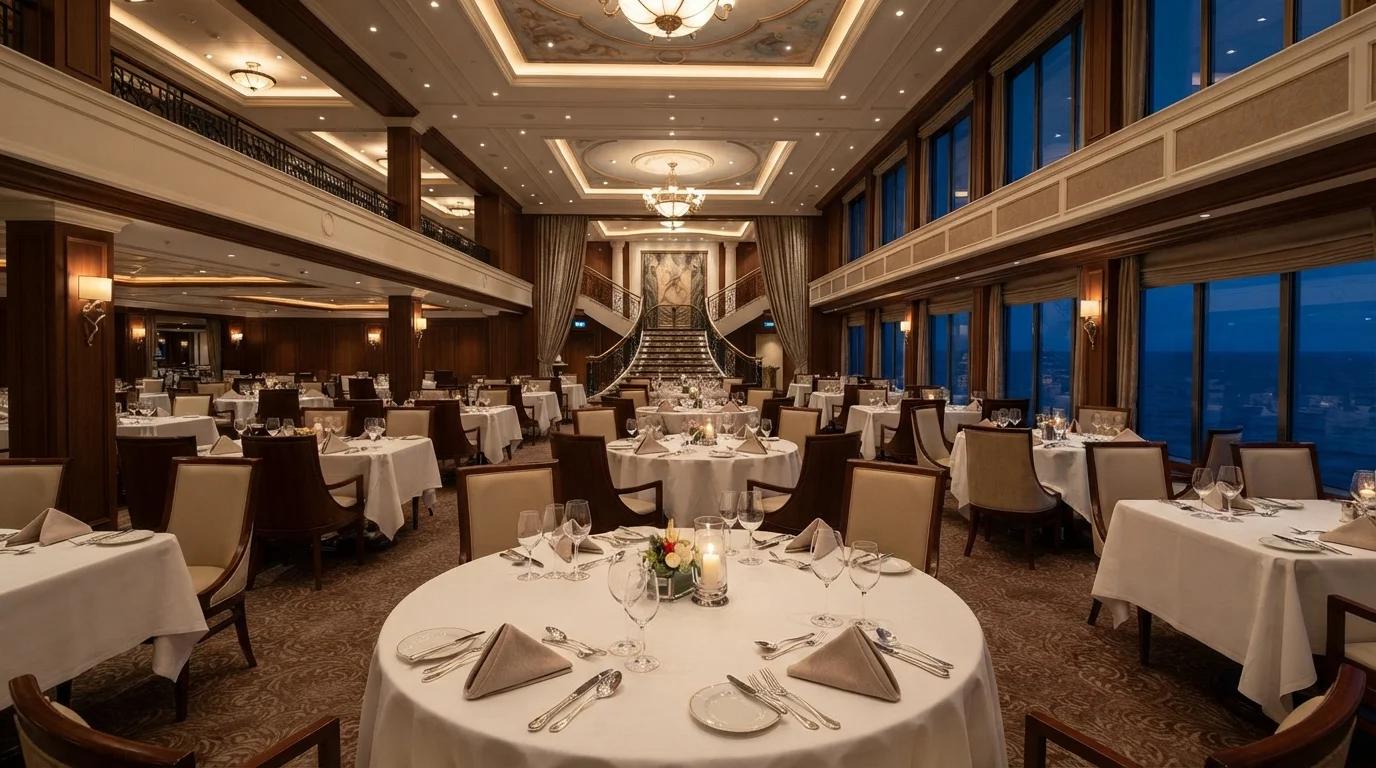
How cruise dining is structured
Cruise ship dining falls into two broad categories: included venues and specialty restaurants. The main dining room is the centerpiece of the included experience, serving multi-course meals at breakfast, lunch, and dinner. Buffet-style lido decks run throughout the day and are fully included in the fare. Specialty restaurants, which feature cuisine like steakhouse, sushi, or Italian, carry a cover charge or per-item fee and typically require advance reservations.
Within the main dining room, ships generally offer one of two scheduling formats. Traditional dining assigns you a fixed table, fixed dining companions, and a set time, either early (around 6 p.m.) or late (around 8:30 p.m.). Anytime dining, called by various names depending on the line, lets you arrive during a broad window and be seated as space allows, though waits are common on busy evenings.
If you have dietary restrictions, food allergies, or religious requirements, notify the cruise line in writing before departure. The earlier you communicate this, the better the kitchen can prepare. Most lines can accommodate common needs, but last-minute requests are harder to fulfill in a kitchen serving thousands of people simultaneously. See also our guide to staying healthy on a cruise for general guidance on food choices at sea.
Dress codes and formal nights
Almost every cruise line publishes a dress code policy, and it varies by venue and by evening. The daily schedule, distributed to your cabin each afternoon, will specify the evening's dress level for the main dining room. Common categories are:
- Casual: Neat, everyday attire. Shorts and sandals are usually accepted.
- Smart casual: Collared shirts, slacks, or sundresses. Beachwear is not appropriate.
- Formal: Suits, sport coats, cocktail dresses, or evening gowns.
Most seven-night cruises include one or two formal nights. Budget lines and shorter sailings often skip formal nights entirely. Staff at dining room entrances do enforce dress codes on formal evenings. If you prefer not to dress up, the buffet or casual poolside venues remain open on formal nights without the same requirements. What to pack for a cruise covers this in more detail, including how to manage formal attire in a carry-on-sized wardrobe.
Table manners and shared seating norms
Traditional dining assigns strangers to shared tables, often for six or eight guests. Basic courtesy applies: greet tablemates when you arrive, avoid dominating conversation, and keep noise levels reasonable. If the arrangement genuinely does not work for your group, guest services can usually reassign you within the first day or two of sailing.
Tipping norms vary by line. Many cruise ships automatically charge a daily gratuity to your onboard account, which is distributed among dining, cabin, and bar staff. On these ships, additional tipping in the main dining room is optional. If gratuities are not pre-applied, follow the line's published guidelines. Withholding standard gratuities affects the entire service team, not just one server.
Punctuality matters more in traditional dining than in anytime dining. Arriving 20 or more minutes late for a fixed seating disrupts table service pacing for everyone. If you expect to be late because of a port excursion, tell your head waiter in advance.
Specialty restaurants and reservations
Specialty venues have smaller capacity and fill quickly, especially on sea days and formal nights. Book reservations as soon as the ship's app or reservation portal opens, which is often 60 to 90 days before departure for booked passengers. Once onboard, the reservation desk is usually open on embarkation day before the ship sails.
Cover charges for specialty dining typically range from around $20 to $60 per person, though upscale chef's table or tasting menu experiences can run higher. Some cruise lines bundle specialty dining credits into certain cabin categories or loyalty tiers. Read your booking confirmation carefully so you know what is already included.
Cancellation policies exist for specialty restaurants. A no-show or very late cancellation may still result in a charge. Cancel at least a few hours in advance if your plans change.
For a broader picture of how dining experience can differ across ship types, comparing river and ocean cruises covers how onboard atmosphere, including dining style, differs between the two formats.