

Key Takeaways
- Cruise ships often have limited-capacity outlets and may not supply multi-port power adapters.
- Motion sickness remedies work best when you start using them before symptoms appear.
- Many passengers discover they need formal attire, a day bag, or port cash only after boarding.
- Sunscreen, particularly water-resistant SPF 50+, is frequently underestimated for sea-level exposure.
- A small medical kit tailored to your itinerary can prevent minor issues from derailing a trip.
Why cruise packing catches people off guard
Packing for a cruise feels straightforward until you are three days into the voyage and realize the ship's gift shop is charging a premium for something you could have dropped into your bag at home. Cruises blend resort, restaurant, city excursion, and open-ocean travel into one trip, and that range of contexts is exactly what makes the packing list harder to get right than a standard hotel-based vacation.
The items passengers most often forget are not exotic. They are everyday things that simply get left off the list because travelers assume the ship will supply them, or because the need only becomes obvious in a specific situation. This list covers the ones that come up most consistently, along with why each matters and what to think through before you zip up your bag.
For a broader pre-trip review, the pre-departure cruise checklist covers documents, medications, and embarkation logistics worth confirming before departure day.
A multi-port power adapter or surge strip
Most cruise ship cabins have one or two standard US outlets, sometimes a single European-style socket, and little else. If you travel with a phone, tablet, camera, e-reader, and a CPAP or other device, you will run out of outlets fast. A compact surge-protected power strip designed for travel solves this immediately.
Check your cruise line's policy before packing: many prohibit strips with surge protectors that have an on/off switch, but allow basic multi-outlet adapters. A USB charging hub paired with a single-outlet adapter is a common workaround that passes most ship policies.
Most cabins have just one or two outlets for everything you brought.
Motion sickness remedies
Smooth seas can give way to noticeable swells in open water, and passengers who have never experienced seasickness before sometimes discover they are susceptible. Over-the-counter antihistamine-based remedies, acupressure wristbands, and prescription patches are all options people use, but most work best when taken before symptoms begin rather than after.
Pack whatever you plan to use and keep it accessible, not buried in checked luggage. For a more thorough look at what happens physiologically and which management strategies have the most evidence behind them, the article on motion sickness at sea goes into detail. Consult a healthcare provider if you have concerns about a particular remedy's suitability for you.
Motion sickness remedies work better before symptoms start, not after.
A small, packable day bag
On port days, you will likely leave the ship carrying water, sunscreen, a camera, cash, and a copy of your documents. Most people do not want to take their full travel backpack ashore, and a tote or a small foldable daypack fills that role perfectly. It collapses to almost nothing in your luggage and becomes one of the most-used items on the trip.
For thinking through how to structure time in port efficiently, the port day planning guide covers the logistics and common time-wasting mistakes.
A foldable day bag is small to pack and constantly useful ashore.
Adequate sunscreen
Sun exposure on water is more intense than most passengers expect. Reflection off the ocean surface increases UV exposure significantly, and sea breezes can mask how much heat you are actually absorbing. A water-resistant SPF 50+ sunscreen in adequate quantity for the full trip is something many passengers run short on by day three.
Some ports and certain cruise itineraries, particularly in reef areas, have restrictions on specific sunscreen chemical ingredients. Check the requirements for each destination before you travel, since some formulas are prohibited to protect marine ecosystems. Reef-safe mineral-based options are accepted broadly.
UV exposure on open water is higher than most passengers plan for.
Formal or semi-formal attire
Many cruise lines still hold formal or semi-formal evenings in main dining rooms, and dress codes vary by line and itinerary. Passengers who pack only casual clothes sometimes find themselves turned away from certain restaurants or feel underdressed for an experience they paid to enjoy. Even lines with relaxed policies typically distinguish between casual and dressy casual.
Check the dining norms for your specific cruise line before packing. The article on cruise dining etiquette breaks down what to expect across different dinner formats and how dress expectations tend to work in practice.
Even relaxed cruise lines distinguish between casual and dressy dining nights.
Local currency for port stops
Credit cards are widely accepted in many ports, but small vendors, local transport, and market stalls often operate cash-only. ATMs in port areas can run out of local currency on busy ship days, and the fees for withdrawing cash abroad add up. Researching each port and carrying a modest amount of local currency per destination avoids a scramble.
US dollars are accepted in many Caribbean and Mexican ports as an informal substitute, but having the local denomination is always more practical and avoids unfavorable conversion rates applied at point of sale.
Cash-only vendors are common in ports where credit card acceptance is unreliable.
A basic medical kit
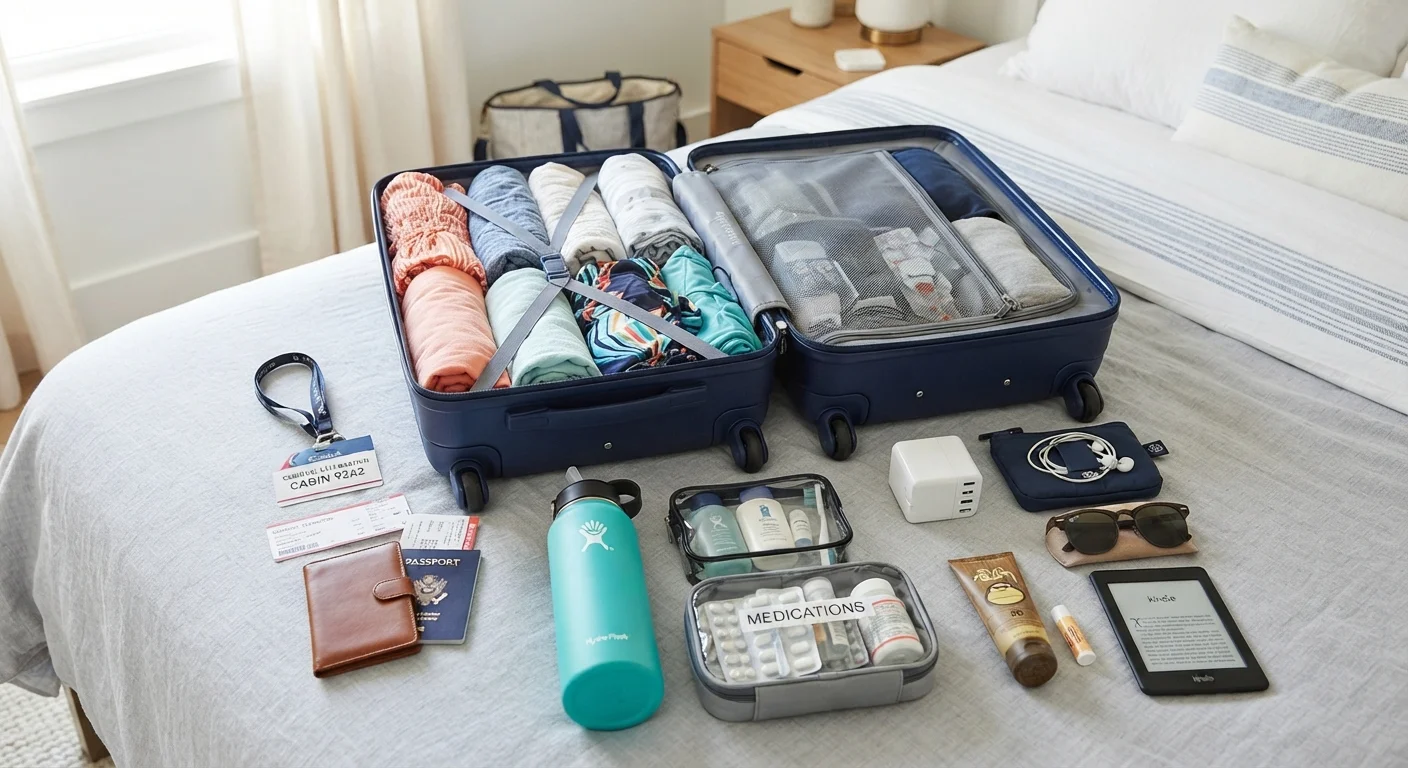
Ships have medical centers, but visits carry costs that can add up. A small kit with pain relievers, antacids, adhesive bandages, blister treatment, and any prescription medications you take regularly covers the everyday issues that come up at sea. Travelers prone to ear infections from swimming should consider protective earplugs for pool and ocean days.
Pack enough of any prescription medication to cover the full trip plus a buffer, and keep it in your carry-on rather than checked luggage. The guide to staying healthy on a cruise covers general hygiene and food-related habits that reduce the chance of needing that kit at all.
Onboard medical visits carry real costs; a basic kit handles most minor issues.
Final checks before you board
Run through this list a day or two before departure rather than the morning you leave, when there is still time to make a quick store run. Pay particular attention to anything health-related; if you manage an ongoing condition, the guide to cruising with a chronic health condition outlines additional planning considerations worth discussing with your healthcare provider well in advance.
Onboard spending is another area where small forgotten items add up. The cruise budget guide walks through the cost traps that catch the most passengers off guard.
Build your list from your itinerary
The right packing list changes depending on whether your cruise is Caribbean beach days, European city ports, or Alaska wilderness stops. Review each port's climate, currency, and any known restrictions before finalizing what you pack. A single itinerary-specific check catches most of the gaps this list describes.