

Key Takeaways
- Secured debt is backed by a specific asset the lender can claim if you default.
- Unsecured debt relies on your creditworthiness alone, so lenders charge higher rates to offset their risk.
- Defaulting on secured debt can cost you the asset; defaulting on unsecured debt triggers collection and credit damage but no automatic asset seizure.
- Repayment priority often depends on which type of debt carries the most immediate consequence.
- Both debt types appear on your credit report and affect your debt-to-income ratio.
Option A
Secured debt
The collateral-backed borrowing arrangement.
Best for: Borrowers who need lower interest rates and are willing to pledge an asset such as a home or vehicle as a guarantee of repayment.
Option B
Unsecured debt
The promise-based borrowing arrangement.
Best for: Borrowers who need credit without putting a specific asset at risk, typically accepted at higher interest rates.
If you are deciding which debt to pay first during a cash crunch
Secured debt
Missing payments on secured debt puts a specific asset, your home or car, directly at risk. Prioritise these to protect what you cannot easily replace.
If you are comparing borrowing costs before taking on new debt
Secured debt
Secured loans generally carry lower interest rates because the lender holds collateral. If you own a qualifying asset and can accept the risk, the cost of borrowing is typically lower.
If you want to borrow without risking a specific possession
Unsecured debt
Personal loans and credit cards do not tie your borrowing to a single asset. The trade-off is a higher interest rate, but no specific property is directly on the line.
If you are mapping out a long-term debt repayment plan
Secured debt
Address secured obligations first to protect core assets, then direct extra payments toward high-rate unsecured balances to reduce total interest paid over time.
What makes a debt secured or unsecured
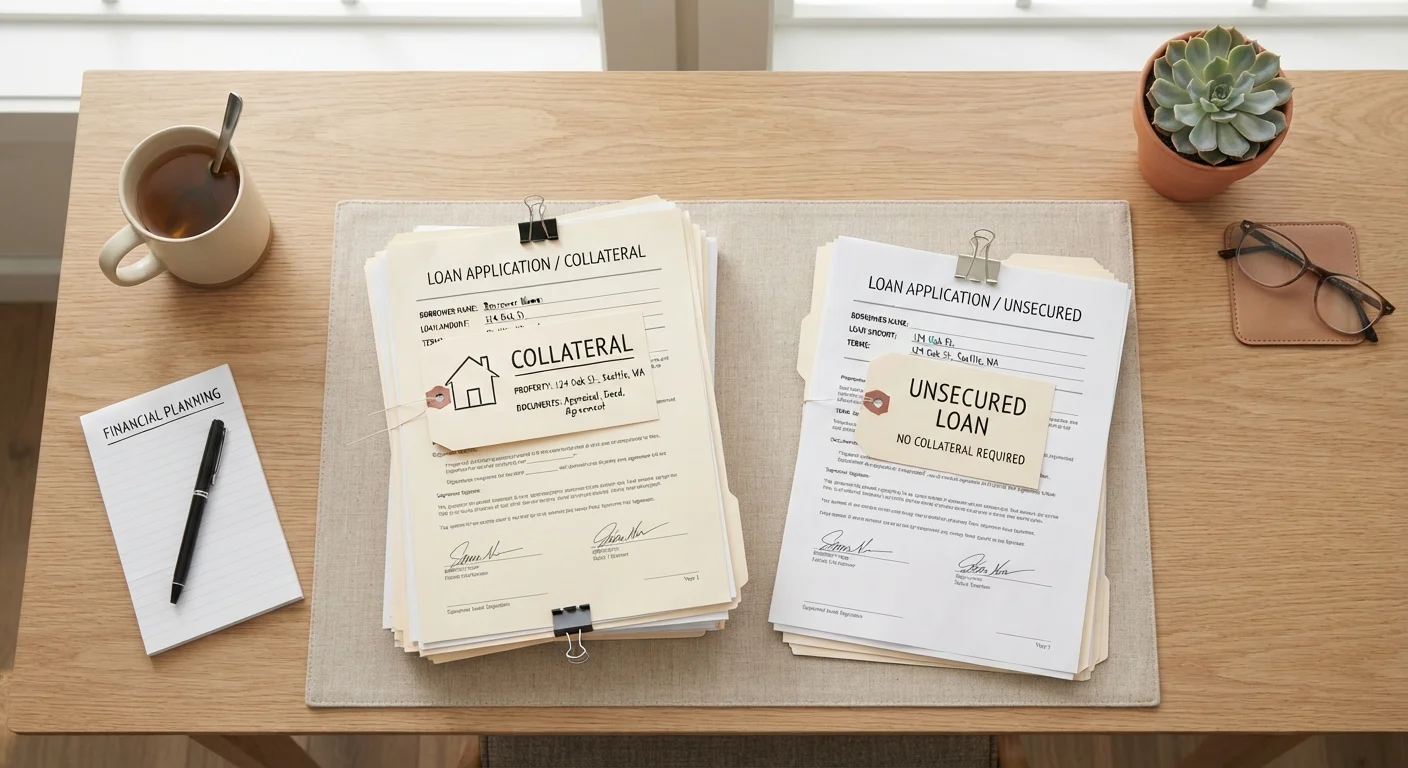
The difference comes down to one question: does the loan require you to pledge a specific asset as collateral? If yes, the debt is secured. If no, it is unsecured.
With secured debt, the lender holds a legal claim, called a lien, against that asset. Common examples include mortgages (secured by the property) and auto loans (secured by the vehicle). If you stop making payments, the lender has a defined path: foreclosure on the home or repossession of the car.
Unsecured debt carries no such claim. Credit cards, medical bills, and most personal loans fall into this category. A lender who issues unsecured credit is taking your word, backed by your credit history, that you will repay. Because there is no asset to recover, the lender has fewer immediate options if you default, and charges a higher interest rate to compensate for that exposure.
Understanding this distinction matters before you borrow, and again when you are deciding how to allocate limited repayment dollars. For a broader look at the vocabulary that comes up in these conversations, see our financial terms glossary.
How default works differently for each type
When a borrower misses payments on secured debt, the lender's first recourse is the collateral itself. A mortgage servicer can begin foreclosure proceedings. An auto lender can repossess the vehicle, sometimes without going to court first, depending on the state. The asset is the lender's built-in exit.
With unsecured debt, there is no asset to seize immediately. Instead, the lender typically reports missed payments to credit bureaus, charges late fees, and may eventually sell the account to a collections agency. If the amount is large enough, the creditor can sue you in civil court and, if they win a judgment, potentially garnish wages or levy a bank account. That process takes time and legal steps; it does not happen automatically the way repossession can.
This gap in speed and severity is why financial counselors generally advise keeping secured payments current even when money is tight. Losing a home or a car disrupts daily life in ways that a damaged credit score, serious as that is, does not match in immediacy.
| Criterion | Secured debt | Unsecured debt |
|---|---|---|
| Collateral required | Yes (home, vehicle, or other asset) | No |
| Typical interest rate | Lower, reflects reduced lender risk | Higher, reflects no collateral |
| Default consequence | Repossession or foreclosure | Collections, credit damage, possible court judgment |
| Common examples | Mortgage, auto loan | Credit card, personal loan, medical bill |
| Lender recovery speed | Faster via asset claim | Slower, requires legal process |
| Repayment priority | High: asset loss is immediate | After secured debts are current |
Interest rates and why collateral changes the math
Lenders price risk. Because secured loans attach to an asset the lender can recover, the lender's downside is limited. That reduced risk usually translates to a lower interest rate for the borrower. Mortgage rates and auto loan rates are nearly always lower than the rates on unsecured personal loans or credit cards, all else being equal.
Unsecured debt rates can vary widely based on your credit score, income, and existing debt load. A borrower with strong credit might qualify for a personal loan at a rate that competes with some secured products, but the average credit card rate runs considerably higher than the average mortgage or auto loan rate.
The interest rate type, fixed or variable, is a separate but related question. Fixed and variable rates each carry their own trade-offs, regardless of whether the underlying debt is secured or unsecured.
Your mix of secured and unsecured debt also affects your debt-to-income ratio, which lenders check when you apply for new credit.
Prioritising repayment when you carry both types
Most households carry both secured and unsecured debt at the same time. Deciding which to pay down faster, beyond meeting all minimums, involves weighing consequence against cost.
Protect secured debts first. Missing a mortgage or car payment triggers consequences that are faster and more concrete than what follows a missed credit card payment. Once all secured obligations are current, the math shifts toward reducing high-interest unsecured balances, which often cost more in interest over time than lower-rate secured loans.
Paying only the minimum on unsecured balances can stretch repayment for years and significantly increase total interest paid. Once secured payments are stable, directing additional dollars toward unsecured debt with the highest rate limits that effect.
For a concrete walkthrough of how these priorities look when mapped out month to month, a practical debt repayment plan example can make the sequence easier to follow.
This article is for general informational purposes only and does not constitute personalised financial or legal advice. Consult a licensed financial adviser or credit counselor for guidance specific to your situation.