
Snacking With Purpose: How Between-Meal Eating Affects Your Overall Nutrition

Key Takeaways
- Snacks are neither inherently healthy nor unhealthy; their value depends on composition, timing, and portion size.
- Protein and fiber in snacks help maintain satiety and reduce the chance of overeating at the next meal.
- Frequent snacking on low-nutrient foods can quietly push total daily calories higher without improving nutritional quality.
- Hunger cues, not the clock, are often a better guide for deciding whether a snack is needed.
- Snacking can fill genuine nutrient gaps, especially for people who cannot always eat large balanced meals.
Purposeful snacking
Purposeful snacking means eating between main meals with intention, choosing foods that contribute to your daily nutritional needs rather than eating out of habit or boredom. It considers what you eat, how much, and when, so that snacks add genuine value to your overall diet. The goal is for between-meal eating to support energy, hunger management, and nutrient intake rather than work against them.
In nutrition science, snacks are typically defined as eating occasions outside three primary meals; their impact on total diet quality depends on energy balance, macronutrient composition, and individual metabolic context.
Why snacking deserves a second look
Snacking has a complicated reputation. Popular diet culture has swung between condemning all between-meal eating and prescribing six small meals a day as a metabolic necessity. Neither extreme reflects what nutrition research actually shows. Between-meal eating is common across nearly all populations, and its effect on health depends almost entirely on the specifics of what is consumed, not on the act of snacking itself.
If you are new to thinking about food systematically, the core concepts behind nutrition provide useful context before digging into how snacks fit the picture. Once you understand basic macronutrients and energy balance, evaluating a snack becomes much more straightforward.
The more useful question is not "should I snack?" but "what is this snack doing for my nutrition today?"
What snacks actually contribute to your daily intake
Snacks are not a separate category from nutrition; they are part of total daily food intake. For many Americans, snacks account for roughly 20 to 25 percent of total daily calories. That proportion is large enough to meaningfully shape diet quality in either direction.
A snack built around protein and fiber, such as plain Greek yogurt with berries or a small handful of almonds, adds nutrients the body uses: protein for tissue maintenance, fiber for digestive health, and micronutrients like magnesium or vitamin E. A snack built primarily around refined starch and added sugar adds calories with little nutritional return.
~25%
Share of daily calories from snacks for many U.S. adults
Dietary survey data from the National Health and Nutrition Examination Survey (NHANES) has consistently found that snacks contribute roughly a quarter of total daily energy intake for many American adults.
90%+
U.S. adults who snack at least once daily
NHANES data has shown that the large majority of American adults report eating at least one snack on any given day, making snacking a near-universal eating behavior rather than an exception.
2x
Longer satiety from protein-rich vs. refined-carb snacks
Controlled feeding studies have found that protein-rich snacks tend to delay the return of hunger significantly longer than calorie-matched snacks composed primarily of refined carbohydrates.
This is where the concept of nutrient density matters directly. Two snacks with identical calorie counts can have very different effects on how satisfied you feel and how much nutritional ground you cover by the end of the day. Choosing foods with more nutrients per calorie is one of the simplest ways to make snacking work in your favor.
Timing and hunger cues: reading the signals correctly
Eating on a schedule regardless of hunger is one of the most common ways snacking adds unnecessary calories. Hunger is a physiological signal driven by hormones including ghrelin, which rises when the stomach is empty, and leptin, which falls as energy needs increase. Eating in response to genuine hunger generally means the body has a use for the incoming energy.
Eating in response to boredom, stress, or habit bypasses those signals entirely. The calories arrive the same way, but the regulatory feedback that would normally moderate intake is absent. This is not about moral failure; it is simply a mismatch between calorie delivery and calorie need.
A useful self-check before reaching for a snack: rate hunger on a simple scale of 1 to 10. If the number is low, drinking water or stepping away from a screen for a few minutes often resolves what felt like hunger. If genuine hunger is present, a small snack with protein or fiber will address it more effectively than a carbohydrate-heavy option, which can trigger a blood sugar rise and subsequent dip. The connection between food choices and energy levels explains why this pattern occurs at the physiological level.
How snack composition shapes the rest of your day
The composition of a snack influences not just immediate satiety but the nutritional arc of the entire day. Protein slows gastric emptying, which means food stays in the stomach longer and hunger returns more gradually. Dietary fiber has a similar effect and also feeds beneficial gut bacteria, which is one reason gut health researchers often highlight fiber intake as a meaningful dietary variable.
A poorly composed snack can also set off a cycle that affects the next meal. A snack high in rapidly digested carbohydrates may cause a blood sugar spike followed by a drop, which then triggers stronger hunger before the next meal, often leading to eating more than intended. Replacing that pattern with a snack containing protein or fat tends to produce more stable appetite through the following meal.
Build snacks around one anchor nutrient
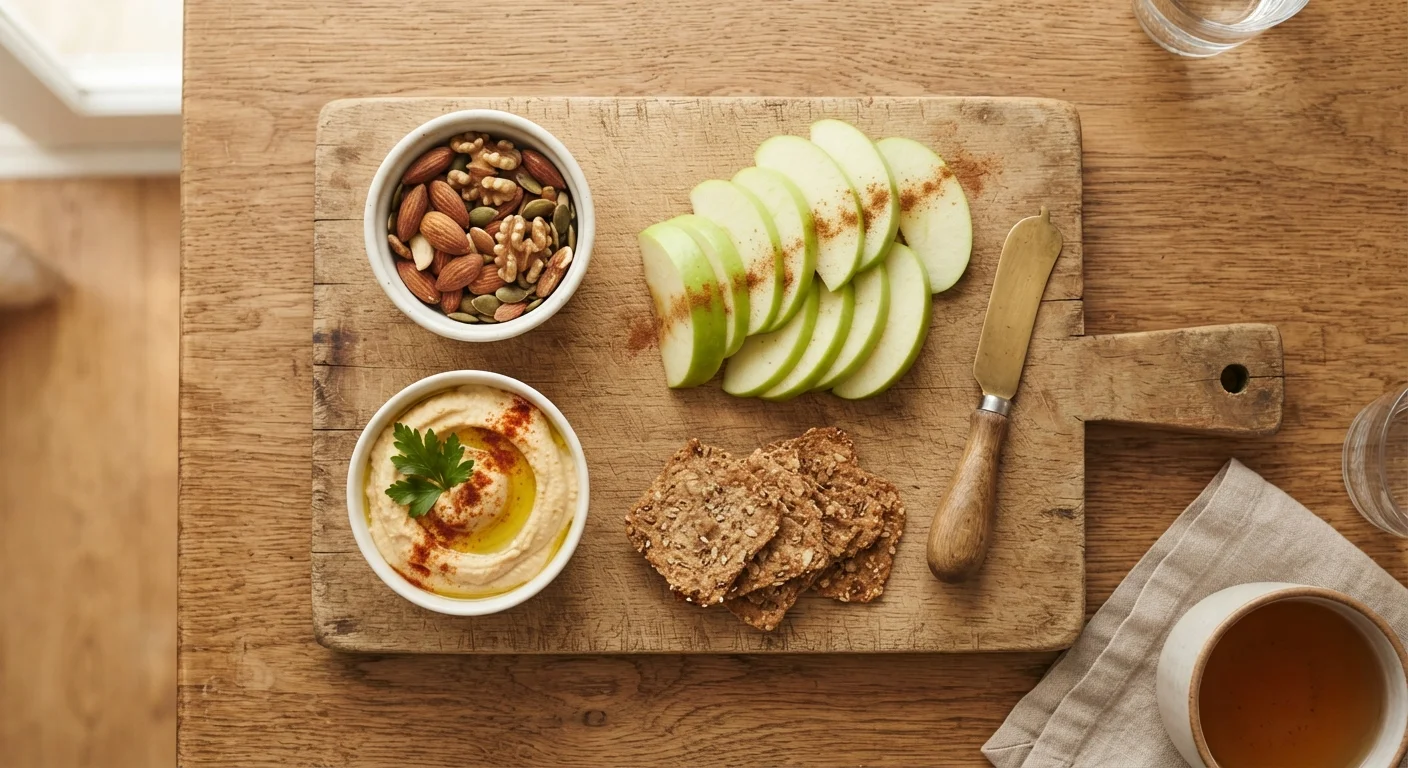
Rather than trying to make every snack a complete mini-meal, pick one anchor nutrient: protein, fiber, or healthy fat. Then add one or two simple complements, like fruit with nut butter or vegetables with hummus. This approach keeps snacks practical without requiring elaborate preparation, and it improves satiety compared to single-ingredient carbohydrate snacks.
This does not mean every snack must be a nutrition project. A piece of fruit is a perfectly reasonable snack even though it lacks protein, because the fiber content and micronutrients it provides are genuinely useful. The aim is to avoid snacks that are nutritionally empty across the board, not to turn every between-meal bite into a calculated exercise.
For a broader view of how individual food choices fit into overall patterns, the article on eating patterns versus individual foods is worth reading alongside this one.
Fitting snacks into a broader nutrition plan
Snacks are most useful when they fill a genuine gap in daily nutrition: bridging a long stretch between meals, adding a nutrient that main meals consistently miss, or meeting higher energy demands on active days. Treating snacks as optional additions rather than obligatory events gives you flexibility to include them when they serve a purpose and skip them when they do not.
If meal planning is part of how you organize your eating, incorporating snacks into that process prevents last-minute, low-quality choices. The practical meal planning checklist covers how to account for snacks within a weekly food structure. Pre-portioning snacks at the start of the week, rather than eating directly from a large package, is one of the most consistent ways to keep portions reasonable without requiring willpower in the moment.
This article is for general informational and educational purposes only and is not medical or dietary advice. For guidance specific to your health needs, consult a registered dietitian or qualified healthcare professional.