
Gut Health and Nutrition: The Relationship Between What You Eat and Your Microbiome

Key Takeaways
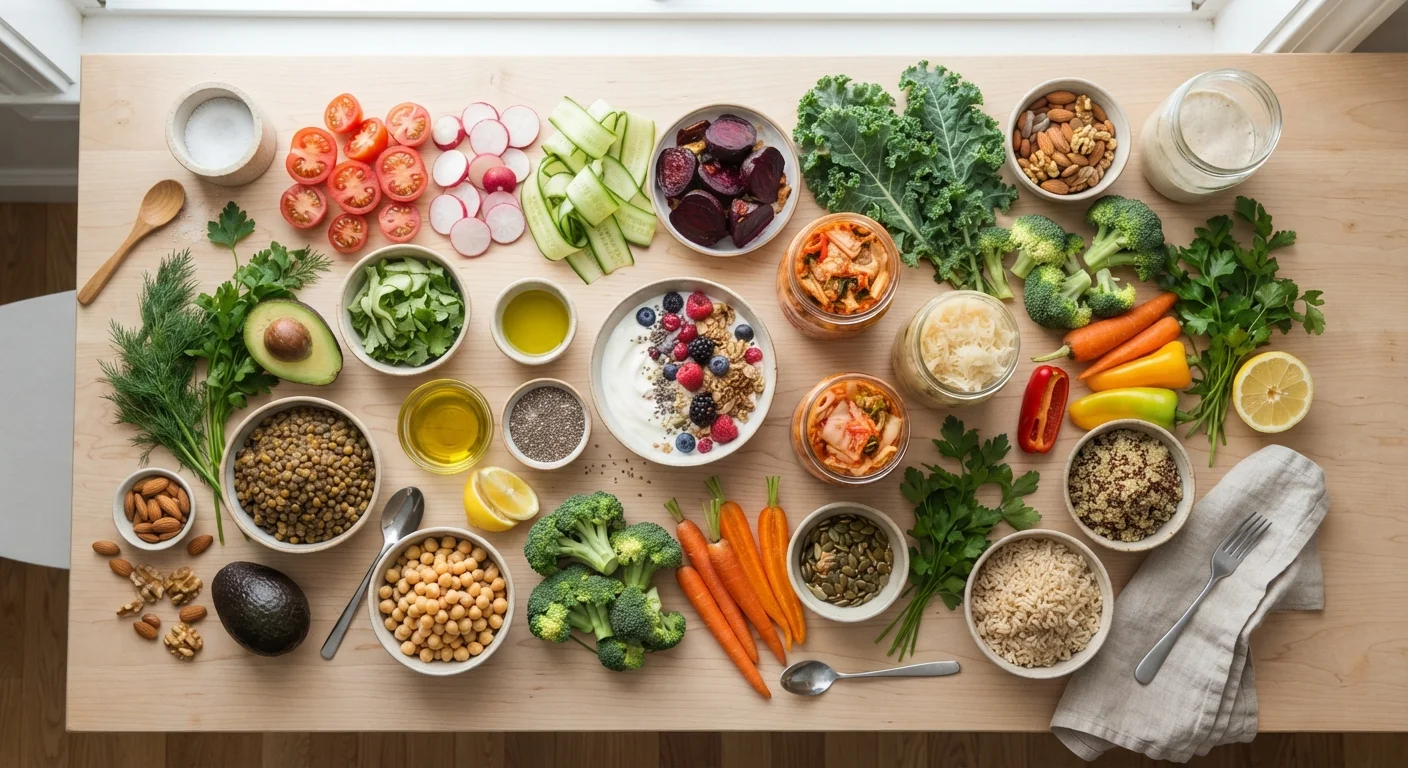
- Dietary fiber from plants is the primary fuel source for beneficial gut bacteria.
- Fermented foods introduce live microorganisms that can temporarily add diversity to the gut.
- A low-diversity microbiome is consistently associated with poorer health outcomes in research.
- Ultra-processed foods appear to reduce microbial diversity over time.
- The gut and brain communicate through a network researchers call the gut-brain axis.
The gut microbiome
The gut microbiome is the community of trillions of bacteria, fungi, viruses, and other microorganisms that live in your digestive tract, particularly the large intestine. These microorganisms are not passive passengers; they digest certain foods, produce vitamins, train the immune system, and communicate with the brain. The composition of this community shifts constantly in response to what you eat, how you sleep, stress levels, and other lifestyle factors.
Researchers use the term 'microbiota' to describe the organisms themselves and 'microbiome' to describe the collective genetic material they carry, though both terms are now widely used interchangeably in general health communication.
What the microbiome actually does
The human gut contains an estimated 38 trillion microbial cells, roughly the same number as human cells in the entire body. This community carries out functions no human enzyme can perform alone. Gut bacteria ferment dietary fiber into short-chain fatty acids (SCFAs) such as butyrate, propionate, and acetate. Butyrate, in particular, serves as the primary energy source for the cells lining the colon and helps maintain the gut barrier that keeps harmful substances out of the bloodstream.
Beyond digestion, gut microbes produce B vitamins and vitamin K, regulate inflammatory signals, and help calibrate immune responses. A well-balanced microbial community tends to be diverse, meaning it contains many different species. Low diversity, by contrast, appears repeatedly in research associated with conditions including obesity, type 2 diabetes, inflammatory bowel disease, and certain allergies.
The composition of your microbiome is not fixed. It changes throughout life, and diet is among the most controllable factors shaping it.
Fiber: the single most studied dietary factor
Dietary fiber is indigestible to human enzymes, which means it arrives in the large intestine largely intact. Gut bacteria break it down, and that fermentation process produces SCFAs. Different fibers feed different bacterial species, which is why variety in plant foods matters more than any single source.
Prebiotic fibers, a specific category that includes inulin and fructooligosaccharides, selectively stimulate the growth of beneficial species such as Bifidobacterium and Lactobacillus. Foods naturally high in these compounds include garlic, onions, leeks, asparagus, bananas, and oats.
Building up fiber gradually works best
Most adults in the US fall short of recommended fiber intake. Adding fiber-rich foods slowly over several weeks, rather than all at once, gives gut bacteria time to adapt and reduces bloating or discomfort. Drinking adequate water helps fiber move through the digestive tract efficiently.
The 2020-2025 Dietary Guidelines for Americans notes that most adults consume well under the recommended daily fiber intake of 22 to 34 grams (depending on age and sex). Gradual increases, rather than sudden large additions, help prevent digestive discomfort as the microbiome adjusts. For personalized guidance, a registered dietitian can help structure a realistic plan. See our beginner's guide to nutrition for a broader overview of how macronutrients and food groups fit together.
Fermented foods and microbial diversity
Fermented foods such as yogurt, kefir, sauerkraut, kimchi, miso, and tempeh contain live microorganisms. A Stanford-led study published in Cell in 2021 found that adults who increased their intake of fermented foods over ten weeks showed a measurable increase in microbiome diversity alongside reduced markers of inflammation, compared with adults who increased fiber intake alone. This does not mean fermented foods outperform fiber; both appear beneficial and likely work through different mechanisms.
The live organisms in fermented foods do not permanently colonize the gut for most people. Their benefit may come partly from the metabolites they produce during fermentation and partly from short-term interactions with existing microbial communities and immune cells in the gut lining.
38 trillion
Estimated microbial cells in the human gut
Research published in Cell estimates the gut microbiota roughly matches the total number of human cells in the body.
~90%
Of the body's serotonin produced in the gut
Current neuroscience research indicates the majority of serotonin synthesis occurs in the gastrointestinal tract, not the brain.
10 weeks
Duration of high-fermented-food intervention in key study
A 2021 study in Cell found measurable increases in microbiome diversity and reduced inflammation markers after a ten-week fermented food intervention.
Overall dietary patterns consistently matter more than any single food. A diet with regular variety across plant foods and fermented options builds a more resilient microbial ecosystem than adding one functional ingredient to an otherwise low-fiber diet.
Ultra-processed foods and microbial disruption
Ultra-processed foods, defined by the NOVA classification as industrial formulations with little whole food content and many additives, are low in fiber and often high in refined sugars, emulsifiers, and artificial flavorings. Emulsifiers such as carboxymethylcellulose and polysorbate-80 have been shown in animal studies to alter gut microbial composition and increase intestinal permeability, though human data are still accumulating.
A diet dominated by ultra-processed foods tends to reduce the diversity and abundance of fiber-fermenting bacteria. This matters because those species produce the SCFAs that protect the gut lining and modulate immune responses. The composition of between-meal eating follows the same logic: snacks built around whole foods contribute to daily fiber intake, while heavily processed options tend to displace it.
The gut-brain connection
The gut and brain communicate through the vagus nerve, the enteric nervous system (sometimes called the 'second brain'), circulating immune molecules, and microbial metabolites that enter the bloodstream. This two-way network is what researchers call the gut-brain axis.
Gut bacteria produce or influence the production of neurotransmitters including serotonin, with roughly 90 percent of the body's serotonin synthesized in the gut. Disruptions in microbial balance have been associated in observational research with anxiety and depression, though establishing direct causation in humans remains difficult. Mental well-being involves many interacting factors, and gut health is one piece of a larger picture rather than a standalone treatment target.
This area of research is developing quickly. Current findings are promising but should not be interpreted as a basis for using dietary changes in place of established mental health care.
This article is for general informational and educational purposes only and is not a substitute for professional medical or nutritional advice. Consult a qualified healthcare provider before making significant changes to your diet, especially if you have an existing health condition.