

Key Takeaways
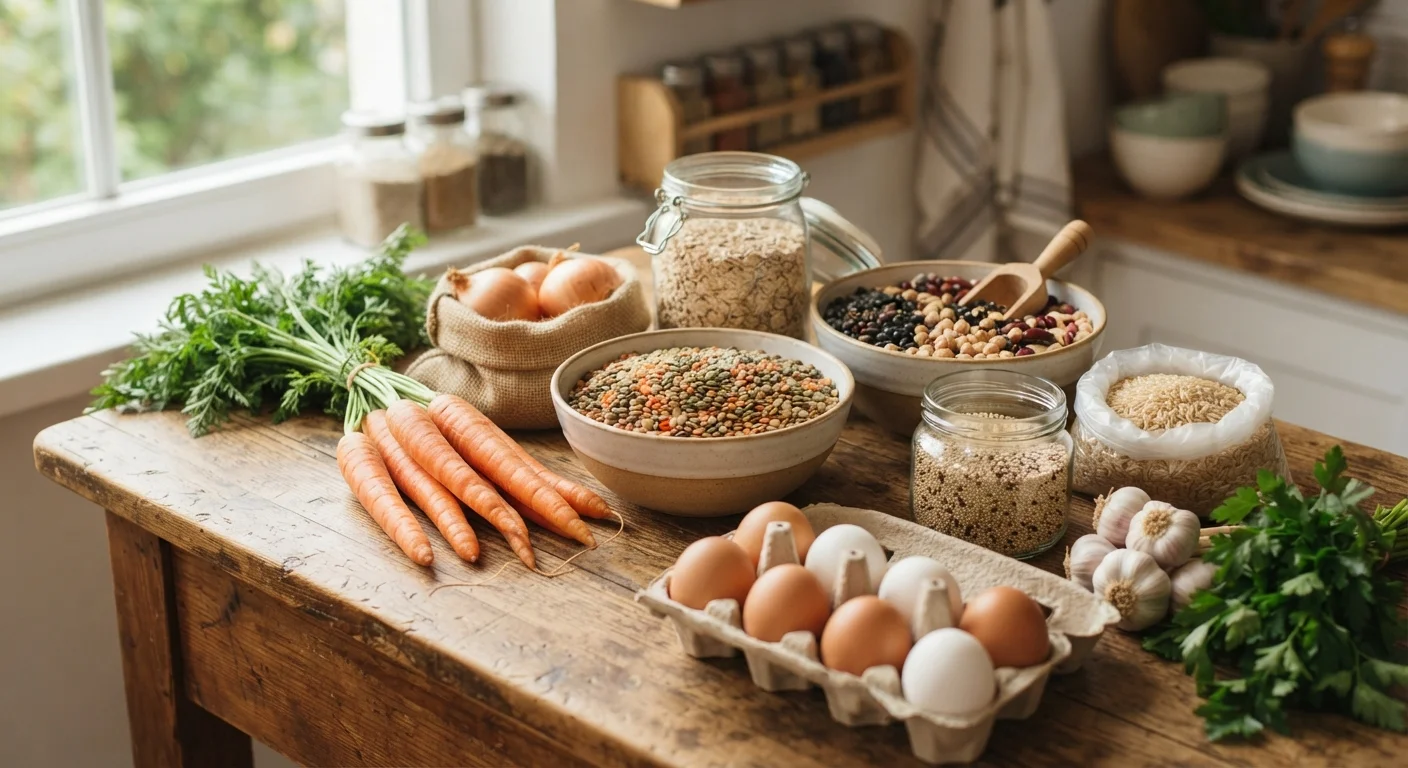
- Dried legumes, oats, eggs, and frozen vegetables provide dense nutrition at low cost per serving.
- Meal planning before shopping reduces impulse purchases and food waste significantly.
- Cooking in bulk and storing portions lowers the cost per meal across the week.
- Nutrient density, not price, is the better measure of food value.
- Seasonal and store-brand produce often matches the nutritional profile of premium alternatives.
Why cost and nutrition are not opposites
A common assumption is that healthy food is expensive by definition. The reality is more practical: many of the most nutrient-dense foods in the American diet are also among the least expensive per serving. Dried lentils, canned chickpeas, oats, eggs, cabbage, and frozen spinach consistently rank high for vitamins, minerals, fiber, and protein relative to their grocery cost.
The confusion partly comes from marketing. Packaged "superfoods" and specialty health items tend to occupy prominent shelf space and carry high price tags, which can make the produce aisle and bulk bins feel less legitimate by comparison. They are not. Understanding nutrient density is one of the most useful mental shifts a budget shopper can make: it reframes the question from "how much did this cost?" to "how much nutrition does each dollar deliver?"
This article is for general informational purposes and is not personalized nutrition or medical advice. Consult a registered dietitian or healthcare provider for guidance specific to your health needs.
Core practices for eating well on less
The following practices are grounded in established nutrition guidance and practical household economics. None require special equipment, unusual ingredients, or significant cooking experience. For a broader foundation on how nutrients work together, the beginner's guide to understanding nutrition covers the core concepts clearly.
Build meals around dried or canned legumes as your primary protein source
Lentils, black beans, and chickpeas provide protein, fiber, iron, and folate at a fraction of the cost of most animal proteins. They also have a long shelf life, which reduces waste.
Choose frozen vegetables over fresh when fresh is out of season or budget
Frozen vegetables are typically harvested and frozen at peak ripeness, which preserves their vitamin and mineral content. They cost less per serving than out-of-season fresh produce and last months in the freezer.
Use whole grains like oats, brown rice, and barley as your carbohydrate foundation
Whole grains provide fiber, B vitamins, and lasting satiety at very low cost per serving. Refined grain products often cost more per ounce while delivering less fiber and fewer micronutrients.
Buy store-brand staples and compare unit prices rather than package prices
Store-brand canned goods, oats, and frozen vegetables are nutritionally equivalent to name-brand versions in most cases, and unit pricing reveals the true cost per ounce or gram rather than per container.
Cook in batches and store portions to reduce daily decision-making and cost
Preparing a large quantity of rice, beans, or roasted vegetables at one time lowers the effective cost per meal and makes it easier to eat nutritiously on busy days without turning to takeout.
Prioritize eggs as a versatile, low-cost source of complete protein
Eggs contain all nine essential amino acids, plus choline, vitamin D, and B12. Per gram of protein, eggs are consistently among the most affordable complete protein sources available in US grocery stores.
Planning is the primary cost control
Unplanned grocery trips are one of the most reliable ways to overspend and under-eat nutritionally. Without a list, shoppers tend to buy for convenience rather than balance, and prepared or packaged items dominate the cart. Common grocery spending patterns inflate bills in ways that are easy to overlook until tracked.
A weekly meal plan does not need to be elaborate. Even a rough outline of five dinners, a breakfast staple, and two lunch options creates enough structure to write a focused list, estimate spending before checkout, and avoid mid-week trips that add cost. A practical meal-planning checklist can help cover key nutrients without guesswork.
Making the most of what you buy
Reducing food waste is a direct path to stretching a grocery budget. The USDA has estimated that American households discard a significant share of the food they purchase, which represents both nutritional and financial loss. Batch cooking grains and legumes at the start of the week keeps ready-to-use ingredients on hand and reduces the temptation to buy more expensive convenience foods.
For people who cook infrequently, these strategies still apply. Eating well without a kitchen routine is possible with a small set of reliable, low-prep staples. Canned beans, pre-washed greens, hard-boiled eggs, and plain oats require minimal preparation and hold nutritional value well.
Tracking where grocery money actually goes is also worthwhile. Everyday money habits that account for food spending can reveal patterns worth adjusting, and small shifts in where and how you shop often compound over time.