

Key Takeaways
- Defensive driving means anticipating hazards, not just reacting to them after they appear.
- Maintaining adequate following distance is one of the most effective defensive habits.
- Scanning well ahead of the vehicle gives drivers more time to respond safely.
- Speed should always match road and weather conditions, not just the posted limit.
- Defensive driving applies on familiar routes as much as on unknown roads.
Defensive driving
Defensive driving is a set of skills and habits that let a driver anticipate potential hazards before they develop into dangerous situations. It goes beyond following traffic laws to actively scanning the road, managing space around the vehicle, and adjusting speed and position based on conditions. The goal is to reduce collision risk even when other drivers, pedestrians, or road conditions are unpredictable.
Defensive driving is formally taught in courses recognized by the National Safety Council (NSC) and the American Automobile Association (AAA), and completion can qualify drivers for insurance premium reductions depending on their state and insurer.
The core idea behind defensive driving
Most drivers think of safety as following rules: stay within the speed limit, stop at red lights, signal before turning. These are necessary, but they describe compliance, not anticipation. Defensive driving begins where rule-following ends.
The defining characteristic of a defensive driver is that they account for what other road users might do, not just what they are doing right now. A car sitting at an intersection may pull out unexpectedly. A truck merging on a highway may not see a vehicle in its blind spot. A pedestrian near a crosswalk may step off the curb without looking. A defensive driver sees those possibilities and creates space and time to handle them without emergency braking or swerving.
This is sometimes described as the "what if" mindset: continuously running low-level hazard assessments while driving rather than treating the road as static until something goes wrong.
Defensive driving is not about distrust
Driving defensively does not mean assuming every other driver is reckless. It means building in enough margin that normal, occasional errors by others do not automatically result in a crash. Most hazardous situations on the road involve ordinary mistakes made by ordinary drivers in ordinary conditions.
Space management and following distance
The most measurable expression of defensive driving is following distance. A driver who tailgates has removed their own reaction time from the equation. If the vehicle ahead stops suddenly, physics determines whether a crash happens, not skill.
The three-second rule gives a practical baseline: pick a fixed point on the road, wait for the vehicle ahead to pass it, then count. If your vehicle reaches that same point before three seconds have elapsed, you are too close. In wet or low-visibility conditions, that gap should grow. Following too closely is one of the most common contributing factors in rear-end collisions, and closing that gap is one of the simplest corrections a driver can make.
Space management also applies laterally. Giving cyclists a wide berth, positioning the vehicle away from merging lanes when possible, and avoiding prolonged travel in another driver's blind spot all reduce exposure to unexpected contact.
Scanning and situational awareness
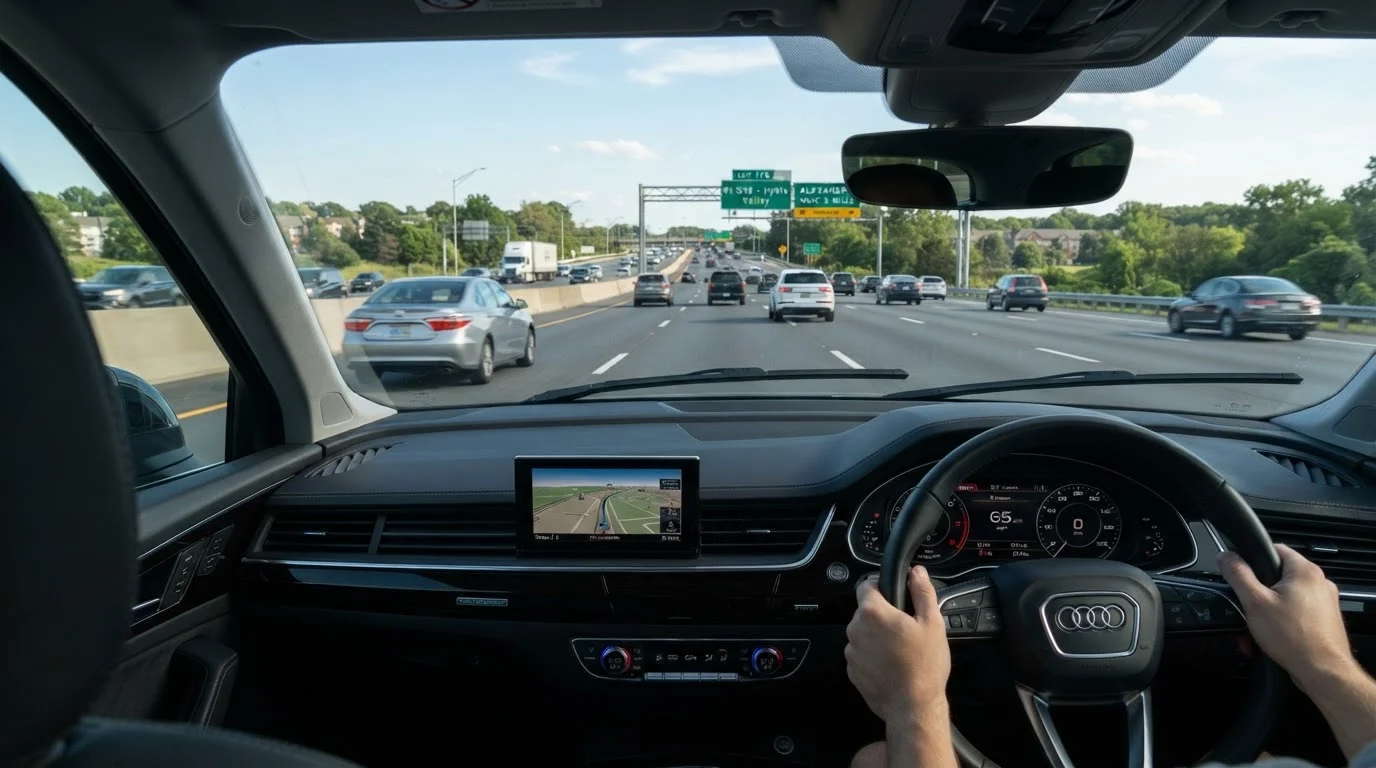
Where a driver looks directly shapes how much time they have to respond. Drivers who fix their gaze on the vehicle immediately ahead see hazards late. Experienced defensive drivers scan further down the road, typically 12 to 15 seconds of travel distance, which at highway speeds means several hundred feet.
Long-range scanning gives time to notice brake lights building up ahead, a vehicle drifting toward a lane boundary, or a merge that will compress available space. That extra information converts emergency reactions into smooth, controlled adjustments.
Checking mirrors every five to eight seconds keeps a driver aware of what is approaching from behind and alongside the vehicle. This matters particularly when considering a lane change or when slowing down, since a driver who brakes without knowing what is behind them cannot predict whether the following vehicle will stop in time.
Consistent scanning habits are among the behaviors that separate drivers with low collision histories from those with higher risk profiles over time.
Speed and conditions
Posted speed limits reflect normal, dry, daylight conditions. They are not an instruction to drive at that speed regardless of what the road is doing. Defensive driving treats speed as something to match to actual conditions, not to a sign.
Rain reduces tire grip and increases stopping distance. Fog cuts visibility to the point where the posted limit may be twice as fast as conditions allow. At night, headlights illuminate only a fraction of the stopping distance needed at highway speeds. A defensive driver adjusts in each of these situations without waiting for conditions to force a reaction.
The same logic applies on unfamiliar roads, where curve radii, intersection visibility, and road surface quality are unknown. Slowing down costs seconds; a collision costs far more.
Why it matters beyond the individual driver
A defensive driver creates a buffer that absorbs errors from other road users. That buffer benefits not just the driver but every occupant of the vehicle and everyone nearby. When one driver maintains space and stays attentive, they reduce the probability that a mistake by someone else becomes a multi-vehicle event.
The habits involved are not complex or physically demanding. Scanning further ahead, holding adequate following distance, matching speed to conditions, and staying aware of what surrounds the vehicle are all decisions made before any hazard appears. They do not require a fast reaction; they prevent the need for one.
Drivers who want a structured framework for building these habits can consult resources from the National Safety Council or look into state-approved defensive driving programs. Building consistent habits behind the wheel is how defensive driving moves from a concept to something that actually changes outcomes on the road.