

Key Takeaways
- Driving anxiety affects many drivers and has identifiable causes, including past accidents, high-traffic environments, and general anxiety disorders.
- Physical symptoms like a racing heart or sweaty palms are common and do not mean a driver is unsafe.
- Graduated exposure, such as starting with low-traffic routes and building up gradually, is a widely used coping approach.
- Professional support from a therapist familiar with anxiety disorders can help when self-directed strategies are not enough.
- Avoiding driving entirely tends to reinforce anxiety rather than reduce it over time.
Driving anxiety
Driving anxiety is persistent fear, apprehension, or distress experienced before or during driving. It can affect both new and experienced drivers and ranges from mild nervousness on busy highways to complete avoidance of getting behind the wheel. Unlike ordinary caution, driving anxiety interferes with a person's ability to drive comfortably or at all.
Clinically, driving anxiety may present as a specific phobia (amaxophobia) or as part of a broader anxiety disorder, sometimes triggered or worsened by a prior traumatic road event such as a collision.
What driving anxiety actually feels like
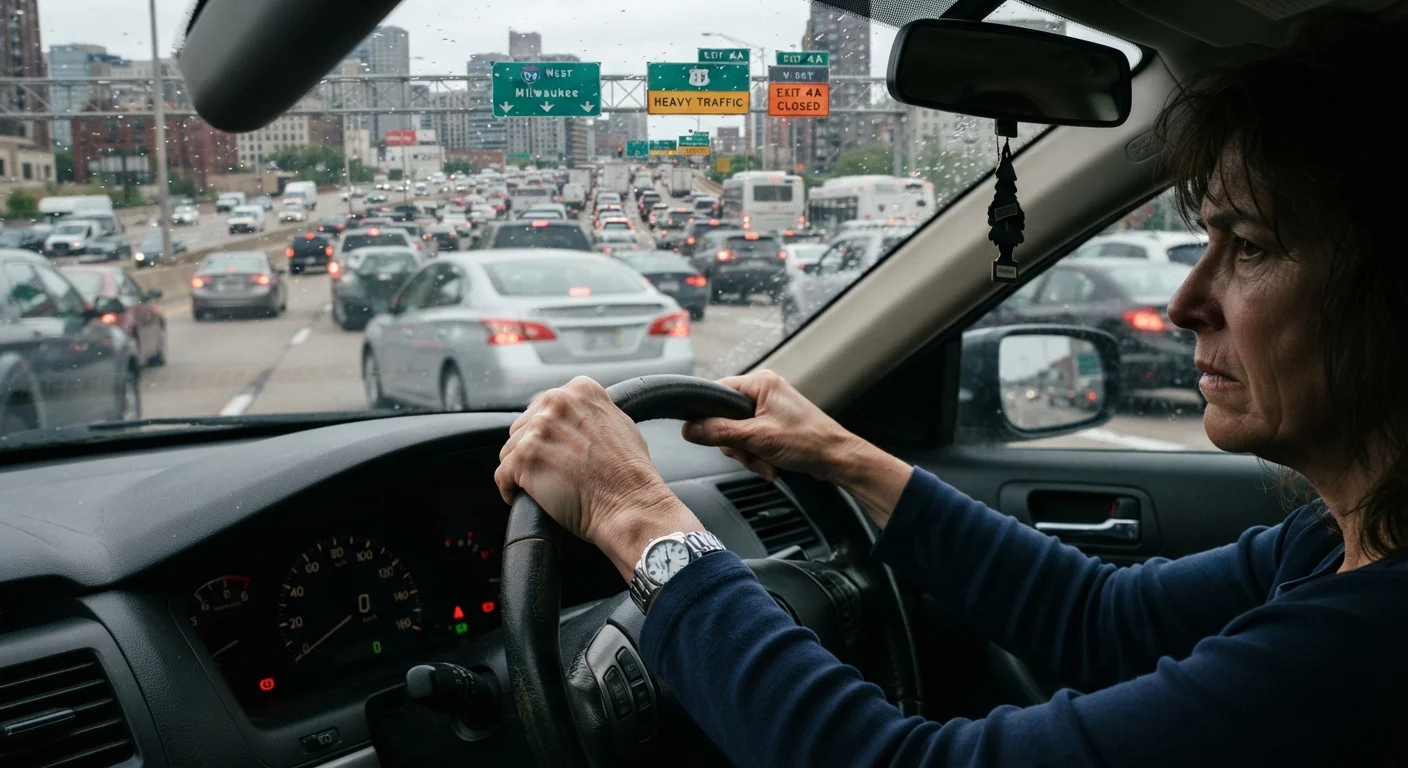
Driving anxiety shows up differently for different people. For some, it is a knot in the stomach before merging onto a busy interstate. For others, it is a full avoidance of highways, bridges, or nighttime driving. In more severe cases, a person may stop driving altogether.
Physical symptoms are common and include a racing heart, shallow breathing, sweaty palms, muscle tension, and a heightened startle response to other vehicles. These are the body's standard stress reactions, not signs of danger or incompetence. Mentally, anxious drivers often report intrusive thoughts about worst-case scenarios, difficulty concentrating on the road, or a sense that something bad is about to happen even when conditions are objectively safe.
Understanding the difference between ordinary nervousness and anxiety that limits daily life matters. Anxiety and worry are not the same thing, and recognizing which one is at work can shape how a driver approaches it.
Common causes and triggers
Driving anxiety rarely appears without a reason, though the cause is not always obvious to the person experiencing it.
- A prior collision or near-miss is one of the most direct causes. The brain can form strong fear associations from a single traumatic event on the road.
- General anxiety disorders can extend into driving. Someone who already experiences anxiety in other areas of life may find that driving becomes another trigger.
- Lack of experience or long gaps in driving after moving to a city, illness, or life change can erode confidence and create apprehension.
- Specific road conditions, such as heavy traffic, tunnels, bridges, or night driving, carry unique demands that some drivers find overwhelming.
- Passenger dynamics can add pressure. The awareness of being watched or judged by others in the vehicle affects some drivers more than others. Our article on driving with passengers covers how in-car social dynamics affect focus.
Anxiety from witnessing an accident
Witnessing a serious accident, even without being directly involved, can prompt driving anxiety. The brain does not always distinguish cleanly between direct experience and observed trauma. If road anxiety started after seeing a serious crash, that connection is worth discussing with a mental health professional.
Witnessing a serious accident, even without being directly involved, can also prompt driving anxiety. The brain does not always distinguish cleanly between direct experience and observed trauma.
Strategies people use to build confidence
There is no single method that works for every anxious driver, but several approaches have practical support behind them.
Graduated exposure means starting with lower-stress situations and expanding gradually. A driver uncomfortable on highways might begin with quiet residential streets, then move to light suburban roads, then to busier arterials before attempting freeway entry. Each successful trip builds evidence that the feared outcome did not occur.
Preparation and route familiarity reduce uncertainty. Knowing a route in advance, checking traffic conditions, and choosing less congested times of day all lower the number of unknowns a driver has to manage at once.
Breathing and grounding techniques before and during driving can interrupt the physical stress response. Slow, controlled breathing before starting the engine is a simple, accessible tool.
Defensive driving principles give anxious drivers a structured mental framework for anticipating hazards rather than reacting to them in a state of alarm. Knowing what to scan for and how to maintain space around the vehicle can replace vague dread with a concrete task.
Low-risk driver habits overlap with anxiety management: consistent routines, reduced distractions, and deliberate attention to surroundings make driving feel more manageable and less reactive.
When to involve a professional
Self-directed strategies work for many drivers, but some situations call for professional support. If anxiety prevents a person from driving to work, medical appointments, or other necessary destinations, or if it causes significant distress even when driving is manageable, a mental health professional is worth consulting.
Cognitive behavioral therapy (CBT) has substantial evidence behind it for treating specific phobias and anxiety disorders. A therapist trained in CBT can work with a driver to identify distorted thoughts about road danger, build systematic exposure plans, and address the underlying anxiety pattern rather than just the driving context.
In some cases, driving anxiety is one part of a broader anxiety condition that benefits from coordinated care. A healthcare provider can assess whether that is the case and discuss options appropriate to the individual's situation.
This article is for general informational purposes only and is not a substitute for professional medical or mental health advice. Readers experiencing significant anxiety should consult a qualified healthcare professional.