

Key Takeaways
- The serpentine belt powers the alternator, power steering pump, AC compressor, and water pump on most vehicles.
- A failing belt often gives visible or audible warnings before it breaks completely.
- Most manufacturers recommend replacement every 60,000 to 100,000 miles, though intervals vary.
- A snapped serpentine belt can disable multiple systems at once and may cause engine overheating.
- Belt replacement is generally a straightforward shop repair and less expensive than the damage a failed belt causes.
Serpentine belt
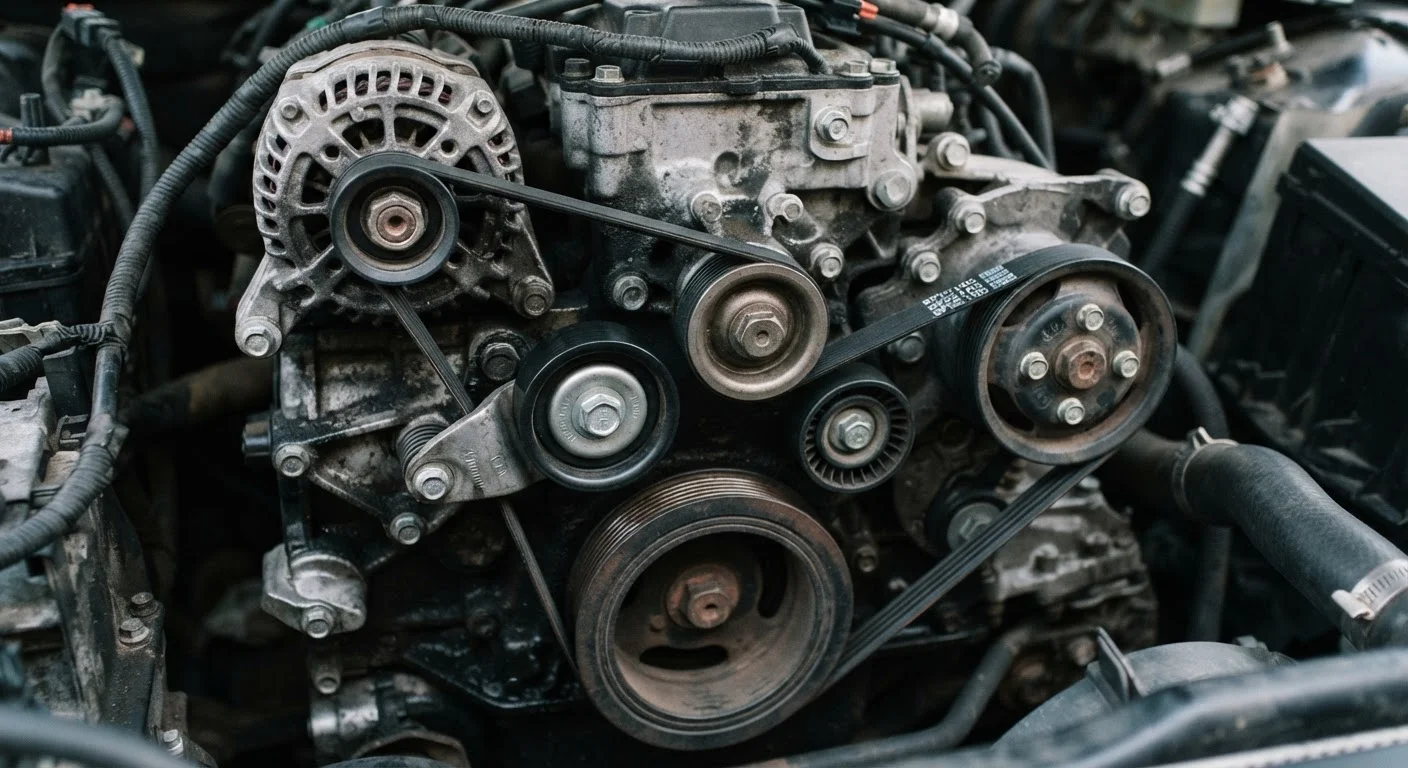
A serpentine belt is a single, continuous rubber belt that winds around multiple pulleys in your engine bay. It transfers rotational power from the engine's crankshaft to accessories such as the alternator, power steering pump, and air conditioning compressor. Without it, those systems stop working.
Older vehicles used multiple separate V-belts, one per accessory. Modern designs consolidate these into one serpentine belt routed by a spring-loaded tensioner that maintains consistent pressure.
What the serpentine belt actually drives
The crankshaft at the bottom of your engine spins whenever the engine runs. The serpentine belt captures that rotational energy and delivers it to several accessories mounted around the engine. On most passenger vehicles, those accessories include the alternator, the power steering pump, the air conditioning compressor, and the water pump.
The alternator charges the battery and powers the electrical system while the engine runs. The power steering pump pressurizes the hydraulic fluid that makes steering feel light. The AC compressor circulates refrigerant through the climate control system. On many engines, the water pump circulates coolant through the radiator to prevent overheating. One belt handles all of this simultaneously.
A spring-loaded component called the belt tensioner keeps the belt tight as it stretches over time. An idler pulley helps route the belt around the engine layout. Both the tensioner and idler pulleys are often replaced at the same time as the belt itself, because worn bearings in either can cause the new belt to fail early.
For a broader picture of how this fits into your vehicle's overall service schedule, see routine maintenance every car owner should understand.
Signs the belt is wearing out
Rubber belts degrade over time through heat cycling, flexing, and exposure to oil or coolant leaks. Several warning signs appear before a complete failure.
- A high-pitched squeal or chirping noise, especially on cold starts or when turning the steering wheel sharply, often means the belt is slipping or has glazed over.
- Visible cracks across the ribbed surface, frayed edges, or missing chunks are signs the rubber has hardened and is breaking down.
- A battery warning light can indicate the alternator is not charging properly, which sometimes traces back to a slipping belt rather than a bad alternator.
- Heavy or stiff steering can signal that the power steering pump is losing drive from the belt.
- An overheating engine in a vehicle where the water pump is belt-driven may point to belt failure rather than a coolant leak.
None of these symptoms are exclusive to belt problems, so a mechanic should inspect the belt directly before assuming the cause.
Check the belt during oil changes
Ask your technician to visually inspect the serpentine belt at every oil change. The inspection takes only a few minutes and can catch cracking, fraying, or glazing before those problems lead to a roadside failure. Many shops include this as part of a standard multi-point check.
When to have it replaced
Manufacturer recommendations for serpentine belt replacement generally fall between 60,000 and 100,000 miles. The specific interval for your vehicle is in the owner's manual under the maintenance schedule. Some newer belts use EPDM rubber, which resists cracking better than older neoprene compounds, so visible cracking alone is no longer a reliable indicator of remaining life on those belts.
A mechanic can measure belt wear using a simple gauge tool that checks the depth of the belt's ribs. This is more accurate than visual inspection alone and takes only minutes during a routine service visit.
If your vehicle has a timing belt rather than a timing chain, that is a separate replacement with its own interval, often around 60,000 to 90,000 miles. The two jobs are sometimes combined to reduce labor cost if the intervals coincide, but they are distinct components. Understanding what each part of your car needs and when is covered in more depth in our guide to routine car maintenance.
60,000-100,000 mi
Typical serpentine belt replacement interval
Most vehicle manufacturers specify this range in their maintenance schedules, though actual life depends on belt material and operating conditions.
Under $200
Typical replacement cost at a shop
This general estimate covers parts and labor for most passenger vehicles; costs vary by make, model, and region.
4-6 systems
Accessories driven by a single belt
On many modern engines, one serpentine belt simultaneously drives the alternator, power steering pump, AC compressor, water pump, and sometimes additional accessories.
What belt failure actually costs
Serpentine belt replacement at a shop typically costs less than $200 for most vehicles, including parts and labor. The belt itself is inexpensive; most of the cost is shop time. Replacing the tensioner and idler pulley at the same time adds a modest amount to that total but avoids a repeat labor charge if those parts fail soon after.
Waiting until the belt breaks rarely saves money. A snapped belt can leave a driver stranded, and if the water pump stops mid-drive, the resulting engine overheating can cause significant internal damage that costs far more to repair. The cost relationship between a planned belt replacement and an unplanned breakdown is not close.
If a mechanic flags belt wear during a brake inspection or oil change, that is a reasonable time to schedule replacement rather than wait for the next mileage milestone. You can read about related maintenance items, including transmission fluid and what it protects, to build a clearer picture of which services often come due around the same mileage intervals.