

| Number of states | 6 (ME, NH, VT, MA, RI, CT) |
| Peak foliage window | Late September (north) to mid-October (south) |
| Primary ski states | Vermont and New Hampshire |
| Peak coastal season | Late June through Labor Day |
| Mud season (trail closures) | Roughly mid-March through April |
| Best transport method | Personal vehicle for rural and coastal areas |
The region across four seasons
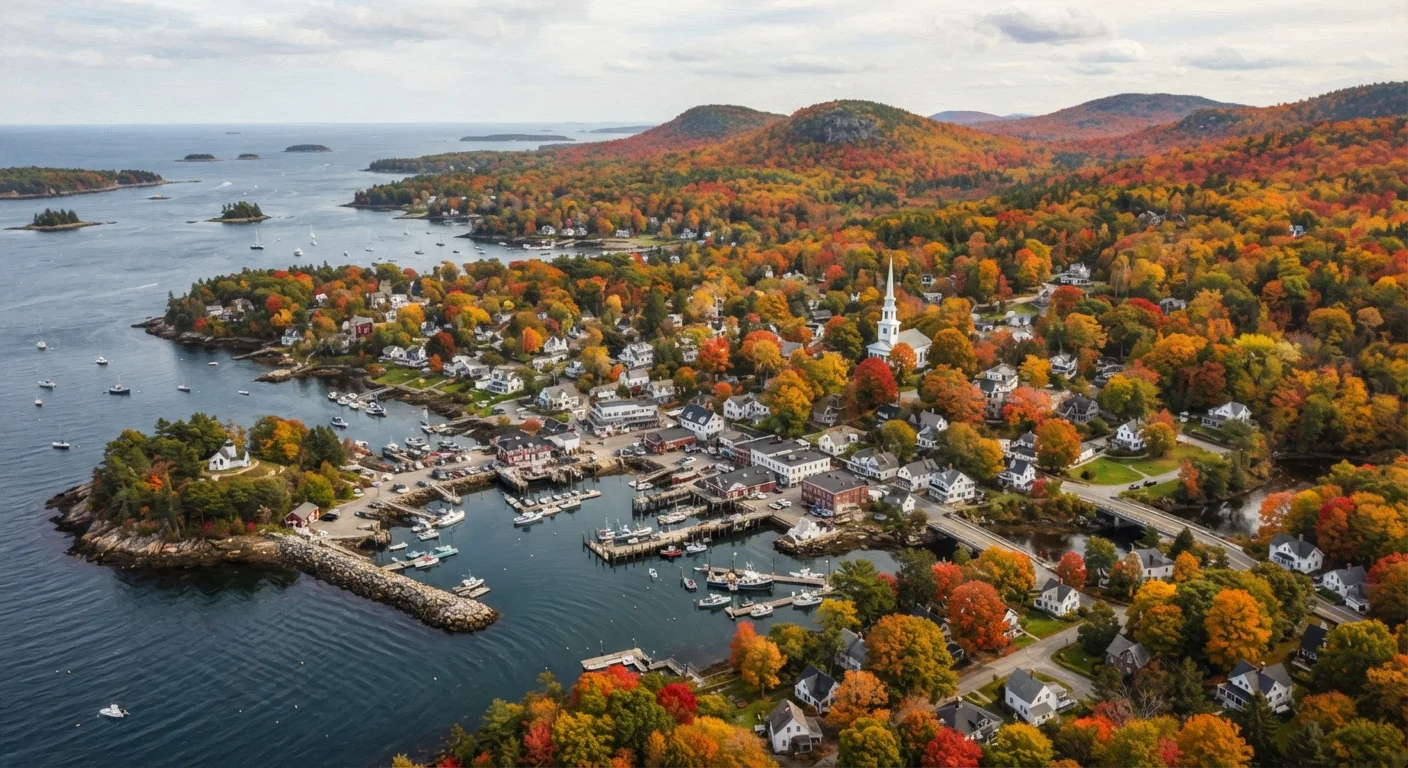
New England spans six states: Maine, New Hampshire, Vermont, Massachusetts, Rhode Island, and Connecticut. Visitors most commonly associate the region with fall foliage, but each season brings a genuinely different experience, not just a variation on the same theme. Geography, weather, and local rhythms all shift in ways that affect what you can do, what it costs, and what the region actually feels like to travel through.
If you plan trips around seasonal conditions, the same principles that shape international seasonal travel apply here: weather windows, crowd patterns, and local event calendars all interact. New England just compresses those contrasts into a relatively small geographic area.
| Number of states | 6 (ME, NH, VT, MA, RI, CT) |
| Peak foliage window | Late September (north) to mid-October (south) |
| Primary ski states | Vermont and New Hampshire |
| Peak coastal season | Late June through Labor Day |
| Mud season (trail closures) | Roughly mid-March through April |
| Best transport method | Personal vehicle for rural and coastal areas |
What each season actually delivers
Fall (September through October)
Foliage typically peaks in northern Vermont and New Hampshire in late September, then moves south through Massachusetts and Connecticut through mid-October. Peak timing varies year to year depending on temperature and rainfall. Accommodations in popular areas, including Stowe, Vermont, the White Mountains of New Hampshire, and the Berkshires in Massachusetts, book out weeks or months in advance. Prices rise sharply during peak leaf weeks.
Winter (December through March)
Ski resorts in Vermont and New Hampshire are the obvious draw, but coastal towns, Boston, and college cities like Providence and Portland take on a quieter character that some travelers find preferable. Rates at coastal inns drop considerably, and museum lines are short. Snow coverage varies; lower-elevation areas can see rain instead of snow, particularly in December and March. Check road conditions before driving mountain routes.
Spring (April through May)
Spring in New England arrives unevenly. April can still bring snow to northern areas while Connecticut sees crocuses. The region's fishing towns, including Gloucester and Rockport in Massachusetts, begin reopening seasonal restaurants and shops, but some businesses stay closed until Memorial Day weekend. Mud season, roughly mid-March through April, makes many unpaved hiking trails soft and erosion-prone; land managers in several states ask hikers to avoid these trails until the ground firms up.
Summer (June through August)
The coast dominates summer travel. Cape Cod, the Maine coast, Block Island, and Nantucket draw large crowds from late June through Labor Day. Beach parking, ferry tickets to islands, and rental properties fill fast. Inland, the Green Mountains and White Mountains offer hiking with long daylight hours and generally reliable weather. July and August bring the warmest temperatures, but coastal fog is common in Maine, particularly in the morning.
What stays constant across all four seasons
Certain qualities hold regardless of when you visit. New England's built environment, historic town centers, white-steepled churches, covered bridges, and 18th- and 19th-century architecture, does not change with the calendar. Boston's Freedom Trail, the colonial districts of Newport, and the old fishing wharves of Portland all remain structurally the same year-round. Indoor cultural institutions, including the Museum of Fine Arts in Boston and the Wadsworth Atheneum in Hartford, operate through all seasons.
The region's food identity, particularly its seafood, also holds year-round. Lobster, clam chowder, and oysters from local fisheries are available in most seasons, though some seasonal shacks close in winter. Farm-to-table dining has grown across the region, and farmers markets in larger cities run year-round indoors.
If you want a comparison for how distinct regional travel can feel across different parts of the country, America's national park regions offer useful contrast. New England's draw is less about raw scale and more about the density of history, coast, and mountains within a driveable area.
Practical considerations for planning
Driving is the most practical way to move between New England states. Amtrak serves Boston, Providence, New Haven, and Portland, but rail service does not reach most of the region's rural or coastal destinations. A car is necessary for the White Mountains, Vermont villages, and the Maine coast north of Portland.
Accommodation options range from large urban hotels in Boston and Burlington to small inns and bed-and-breakfasts in rural areas. The latter often have minimum-stay requirements on peak weekends, including foliage season, July Fourth, and Labor Day.
Packing requires attention to layering at almost any time of year. Even summer nights in Maine can drop into the 50s Fahrenheit. Spring and fall demand flexibility for temperature swings of 30 degrees or more within a single day. For a systematic approach to managing clothing for seasonal travel, a seasonal wardrobe rotation system can simplify packing decisions before you leave.
Travelers should always verify current travel conditions, road closures, ferry schedules, and entry requirements for any specific sites or parks directly with official sources before departing.