

| Standard interior cabin size (approximate) | 140 to 185 sq ft (General industry range; varies by ship class) |
| Standard balcony cabin size (approximate) | 180 to 220 sq ft plus balcony (General industry range; varies by ship class) |
| Suite living area (approximate) | 300 to 1,400+ sq ft (Varies widely by ship and suite tier) |
| Typical cabin categories available | Interior, oceanview, balcony, mini-suite, suite (Common across major ocean cruise lines) |
| Obstructed view discount | Typically 10 to 25% less than unobstructed (General market observation; varies by line) |
| Guarantee booking assignment timing | Usually 1 to 4 weeks before departure (General industry practice; varies by line) |
The four main cabin categories
Cruise ships organize cabins into four broad categories, each defined primarily by access to natural light and outdoor space. Understanding what each one actually contains helps you weigh the practical trade-off rather than just comparing prices.
Interior cabins have no window. The space is entirely enclosed, which means no daylight cues and no view. They are the smallest rooms on most ships, typically in the 140 to 185 square foot range. For passengers who plan to spend most waking hours in public areas, the lower price can make sense. The main adjustment is psychological: without a window, it is easy to lose track of time or weather.
Oceanview cabins add a sealed porthole or large picture window. The window does not open, but natural light enters, and you can see the sea or a port without going to a public deck. These rooms are generally comparable in floor space to interiors, though some ships offer wider oceanview staterooms on certain decks.
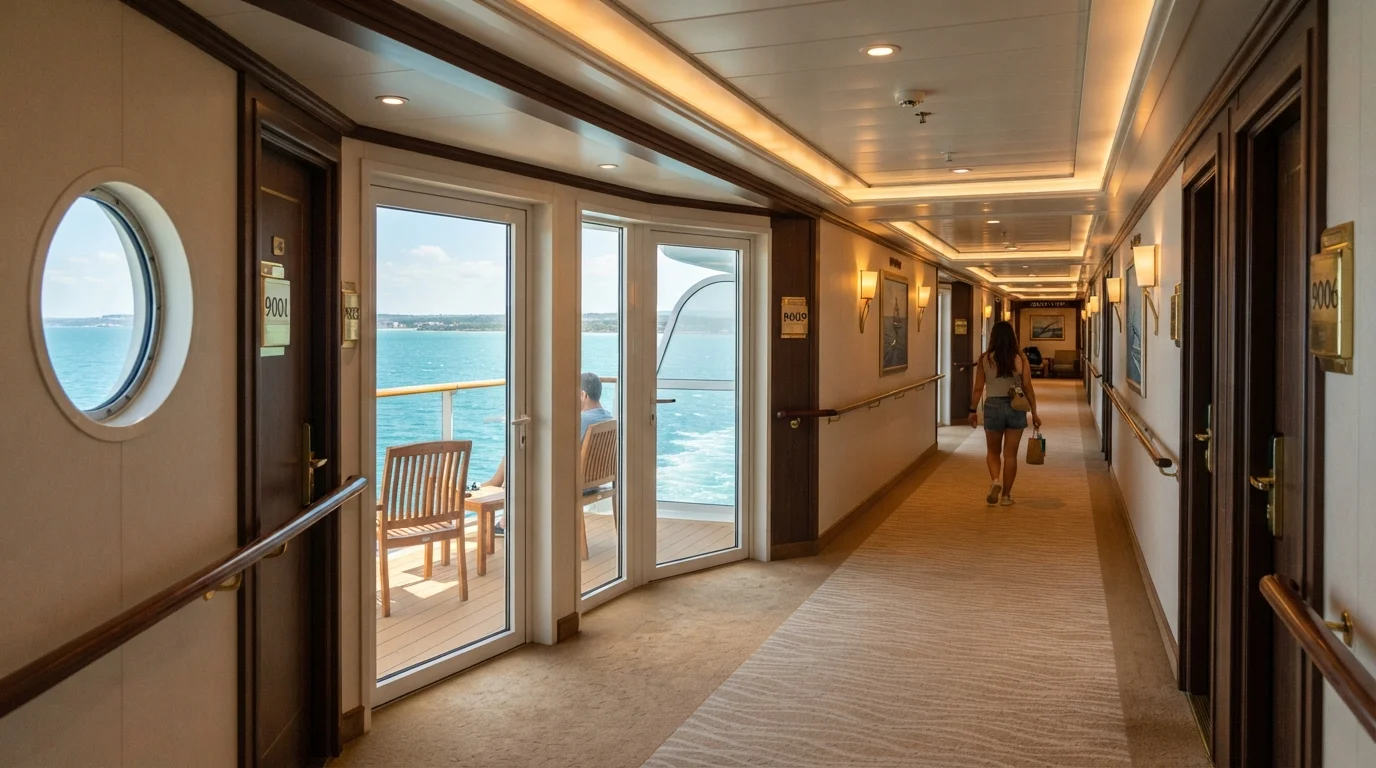
Balcony cabins include a private outdoor space with a chair or two and a small table. The balcony is accessed through a sliding glass door, and the partition between adjacent balconies is typically solid or semi-solid. This is where the category split is most noticeable in daily life: you can step outside in the morning, watch a port approach in private, or simply get fresh air without going to a public deck.
Suites vary more than any other category. A junior suite might add 50 to 80 square feet and a small sofa. A full suite often includes a separate bedroom, a dining area, and concierge or butler service. Many lines also grant suite guests access to a private sun deck or lounge. The perks attached to suite bookings differ significantly by line, so it is worth reading what is actually included rather than assuming a standard set of benefits.
Interior cabin
A stateroom with no windows or natural light. These are typically the smallest and least expensive cabins on the ship.
Oceanview cabin
A cabin with a sealed porthole or picture window facing the sea. Natural light enters, but the window does not open.
Balcony cabin
A stateroom with a private outdoor balcony accessed through a sliding glass door. Also called a veranda cabin on some lines.
Suite
A premium cabin category with significantly more living space, often including a separate bedroom, sitting area, and elevated service perks.
Obstructed view
A cabin sold as oceanview or balcony but with a lifeboat, overhang, or structural element partially blocking the sightline. Usually priced lower than unobstructed equivalents.
Guarantee cabin
A booking where you pay for a category but are assigned a specific room by the cruise line at a later date. Sometimes results in an upgrade, but placement is not guaranteed.
Practical factors that affect cabin choice
Location on the ship matters as much as category. Cabins near the center of the ship on lower decks experience less motion in rough seas, which is relevant for passengers prone to seasickness. Cabins near elevators or the main atrium are convenient but can be noisier. Cabins directly below a pool deck or buffet area may have noise overhead during busy hours.
| Standard interior cabin size (approximate) | 140 to 185 sq ft (General industry range; varies by ship class) |
| Standard balcony cabin size (approximate) | 180 to 220 sq ft plus balcony (General industry range; varies by ship class) |
| Suite living area (approximate) | 300 to 1,400+ sq ft (Varies widely by ship and suite tier) |
| Typical cabin categories available | Interior, oceanview, balcony, mini-suite, suite (Common across major ocean cruise lines) |
| Obstructed view discount | Typically 10 to 25% less than unobstructed (General market observation; varies by line) |
| Guarantee booking assignment timing | Usually 1 to 4 weeks before departure (General industry practice; varies by line) |
Deck plans are public documents, and comparing the specific cabin number against a ship's layout takes less than five minutes. This is especially worth doing for obstructed-view cabins, which are sold at a discount but carry meaningful variation in how much of the view is actually blocked.
Solo travelers should note that most cabin categories carry a single-occupancy supplement when booked by one person, since cruise pricing is built around two occupants. Some lines offer designated solo cabins at no supplement, but availability is limited. The solo cruising guide covers this in more detail.
If cabin size matters for your trip, compare the square footage listed for the specific ship you are booking, not the category average. Ships in the same cruise line's fleet can differ by 40 or more square feet in the same nominal category.
Obstructed views: check the deck plan
Cruise lines publish deck plans on their websites showing the exact location of every cabin. Before booking an obstructed-view cabin for its lower price, pull up the deck plan and identify what is blocking the view. A lifeboat blocking the lower half of a window is a very different situation from an overhang that only cuts off a sliver of sky. The specific obstruction matters more than the category label.
Passengers watching spending closely will find the cabin category one of the larger line items in the overall budget. The cruise budget guide covers where onboard costs commonly escalate beyond the base fare, which applies regardless of which cabin tier you choose.
For passengers comparing ocean cruising to a different format entirely, river cruises vs. ocean cruises addresses how cabin sizes and layouts differ between the two formats.