
Welcoming a Second Pet into a Household: What the Research on Animal Introductions Suggests

Key Takeaways
- Gradual, scent-first introductions reduce conflict between resident and incoming animals.
- Separate feeding stations and resting spaces help prevent resource-based tension in multi-pet homes.
- Signs of stress in either animal should slow the process, not rush it.
- Senior residents need extra consideration; a new pet can disrupt established comfort routines.
- Most introductions take days to weeks, not hours, to reach a stable baseline.
What you will need
Why introductions matter more than most owners expect
Bringing a second animal home is one of the most significant changes a pet experiences. From the resident animal's perspective, a stranger has arrived in their territory without warning or consent. From the newcomer's perspective, everything is unfamiliar: the smells, the layout, the people, and the presence of another animal already at home.
Research in animal behavior consistently points to the same conclusion: rushed introductions are the most common driver of long-term conflict between household pets. A study published in Applied Animal Behaviour Science found that cats introduced gradually, with controlled scent exposure before any visual contact, showed significantly fewer aggressive and fearful behaviors than those introduced all at once. While dog-to-dog research is harder to generalize given breed and temperament variation, the same principle of gradual, staged exposure appears across veterinary behaviorist guidance for multiple species.
What owners often underestimate is that initial tolerance is not the same as acceptance. Two animals that seem to ignore each other in week one may have unresolved stress responses that surface later through resource guarding, redirected aggression, or withdrawal. Structured introductions build familiarity before they build proximity, which gives both animals a real chance to adjust. See also the guide to pet anxiety triggers for context on how stress shapes animal behavior at home.
What you will need
What to prepare before the new pet arrives
Setup matters as much as the introduction itself. Before the new animal enters the home, the resident pet's core resources, its feeding spot, sleeping area, and any favored resting zones, should remain exactly where they are. Moving a resident cat's food bowl or a dog's bed to accommodate the newcomer signals a disruption before any introduction has occurred.
Separate spaces are not optional. Each animal needs a zone it can access without passing through the other's area. For cats, this typically means vertical space and separate litter boxes on different floors or rooms. For dogs, crate training or room-gating achieves the same outcome. The guide on disease prevention in multi-pet households also covers why separate feeding and resting areas reduce health risks beyond behavioral ones.
If your resident animal is older, give extra thought to noise tolerance and sleep disruption. A kitten or puppy's energy level can be physically and psychologically taxing for a senior pet. The senior pet health guide outlines the comfort and routine needs of aging animals that a new arrival can easily disrupt.
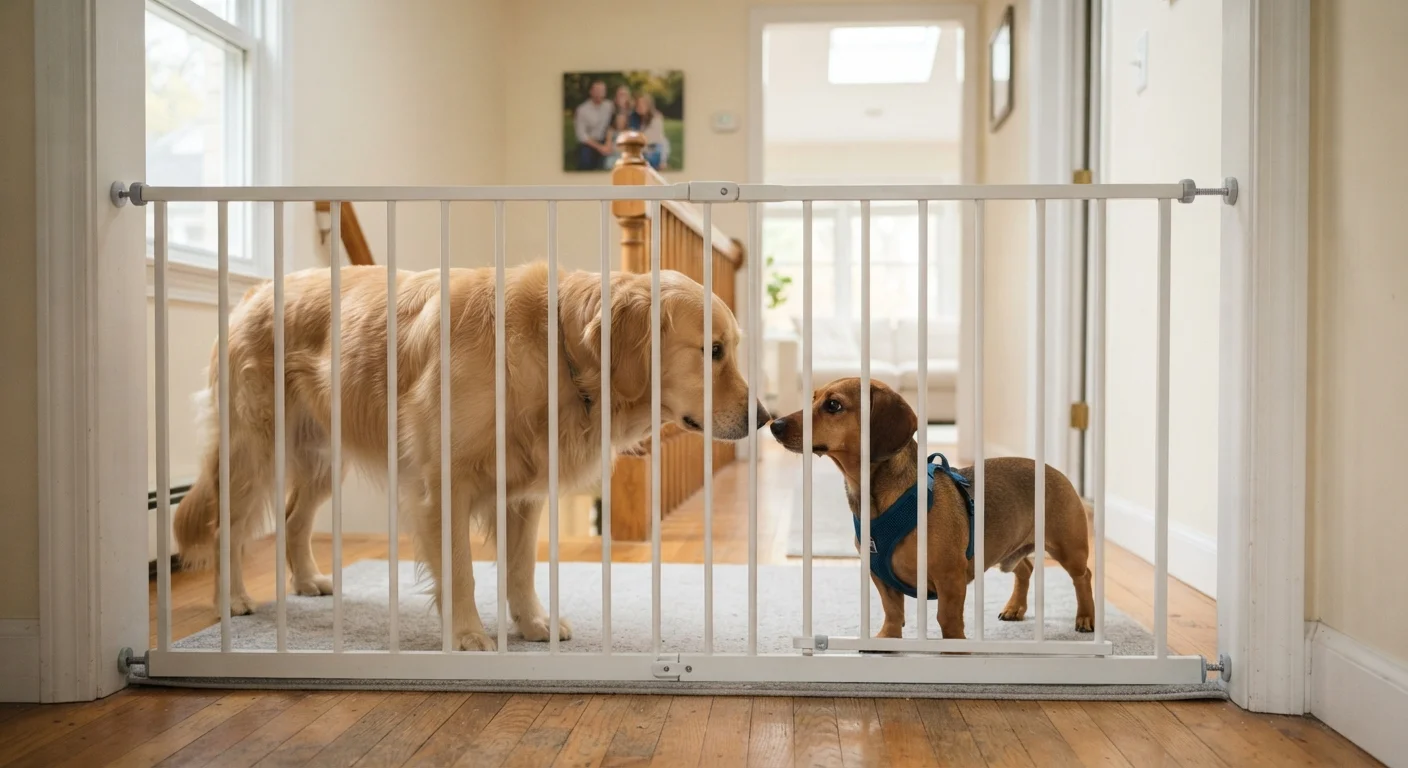
Baby gate or mesh screen
Creates a physical barrier that allows visual and scent contact without direct physical access during early introduction stages.
Spare bedding or worn cloth
Used to transfer each animal's scent to the other's space before any face-to-face contact.
Separate food and water bowls
Prevents resource competition at mealtimes, which is a common trigger for inter-animal conflict.
High-value food treats
Used during barrier and shared-space sessions to build positive associations with the other animal's presence.
Pheromone diffuser (species-specific)
Synthetic calming pheromones formulated for cats or dogs may help reduce ambient stress during the adjustment period; consult your vet before use.
The staged introduction process
The steps below follow the scent-first, proximity-second approach that veterinary behaviorists broadly recommend. The timeline at each stage is a minimum, not a target to hit as fast as possible. Move forward only when both animals show relaxed, neutral body language at the current stage.
Establish scent familiarity before any visual contact
Before the new animal enters the main living space, swap bedding or a worn cloth between the two animals' areas. Place the newcomer's item near (not in) the resident animal's space, and vice versa. Let each animal investigate at its own pace over one to three days. No forced sniffing, no hovering. Calm, curious investigation of the scent item is a positive sign.
Introduce the newcomer to a single, contained space first
When the new animal arrives, confine it to one room with its own food, water, litter or elimination area, and a bed. This room becomes its base for the first several days. The resident animal keeps full access to the rest of the home. Both animals can smell each other under the door. Do not attempt visual contact at this stage.
Allow visual contact through a barrier
Once both animals seem calm around the door-gap scent exchange (typically three to seven days in), introduce a visual barrier: a baby gate with a mesh panel, a cracked door, or a screen door. Let both animals approach and retreat freely. Keep sessions short, around five minutes, and increase gradually. End each session while both animals are still calm rather than waiting for tension to build.
Arrange the first shared-space meeting
For dogs, the first shared meeting is best done in a neutral space outdoors if possible, with both animals on loose leashes and two handlers present. For cats, remove the barrier and let the resident cat enter the newcomer's room voluntarily rather than carrying the newcomer into the resident's main space. Keep the first session to ten minutes or less. Do not intervene unless there is genuine physical danger.
Gradually increase shared time while maintaining separate resources
Over the following one to three weeks, extend shared time in increments. Continue feeding in separate areas throughout this period. Maintain separate sleeping spaces until the animals choose proximity on their own. Watch for resource guarding around food, toys, and human attention, and intervene calmly by redirecting rather than punishing.
Reading the signs and knowing when to slow down
Not every introduction goes smoothly, and setbacks are normal. What matters is recognizing which signals indicate manageable adjustment stress versus genuine incompatibility that needs professional input.
Manageable signs include brief hissing or growling followed by disengagement, avoidance without panic, and short periods of watchfulness. These are animals communicating discomfort, not attacking. Concerning signs include sustained stalking or stiff posturing, repeated lunging or biting even through a barrier, prolonged refusal to eat, or one animal hiding continuously for more than two or three days.
If the resident animal starts showing appetite changes, excessive grooming, or elimination outside the litter box, these can be stress responses worth discussing with a veterinarian or veterinary behaviorist. The signs your senior pet needs different care article is a useful reference if your resident animal is older and showing subtle behavioral changes after the new pet arrives.
Puppies and kittens also carry their own adjustment complexity. A kitten's social development window is narrow; how it experiences early household life shapes its long-term comfort with other animals. The kitten socialization guide explains why those first weeks matter for multi-pet households specifically.
Patience is the most practical tool you have
Most successful multi-pet households reach a stable, comfortable dynamic within four to eight weeks of a well-managed introduction. Pushing the timeline faster than either animal is ready for is the most common reason introductions fail. If progress stalls for more than two weeks, a consultation with a veterinary behaviorist is a reasonable next step rather than a sign of failure.