

Key Takeaways
- Premiums can rise even if you filed no claims and your circumstances stayed the same.
- Insurers price risk across large pools of policyholders, so community-wide trends affect your rate.
- Inflation in repair and medical costs flows directly into premium calculations.
- Your credit-based insurance score can shift your rate without any policy change on your end.
- Reviewing your policy at renewal can reveal discounts or coverage adjustments worth making.
Insurance premium increase
An insurance premium increase is a rise in the amount you pay for coverage, even when your own risk profile has not changed. Insurers can adjust rates based on factors entirely outside your control, including claims trends across your region, rising repair costs, and broader economic conditions. Your personal history is only one input among many.
Insurers file rate changes with state regulators before applying them. An increase is not arbitrary, but it may reflect pooled-risk data rather than anything specific to your policy.
The rate went up, and you have no idea why
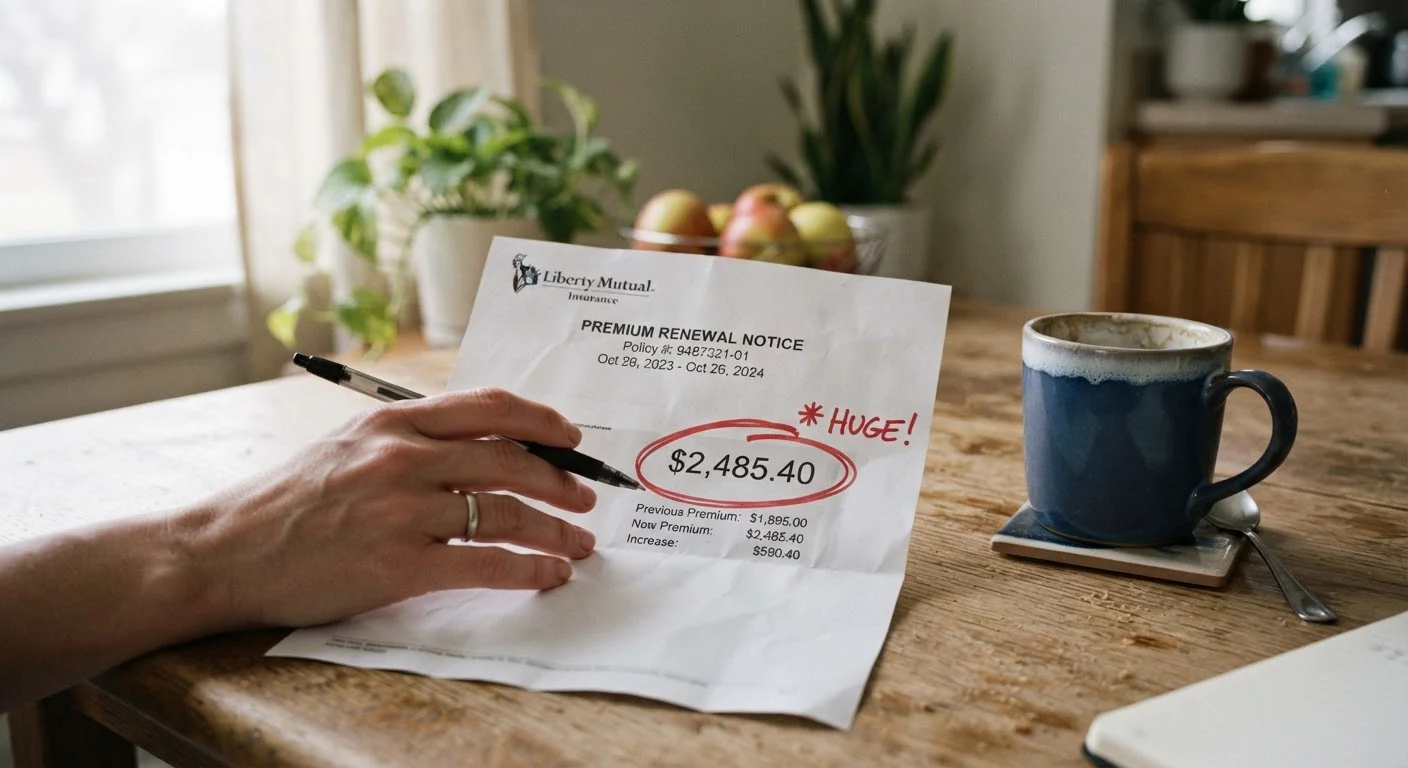
You open your renewal notice and the premium is higher than last year. You did not file a claim. You did not move, buy a new car, or add a driver. Nothing changed on your end, yet the bill is bigger. This happens to millions of American policyholders every year, and it is not a billing error.
Insurance pricing is based on risk pools, not just individual histories. When costs rise across a pool of thousands of policyholders, everyone in that pool tends to pay more, regardless of personal behavior. Understanding what drives those pool-wide changes is the first step toward knowing whether an increase is reasonable and what, if anything, you can do about it.
See how insurers calculate risk and your rate for a deeper look at the underwriting process behind your premium.
The main reasons premiums rise without a personal trigger
Inflation in repair and replacement costs. When the cost of auto parts, lumber, or medical care rises, insurers pay more to settle claims. Those higher payouts get priced into future premiums. A fender bender that cost $3,000 to repair several years ago may now cost significantly more, and that trend affects every auto policyholder in the market.
Regional claims trends. If your area has seen a spike in severe weather events, auto theft, or liability lawsuits, your insurer has likely paid out more claims in your territory. Because you share a risk pool with other policyholders in your region, those trends push up everyone's rate, including yours.
Reinsurance costs. Insurers buy their own insurance, called reinsurance, to protect against catastrophic losses. When reinsurance prices rise, often after large natural disasters, primary insurers pass a portion of that cost through to policyholders.
Your credit-based insurance score. In most states, insurers use a credit-based insurance score as one pricing factor. If your credit profile shifted, perhaps because of a missed payment, a new loan, or a higher credit utilization ratio, your score may have changed enough to affect your premium. This happens automatically at renewal in many cases.
Check your coverage limits, not just your rate
Some policies include an inflation-guard clause that automatically raises your coverage limits each year to keep up with rising replacement costs. This is a feature, not a fee increase in disguise. Confirm whether yours includes this clause so you know exactly what you are paying for.
Your coverage amounts may need updating. As home values and car values rise, the cost to fully replace what you own rises too. Some insurers automatically adjust coverage limits to keep pace, which increases the premium. Check whether an inflation-guard clause applies to your policy.
What you can do at renewal
A premium increase is not necessarily a sign that your insurer is treating you unfairly. It may reflect real changes in the cost of coverage. That said, renewal is a good time to review whether your current policy still fits your situation.
Ask your insurer for a written explanation of the rate change. Most will provide the general category of reason, such as a territory adjustment or a credit score change. If the explanation points to a correctable factor, address it before your next renewal cycle.
Check whether you qualify for discounts you may not be using, such as bundling home and auto coverage, completing a defensive driving course, or installing safety devices. The annual insurance renewal checklist walks through what to review before signing off on another year of coverage.
If you are thinking about adjusting your deductible to offset a premium increase, see the deductible vs. premium trade-off explained before making that decision. Raising your deductible lowers your premium, but it also raises your out-of-pocket cost if you do file a claim.
~11%
Average U.S. homeowners insurance rate increase in recent years
According to data from the Insurance Information Institute, homeowners insurance rates have risen sharply in many states, driven by increased claims from natural disasters and construction cost inflation.
45 states
States allowing credit-based insurance scoring
The National Conference of State Legislatures has documented that the majority of states permit insurers to use credit-based insurance scores as a rating factor for home and auto policies.
This article is general insurance information and is not personalized insurance, financial, or legal advice. Coverage terms, pricing factors, and regulations vary by insurer and by state. Consult a licensed insurance professional for guidance specific to your situation.