

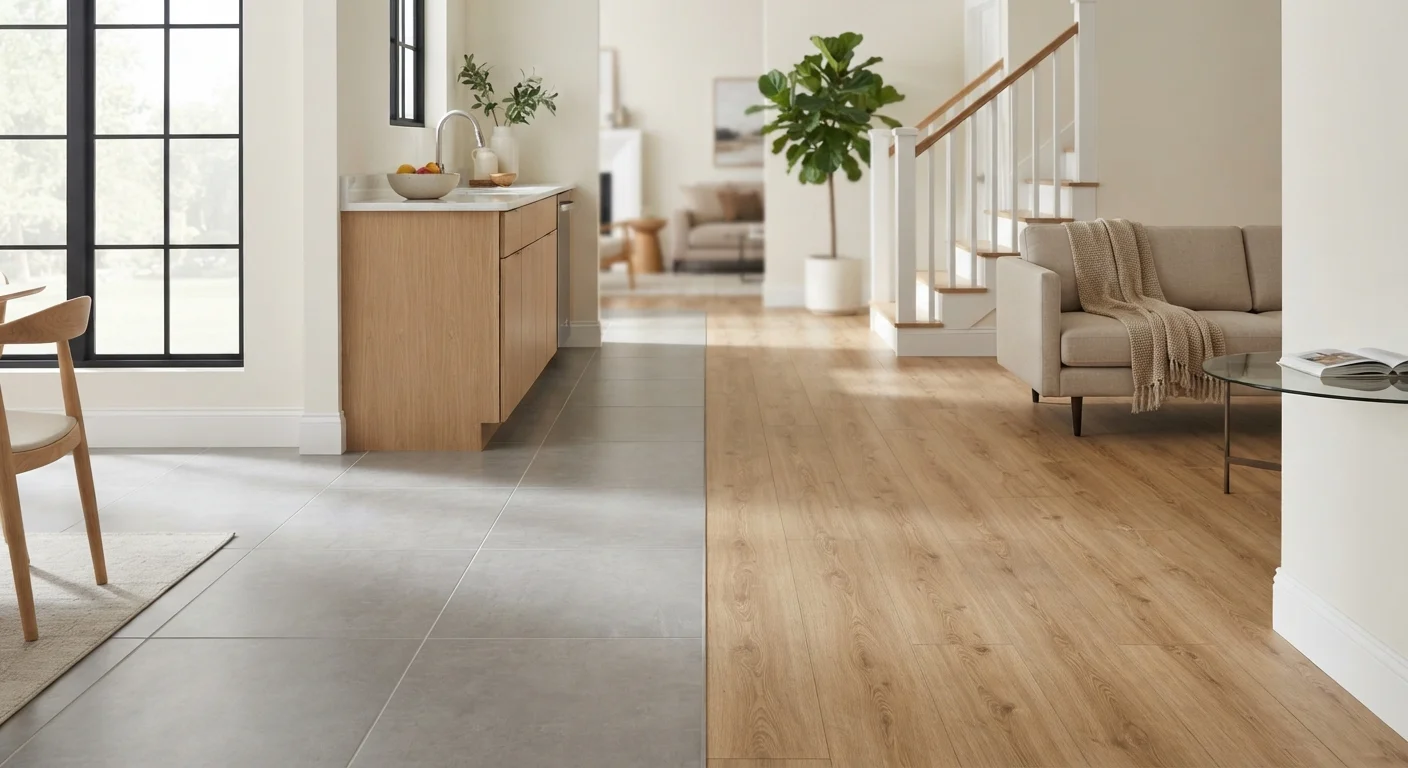
Key Takeaways
- Ceramic and porcelain tile last decades but require more complex installation and feel hard underfoot.
- Luxury vinyl plank handles moisture well and installs faster, making it practical for many DIYers.
- Tile costs less per square foot in materials but installation labor typically runs higher than vinyl plank.
- Neither option is universally better; the right choice depends on the room, subfloor, and budget.
Our Verdict
Tile floors hold up longer in wet environments and suit homeowners willing to invest in professional installation. Vinyl plank suits budget-conscious projects, renters, and anyone who wants a warmer, quieter surface they can install themselves. Both perform well in high-traffic areas when properly maintained.
| Best for | Recommended |
|---|---|
| Wet rooms like bathrooms and kitchens where long-term moisture resistance matters most | Ceramic or porcelain tile |
| DIYers who want fast installation with comfort underfoot | Luxury vinyl plank |
| Households with heavy furniture, sharp pet claws, or abrasive foot traffic | Porcelain tile |
| Renters or anyone needing a floor they can realistically replace without major cost | Luxury vinyl plank |
What each material actually is
Ceramic tile is made from clay fired at high temperatures. Porcelain is a denser subtype fired at even higher heat, which makes it less porous and more resistant to water and scratches. Both come in a wide range of sizes, finishes, and patterns, and they are set permanently with mortar and grout.
Luxury vinyl plank (LVP) is a layered synthetic product. A rigid or semi-rigid core sits between a photographic design layer and a protective wear layer on top. Most LVP products click together without glue, sitting as a floating floor over the subfloor. The wear layer thickness, measured in mils, determines how well the surface resists scratches and dents over time.
Durability in high-traffic conditions
Porcelain tile is one of the hardest flooring materials available for residential use. It does not scratch easily, holds color for decades, and will not dent under furniture legs. The weakness is the grout. Unsealed or aging grout absorbs stains and bacteria, and cracked grout can allow water to reach the subfloor over time. Tile itself rarely fails; the installation around it does.
Luxury vinyl plank resists dents less well than porcelain, especially under heavy furniture without felt pads. However, the wear layer protects against everyday scratches from foot traffic and pet claws at a level comparable to mid-grade hardwood. If a plank is gouged or stained beyond repair, individual planks in a floating-floor system can be replaced without removing the entire floor, which is a practical advantage tile cannot match.
| Ceramic/Porcelain Tile | Luxury Vinyl Plank | |
|---|---|---|
| Lifespan | 50+ years with proper grout care | 15 to 25 years typical |
| Water resistance | Excellent at surface; grout needs sealing | Waterproof planks; seams can allow seepage |
| Scratch resistance | Very high (porcelain especially) | Good; depends on wear layer thickness |
| Comfort underfoot | Hard and cold without radiant heat | Warmer and softer with underlayment |
| DIY friendliness | Low; wet saw and mortar work required | High; click-lock floats without adhesive |
| Repairability | Difficult; matched tiles hard to find later | Individual planks replaceable in floating systems |
Moisture resistance and subfloor requirements
Porcelain tile is effectively waterproof at the surface. What matters is the installation: gaps in grout, improperly sealed joints, and missing waterproof membrane behind wet-area walls can all allow water to travel beneath the tile. When installed correctly with the right membrane, tile floors are the standard choice for shower floors and bathroom surrounds.
Luxury vinyl plank is also waterproof at the plank level. Many LVP products can be installed in bathrooms and laundry rooms without issue. The caveat is that water that seeps through seams in a floating floor can reach the subfloor and cause mold or swelling underneath, particularly if the subfloor is wood. LVP works best in rooms with occasional spills rather than standing water.
Both materials require a flat, structurally sound subfloor. Tile is less forgiving: any flex in the subfloor will eventually crack the grout or the tile itself. LVP can bridge minor imperfections but is not a fix for a genuinely damaged or uneven subfloor.
Comfort, temperature, and sound
Tile is cold and hard. In rooms with cold winters, an unheated tile floor in the morning is genuinely uncomfortable for bare feet. Radiant in-floor heating solves this, but it adds cost and complexity to the installation. Tile also transmits impact sound readily, which matters in multi-story homes or apartments.
Luxury vinyl plank is warmer underfoot because the core insulates slightly. Adding a foam underlayment beneath LVP (where the product does not have it pre-attached) improves both comfort and sound transmission noticeably. For families with young children or anyone spending long hours standing in a kitchen, the difference in foot fatigue is real.
Check the wear layer before buying LVP
Wear layer thickness in luxury vinyl plank is measured in mils (thousandths of an inch). For high-traffic areas like hallways and kitchens, look for products with a wear layer of 12 mils or thicker. Thinner wear layers are better suited to low-traffic bedrooms. The product label or spec sheet will list this number.
Installation complexity and cost
Tile installation requires setting mortar or thin-set adhesive, laying tiles with consistent spacing, allowing cure time, then applying and sealing grout. Cutting tile cleanly requires a wet saw. Most tile work in bathrooms, kitchens, and entryways benefits from a professional installer, and labor costs typically run higher than for vinyl plank. The process is also messy and slow, with a full bathroom floor taking several days from start to sealed finish.
Luxury vinyl plank is designed for DIY installation. Most click-lock systems require only a tape measure, a utility knife or a miter saw for cuts, and patience on layout. A moderately skilled DIYer can complete a medium-sized room in a day. If you are exploring other DIY flooring projects, the room-by-room laminate walkthrough covers subfloor prep and cutting techniques that transfer directly to vinyl plank work.
Material costs vary by product quality and region, but LVP generally runs lower per square foot for mid-range options. Tile can be very affordable at entry level, but the added cost of mortar, grout, spacers, and sealer narrows the gap. Factor in professional installation and tile projects often cost more in total.