
Sugar in Your Diet: Natural, Added, and What the Labels Do Not Always Make Clear

Key Takeaways
- Natural sugars in whole foods come packaged with fiber, water, and nutrients that affect how the body processes them.
- Added sugars contribute calories without the nutritional context that slows absorption.
- The Nutrition Facts label now lists added sugars separately, but the line on ingredient lists is still not always clear.
- The American Heart Association recommends limiting added sugar intake, with lower thresholds for women than men.
- Fruit juice removes fiber from whole fruit, making its sugar behave more like an added sugar in the body.
- Reading ingredient lists alongside the Nutrition Facts panel gives a more complete picture than either alone.
Added vs. natural sugar
Natural sugars occur in whole foods like fruit and milk. Added sugars are put into food during processing or preparation. Both are chemically similar, but the foods that carry them differ significantly in how they affect your nutrition.
Sucrose, fructose, and glucose can appear in both natural and added forms; the distinction on a nutrition label refers to source and processing, not molecular structure.
Why the sugar source matters
Sugar is sugar at the molecular level, but that framing misses the nutritional context around it. A teaspoon of sucrose dissolved in water and the fructose inside a whole apple both contain carbohydrate calories, but the apple also delivers fiber, water, vitamins, and polyphenols. Those components change how quickly the stomach empties, how steeply blood glucose rises, and how soon hunger returns. The surrounding nutrients are not incidental. They are part of what the food does.
Milk sugar (lactose) and fruit sugar (fructose) in whole foods are described as naturally occurring sugars. Added sugars are those introduced during manufacturing, cooking, or preparation. The distinction matters because foods with naturally occurring sugars tend to carry nutritional value beyond their sugar content, while foods with added sugars often do not. This does not make every food with added sugar harmful, but it does explain why nutrition guidance treats the two categories differently.
For a broader look at how carbohydrates behave after digestion, see how carbohydrates affect blood sugar.
What nutrition labels show and where they fall short
The U.S. Food and Drug Administration updated the Nutrition Facts label format, and one of the most significant changes was a separate line for added sugars beneath the total sugars figure. This gives consumers a direct read on how much sugar was introduced during processing. Before that update, the only way to estimate added sugar was to decode the ingredient list.
The ingredient list remains useful, but it has limits. Manufacturers may use several different sugar sources in one product, each present in a smaller quantity. Because ingredients are ordered by weight, splitting sugar across four or five different names can push each one further down the list, making sugar appear less prominent than it is. Common names to recognize include high-fructose corn syrup, dextrose, maltose, cane juice, agave nectar, brown rice syrup, and molasses.
One area where labels can be genuinely ambiguous: fruit-based products. A fruit smoothie made from fruit puree and added cane sugar will show a high total sugar number, but the proportion that is added versus naturally occurring depends on the exact formulation. Reading the added sugars line resolves most of that ambiguity for packaged foods, but restaurant and homemade items carry no such labels.
Labels apply only to packaged foods
The Nutrition Facts panel and its added sugars line appear on most packaged foods sold in the U.S., but restaurant meals, freshly prepared items, and foods from small manufacturers may be exempt from the requirement. When eating out or buying from a local bakery, there is no standardized label to consult. Asking about ingredients or checking a restaurant's published nutrition information, where available, is the most reliable option.
Fruit juice and the fiber gap
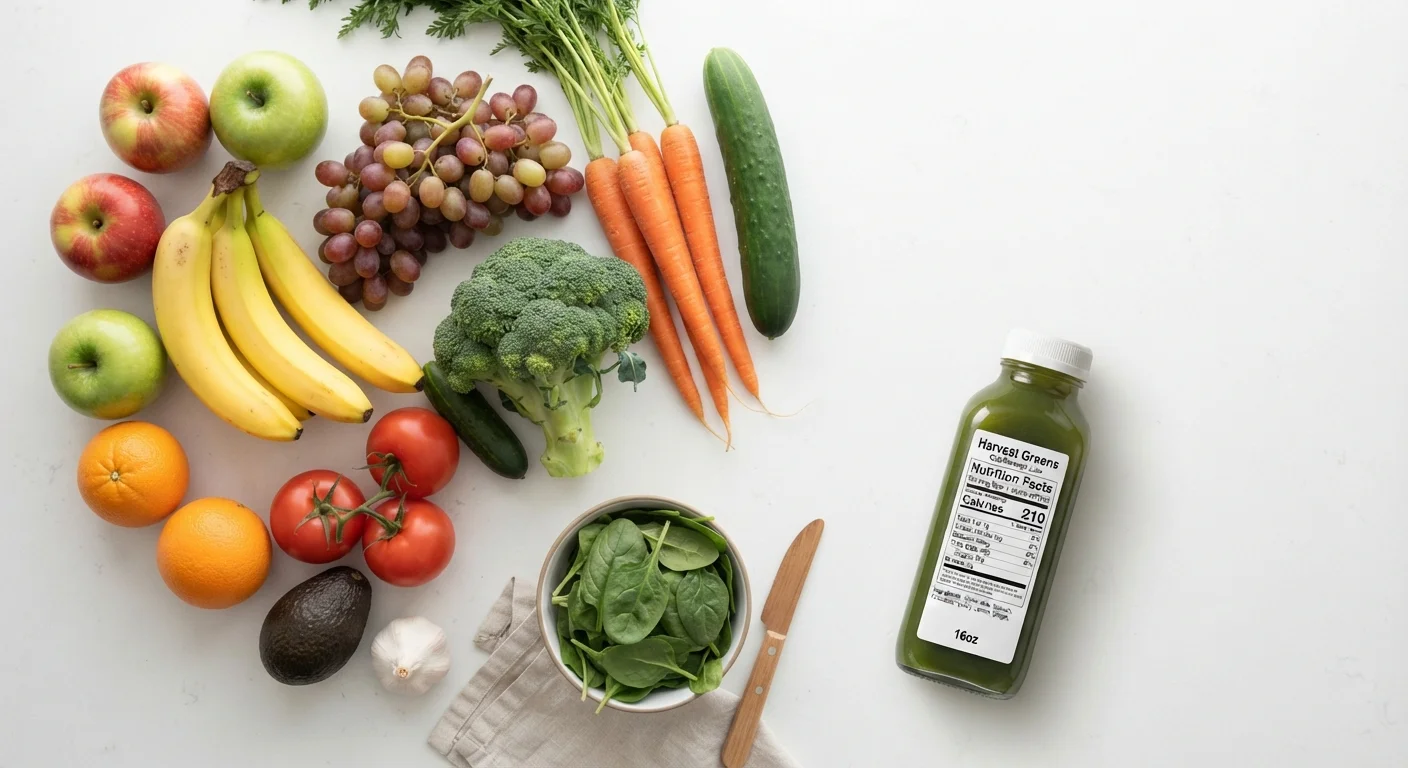
Whole fruit and fruit juice illustrate the natural sugar distinction more clearly than almost any other comparison. A medium orange contains about 12 grams of sugar alongside roughly 3 grams of fiber and a significant volume of water. An 8-ounce glass of orange juice contains a similar sugar quantity but almost no fiber, because juicing strips out the pulp. The result is faster absorption and a steeper rise in blood glucose.
Neither the orange nor the juice has added sugar. The difference is entirely structural. Because the juice lacks fiber, its sugar behaves metabolically more like added sugar than the intact fruit does. This is not a reason to avoid juice entirely, but it is why public health guidance generally favors whole fruit over juice and why portion size matters more with juice than with whole pieces of fruit.
For practical guidance on how snack choices, including juice, fit into overall eating patterns, see how between-meal eating affects overall nutrition.
Putting the numbers in context
The American Heart Association recommends that most women limit added sugar to around 25 grams per day and most men to around 36 grams. The Dietary Guidelines for Americans place added sugars at less than 10% of total daily calories. A single 12-ounce regular soda contains roughly 39 grams of added sugar, which already exceeds both thresholds. Many flavored yogurts, granola bars, and bottled sauces carry between 10 and 20 grams per serving.
These figures are population-level guidelines, not clinical targets for any individual. A person managing blood glucose, a child, a pregnant person, or someone with specific metabolic conditions may need different considerations. A registered dietitian or physician is the right resource for personal targets.
17 tsp
Average daily added sugar intake in the US
According to the U.S. Dietary Guidelines Advisory Committee, average American adults consume roughly 17 teaspoons of added sugar per day, well above recommended limits.
10%
Recommended added sugar ceiling (% of daily calories)
The Dietary Guidelines for Americans recommend that added sugars account for less than 10% of total daily caloric intake.
39g
Added sugar in a typical 12-oz regular soda
A standard 12-ounce can of regular soda contains approximately 39 grams of added sugar, exceeding the American Heart Association's daily limit for women in a single serving.
Claims that specific sugars like agave or coconut sugar are fundamentally healthier deserve skepticism. They are classified as added sugars and metabolized in broadly similar ways to sucrose. Some carry trace micronutrients, but the amounts in a realistic serving are nutritionally minor. For more on how nutrition claims in popular diets can misrepresent the research, see how fad diets distort nutrition science.
This article is for general informational and educational purposes only and is not a substitute for professional medical or dietary advice. Consult a qualified healthcare provider for guidance specific to your health needs.