

Key Takeaways
- Comprehensive covers non-collision events like theft, weather damage, and falling objects.
- Collision covers damage to your vehicle when it hits or is hit by another vehicle or object.
- Both coverages are typically optional unless required by a lender or lessor.
- Each has a separate deductible that you pay before the insurer covers the remainder.
- Dropping either coverage on a low-value vehicle may make financial sense, but involves real risk.
Option A
Comprehensive Coverage
Protection against events outside your control.
Best for: Drivers who want financial protection from weather, theft, fire, and other non-collision events.
Option B
Collision Coverage
Protection for damage caused by impact.
Best for: Drivers who want protection when their vehicle is damaged in an accident with another vehicle or object.
If you live in an area prone to hail, flooding, or high vehicle theft
Comprehensive Coverage
Comprehensive pays for damage from weather events and theft, which collision does not cover. These risks are common enough in many US regions to make the cost worthwhile.
If you drive frequently in heavy traffic or have a long daily commute
Collision Coverage
More time on the road increases accident exposure. Collision coverage handles repair costs when an at-fault driver's liability limit is insufficient or when you cause the accident yourself.
If you financed or leased your vehicle
Both coverages together
Lenders and lessors typically require both comprehensive and collision until the vehicle is paid off. Dropping either while a loan is active may violate the finance agreement.
If you own an older vehicle with low market value
Neither, depending on vehicle value
When the combined annual premium for both coverages exceeds a meaningful fraction of the vehicle's actual cash value, carrying them may cost more than a claim would pay out.
What each coverage actually pays for
Comprehensive and collision are both physical damage coverages, meaning they pay to repair or replace your vehicle rather than covering injuries or property damage you cause to others. The distinction is what triggers a claim.
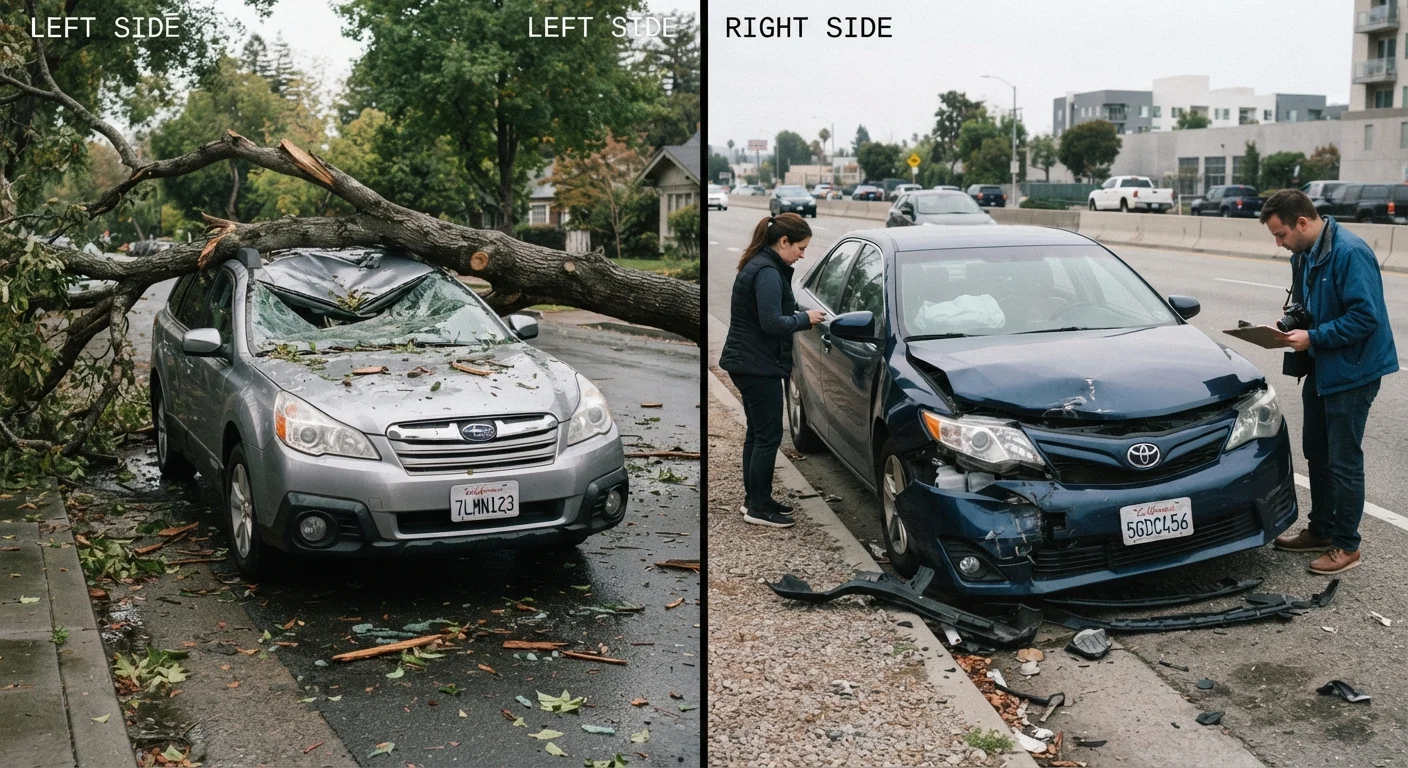
Comprehensive coverage applies when your vehicle is damaged by something other than a collision. That includes theft, vandalism, fire, flooding, hail, falling trees or objects, and animal strikes. If a deer hits your car on a rural highway, that falls under comprehensive, not collision.
Collision coverage applies when your vehicle makes contact with another vehicle or a stationary object. Running into a guardrail, backing into a pole, or being struck by another driver all trigger collision regardless of who is at fault. Fault matters for liability coverage purposes, but collision pays for your own vehicle's damage either way.
For a full side-by-side view of how these coverages interact with liability, PIP, and uninsured motorist coverage, see the breakdown of auto insurance coverage types.
| Criterion | Comprehensive | Collision |
|---|---|---|
| What triggers a claim | Non-collision events (theft, weather, fire, animals) | Impact with vehicle or object |
| At-fault requirement | Not applicable | Pays regardless of fault |
| Typical premium cost | Generally lower | Generally higher |
| Deductible applies | Yes | Yes |
| Required by lender/lessor | Usually yes | Usually yes |
| Required by state law | No | No |
| Covers theft | Yes | No |
| Covers hit-and-run damage | No | Yes |
Cost, deductibles, and what determines your premium
Both coverages carry a deductible, the amount you pay out of pocket before the insurer pays the rest. Common deductibles run from $250 to $1,500. Choosing a higher deductible lowers your premium but increases what you owe if you file a claim. That trade-off is worth understanding clearly before you set it. The deductible versus premium trade-off article covers the math in detail.
Collision premiums are generally higher than comprehensive premiums because accidents are more frequent than qualifying non-collision events for most drivers. Your driving record, location, vehicle make and model, and the deductible level all affect the cost of each.
Comprehensive premiums vary more by geography. Drivers in regions with frequent hail, hurricane exposure, or elevated vehicle theft rates pay more for comprehensive than drivers in lower-risk areas.
~$192/yr
Average annual comprehensive premium (US)
Based on industry data compiled by the National Association of Insurance Commissioners in their most recent private passenger auto study.
~$526/yr
Average annual collision premium (US)
Collision costs drivers roughly 2.7 times more per year than comprehensive on average, according to NAIC data.
$500
Most common deductible chosen by US drivers
A $500 deductible is the most frequently selected level across both comprehensive and collision coverages, per insurer data.
When lenders require both coverages
If you financed or leased a vehicle, the lender or lessor almost certainly requires you to carry both comprehensive and collision until the vehicle is paid off or returned. The lender has a financial interest in the vehicle and wants it protected against both accident damage and non-collision losses.
Dropping either coverage while a loan is active can result in the lender placing force-placed insurance on your account, which tends to cost considerably more than a standard policy and covers only the lender's interest rather than yours. Verify your loan or lease agreement's specific requirements before making any coverage changes.
Gaps in what standard policies cover, including situations where you may be underinsured, are worth reviewing separately. See where standard policies commonly fall short and what happens when you are underinsured at claim time for context.
Deciding whether to drop coverage on an older vehicle
Neither comprehensive nor collision is legally required by state law in the US. Once a vehicle is paid off, carrying or dropping either coverage is your choice. The practical question is whether the coverage cost justifies the potential payout.
Insurers pay no more than the actual cash value (ACV) of your vehicle at the time of loss, minus your deductible. If your vehicle's ACV is $3,500 and your deductible is $1,000, the maximum payout is $2,500. If your combined annual premium for both coverages is $900, you would recover that cost in under three years of claim-free driving only if a total loss occurs. Many drivers with low-value vehicles choose to self-insure against this risk and bank the premium savings instead.
There is no universal breakpoint that works for everyone. Your tolerance for out-of-pocket repair costs, how essential the vehicle is to daily life, and whether you have savings to cover a sudden loss all factor in. If you are comparing policies or rethinking your current structure, a structured approach to evaluating insurance options can help you focus on what matters.
This article provides general information about auto insurance coverage types and is not personalized insurance, financial, or legal advice. Coverage terms, exclusions, and requirements vary by insurer and by state. Read your actual policy documents and consult a licensed insurance professional for guidance specific to your situation.