

Key Takeaways
- A car that sags on one side almost always has a failed spring or collapsed strut at that corner.
- Excessive bouncing after a bump indicates worn shock absorbers or struts, not just a rough road.
- Uneven suspension wear often shows up in tire tread long before the ride feels noticeably wrong.
- Many suspension faults worsen quickly once they start; early inspection limits the repair scope.
- A qualified mechanic should diagnose suspension issues before they affect steering or braking safety.
Uneven car stance
When a vehicle sits lower on one side, sags at the front or rear, or bounces differently over bumps, that imbalance points to a problem somewhere in the suspension system. The suspension includes springs, shock absorbers, struts, and related hardware that keep the tires in contact with the road and the body level. A car that sits or moves unevenly is not just a cosmetic concern; it affects steering response, braking distance, and tire life.
Suspension geometry relies on all four corners working within specified tolerances. Even modest deviations in ride height or damping can shift wheel alignment outside the manufacturer's range, accelerating wear across multiple components.
What a level car actually requires
Every vehicle is designed to sit at a specific ride height on all four corners. That height is maintained by the springs, which carry the vehicle's weight, and controlled by shock absorbers or struts, which limit how much the body moves in response to road input. When any of those components weakens or fails, the geometry changes and the car communicates it through visible stance, unusual movement, or abnormal tire wear.
Springs are rated for a specific load range. When a coil spring cracks or loses its temper over time, it compresses further than designed. The corner above it drops. The difference can be subtle at first, perhaps half an inch, but it shifts alignment angles enough to scrub tire tread unevenly. For a practical way to read that tread, see how tire wear patterns work as a diagnostic tool.
Common causes of an uneven stance
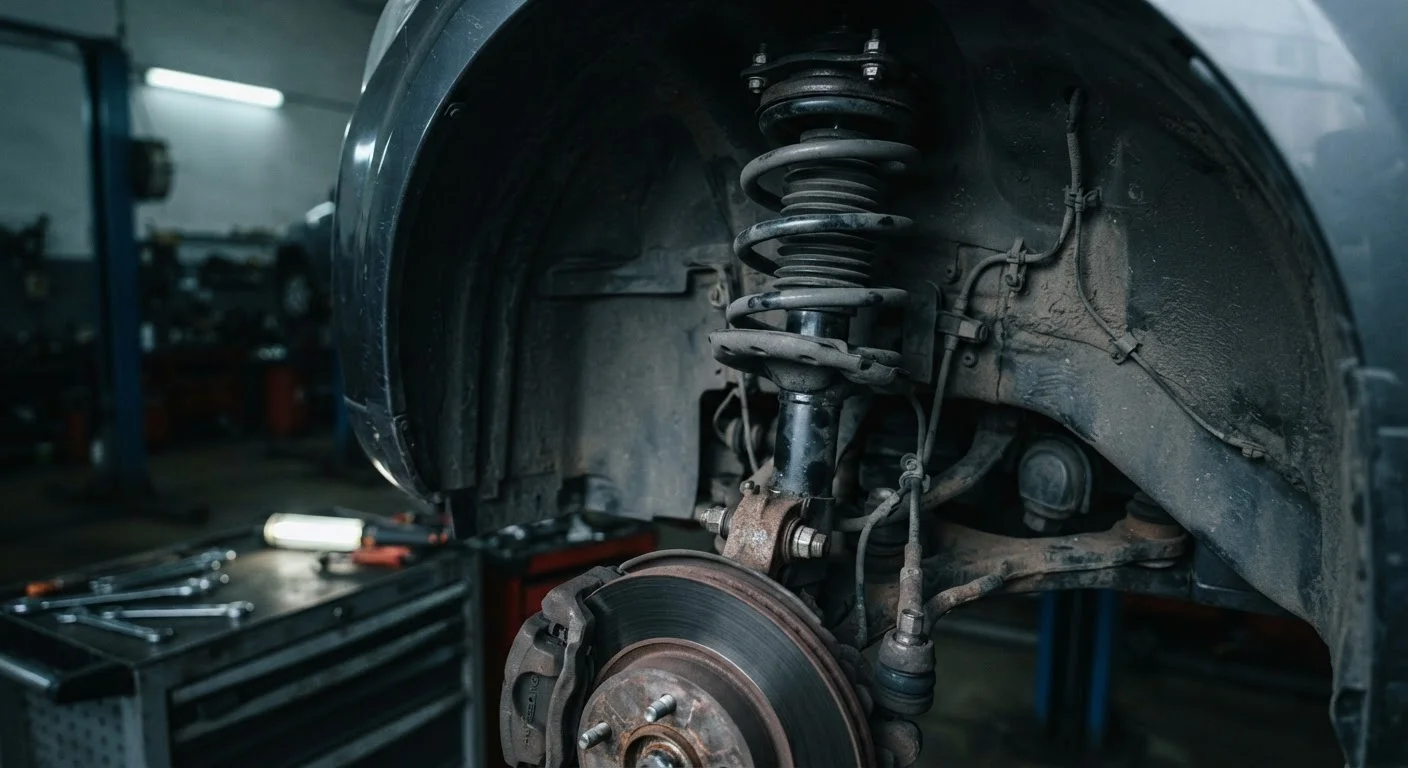
A broken coil spring is the most direct cause of a corner sitting low. Springs can fracture suddenly from a hard impact, or they can sag gradually as metal fatigue accumulates over tens of thousands of miles. Both produce the same result: one corner closer to the ground than the other three.
Collapsed struts or worn shock absorbers do not hold the body at the wrong height in the same way a broken spring does, but they allow excessive body movement. A car with failed dampers will bounce multiple times after a single bump, lean more than expected through corners, and feel loose over uneven pavement. In severe cases, the strut body itself can corrode or bend, causing a visible lean similar to a spring failure.
Vehicles equipped with air suspension use pressurized bags in place of conventional springs. A slow leak in one bag or a failed compressor produces a sag on that corner that can appear overnight. Warning lights typically accompany air suspension faults, but not always.
Check all four corners at the same time
When a mechanic inspects one failed suspension component, it is worth asking for a review of all four corners during the same visit. Springs, dampers, and bushings age together, and finding one worn part often means others are approaching the same point. Addressing them together avoids a return visit shortly after.
Worn or deteriorated rubber bushings throughout the suspension, while not causing a lean by themselves, allow components to shift out of position under load. This produces a vague, unpredictable steering response that gets worse over time.
How to observe what your suspension is telling you
Park the vehicle on flat, level ground and step back to view it from each end and both sides. Compare the gap between the top of each tire and the wheel arch. A difference of more than an inch on the same axle warrants a closer look. Push down firmly on each corner and release it; the body should return to its resting height in one smooth motion. More than one additional bounce after release suggests weak damping at that corner.
During normal driving, note whether the vehicle pulls to one side without steering input, whether one side of the cabin feels rougher than the other, or whether you hear a clunking or creaking sound from a specific corner over bumps. Each of these is a location clue that helps a mechanic focus the inspection quickly.
~50%
Of handling complaints linked to suspension wear
AAA vehicle research has indicated that worn or damaged suspension components are a factor in roughly half of reported handling and stability complaints among vehicles with higher mileage.
43 ft
Extra stopping distance with worn shock absorbers at 60 mph
Testing by the Australasian New Car Assessment Programme found that vehicles with severely worn shock absorbers required significantly longer distances to stop compared to vehicles with properly functioning dampers.
When to involve a mechanic
Suspension diagnosis requires visual inspection from below the vehicle, often with it raised on a lift so components can be moved by hand to check for worn bearings and loose joints. A driver can observe symptoms accurately, but confirming the specific failed part requires that hands-on assessment.
If the vehicle leans visibly, bounces excessively, or has started pulling to one side, schedule an inspection before the next long trip. Suspension faults that affect ride height also affect alignment, and misaligned wheels wear tires faster and less evenly than correctly set ones. Catching a single failed spring before it loads adjacent components unevenly can keep the repair to one part rather than several.