

Key Takeaways
- A digital twin is a virtual replica of a physical object, process, or system, updated with live data.
- Industries including manufacturing, healthcare, and energy already use digital twins to reduce costs and failures.
- Digital twins enable safe simulation of scenarios that would be too risky or expensive to test in reality.
- The technology relies on sensors, data feeds, and simulation software working together continuously.
- Adoption requires significant investment in data infrastructure and technical expertise.
What a digital twin actually is
A digital twin is a virtual model of a physical object, system, or process that stays synchronized with its real-world counterpart through a continuous stream of sensor data. Think of it as a living replica: as the physical object changes, the virtual model updates to match. Engineers and operators can then interrogate, test, and simulate scenarios on the virtual version without touching the real thing.
The concept has existed in engineering for decades, but affordable sensors, cloud computing, and faster data networks have made it practical at scale across many industries. The underlying idea connects naturally to how synthetic data powers AI training, since both involve creating accurate virtual representations of the real world to inform decisions without incurring real-world costs or risks.
What makes something a true digital twin
A static 3D model or a design file is not a digital twin. The defining feature is a continuous, live data connection between the physical object and its virtual counterpart. Without that ongoing feed of real sensor data updating the model, the virtual version is just a simulation, not a twin. The quality of a digital twin depends entirely on the quality, frequency, and coverage of its underlying data sources.
The six examples below cover where digital twins are already in active use, what problems they solve, and what it takes to make them work.
Six industries already using digital twins
Manufacturing: catching problems before they become failures
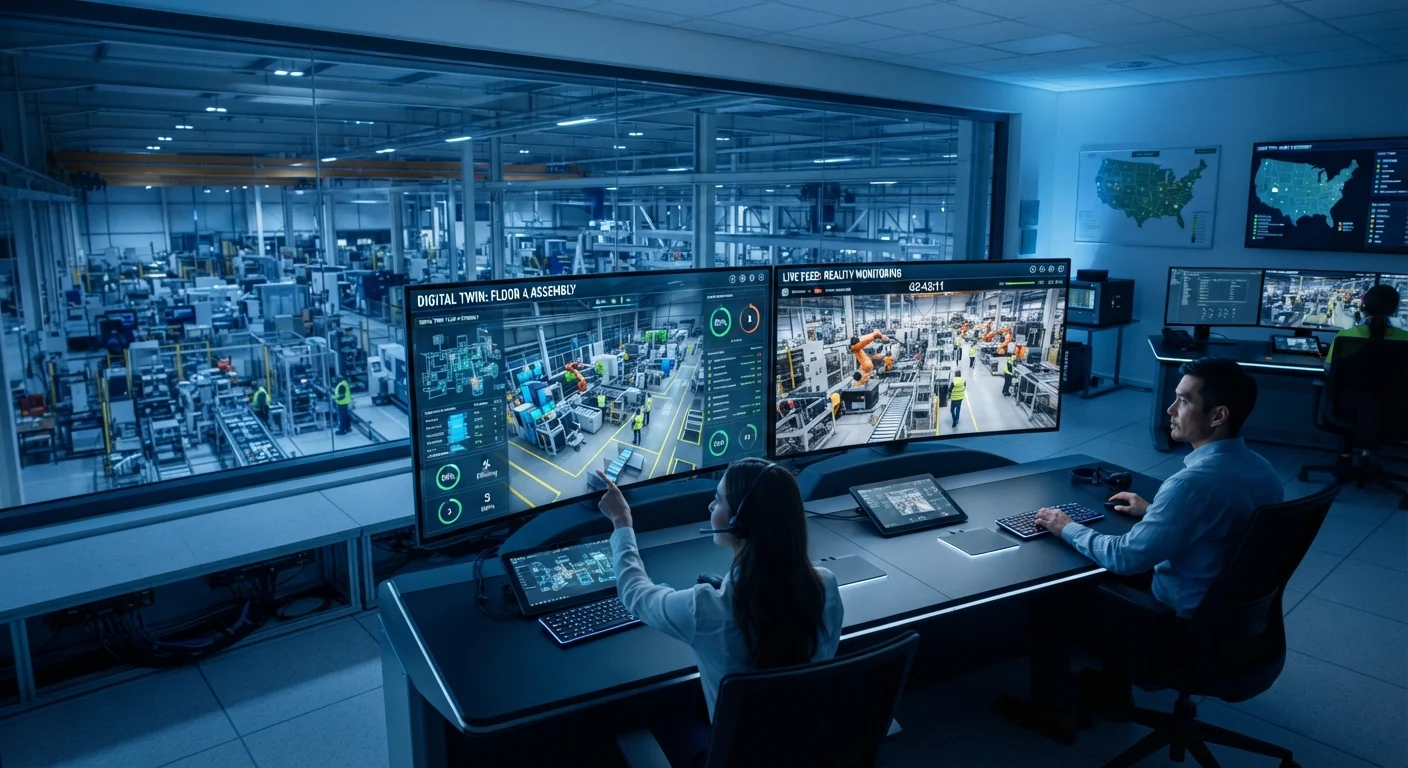
In manufacturing plants, a digital twin mirrors every machine on the factory floor in real time. Sensors on physical equipment stream data, including temperature, vibration, and output rates, into the virtual model. Engineers can watch the twin for early signs of wear and schedule maintenance before a breakdown disrupts production.
Aerospace and automotive manufacturers have used this approach to shorten production cycles. Rather than halting a line to test a new assembly configuration, engineers modify the virtual model first and observe how the simulated system responds. Changes are only applied physically once the simulation confirms they work.
Engineers test assembly changes virtually before applying a single physical modification.
Healthcare: planning surgery and personalizing treatment
Medical researchers build patient-specific digital twins from imaging data such as MRI and CT scans. A cardiac digital twin, for example, can replicate how an individual heart pumps blood and responds to different medications or devices. Surgeons use these models to rehearse complex procedures on the virtual organ before operating.
This application is still largely in research and clinical trial settings rather than routine care. The potential benefit is reducing guesswork about how a particular patient's anatomy will respond, though broad clinical adoption depends on further validation and regulatory review.
This content is general health information and education, not medical advice. Consult a qualified healthcare professional for personal medical decisions.
A cardiac digital twin can simulate how one patient's heart responds before any procedure begins.
Energy: managing grids and wind farms remotely
Energy operators use digital twins to manage infrastructure spread across vast geographic areas. A wind turbine twin receives continuous sensor data on blade stress, wind speed, and generator output. The virtual model predicts when a component is likely to fail, allowing crews to schedule repairs during low-demand windows rather than responding to emergencies.
At the grid level, electricity network operators build twins of transmission systems to simulate how the grid would respond to sudden demand spikes, equipment outages, or the addition of new renewable sources. These simulations inform decisions about where to invest in grid upgrades without taking any part of the live system offline.
Grid operators simulate equipment outages and demand spikes without touching the live system.
Smart cities: urban planning without physical prototypes
City planners and engineers build digital twins of urban areas by combining satellite imagery, sensor networks, traffic data, and building information. Singapore has one of the most developed national-scale city twins, used to model pedestrian flow, flood risk, and the effects of proposed construction.
When a city considers adding a new transit route or rezoning an area, the twin can model how those changes would affect traffic, air quality, and emergency service response times. Planners get data-grounded projections before committing public funds, which reduces the risk of expensive infrastructure decisions going wrong.
A city twin can project how a new transit route affects traffic and air quality before construction starts.
Construction and real estate: buildings that learn from use
Building information modeling (BIM) has long given architects and engineers 3D design tools, but a digital twin goes further by staying connected to the physical building after it is built. Sensors embedded in a structure report on occupancy, energy consumption, HVAC performance, and structural stress in real time.
Facilities managers use this live data to optimize heating and cooling schedules based on actual occupancy patterns rather than fixed timers. When something deviates from the norm, such as unusual energy consumption in one zone, the twin flags it for investigation. Over the lifetime of a large commercial building, these adjustments can add up to meaningful reductions in operating costs.
A building twin flags unusual energy use automatically, turning maintenance from reactive to predictive.
Aerospace and defense: testing without the risk
Aircraft manufacturers and defense organizations use digital twins to extend the life and safety of systems where physical testing is prohibitively expensive or dangerous. A digital twin of an aircraft can be run through thousands of simulated flight cycles to predict fatigue in structural components, informing maintenance schedules without waiting for real-world wear to accumulate.
Space agencies apply the same logic to spacecraft. NASA has used digital twin concepts for years to monitor spacecraft health during missions by comparing live telemetry against a virtual model of what the vehicle's systems should be doing. Deviations from the expected model can indicate problems early enough to allow a response.
Comparing live spacecraft telemetry against a virtual model can surface problems early enough to act.
What it takes to build and maintain a digital twin
Every digital twin depends on three things: reliable sensors on the physical asset, infrastructure to transmit and store the data those sensors produce, and software capable of maintaining and querying the virtual model. All three must work continuously. A twin is only as current as its last data update.
The investment required is substantial. Large-scale implementations in manufacturing or city planning involve thousands of sensors, significant cloud storage, and teams of engineers who specialize in both the physical domain (say, turbine mechanics) and data modeling. Smaller organizations can start with twins of individual high-value assets rather than entire systems, which lowers the entry cost.
For readers interested in how digital twins fit into a broader picture of responsible technology adoption, thoughtful practices for adopting emerging tech covers what to weigh before committing to a new system. Digital twins are different from generative tools like writing assistants (covered in the everyday reality of generative AI), but both share a dependency on high-quality underlying data to deliver accurate results.