

Key Takeaways
- A microchip stores a unique ID number, not GPS location data.
- The chip is useless without an up-to-date record in a searchable registry.
- Implanting the chip takes seconds and is considered a low-risk, routine procedure.
- Scanners must be compatible with the chip's frequency to read it correctly.
- Microchipping complements, but does not replace, a collar and ID tag.
Pet microchipping
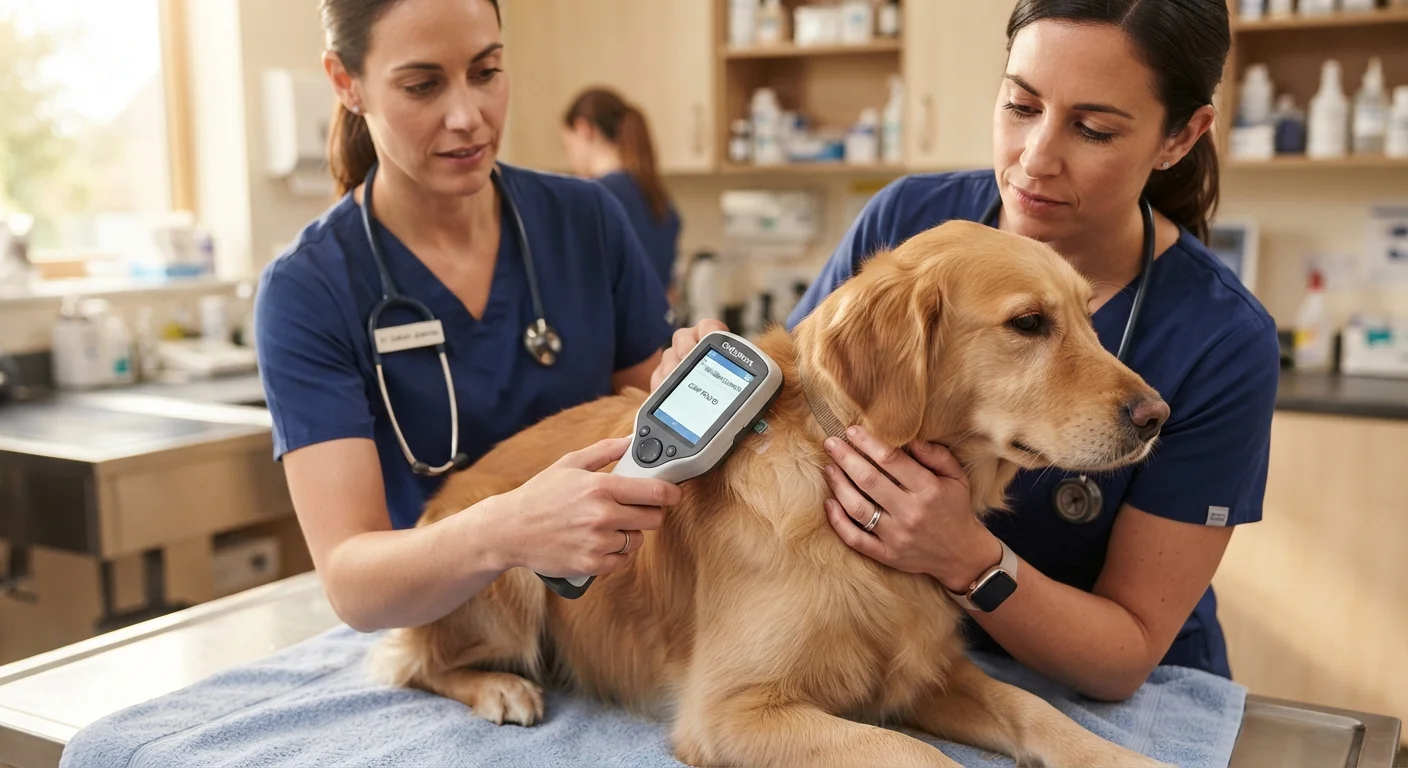
Pet microchipping is a procedure in which a tiny electronic chip, roughly the size of a grain of rice, is injected under an animal's skin. Each chip carries a unique identification number that links to the owner's contact details in a registry database. When a lost pet is found and scanned, that number can be looked up to help return the animal home.
The chip uses passive RFID (radio-frequency identification) technology, meaning it has no battery and only activates when a compatible scanner passes over it.
How the technology actually works
A pet microchip is a passive RFID device. It contains no battery and generates no signal on its own. When a scanner emits a low-frequency radio wave near the chip, the chip draws enough energy from that wave to transmit its unique ID number back to the scanner's display. The whole exchange takes less than a second.
That ID number means nothing by itself. Its value depends entirely on a registry database that links it to your contact information. When a shelter worker or vet scans a found pet, they read the number and then search one or more registries to find the owner. In the US, there is no single national mandatory registry, so a chip implanted by one provider may be listed in a different database than the one being searched. The AAHA Universal Pet Microchip Lookup tool queries multiple registries at once, which is why many shelters use it as a first step.
Chip frequencies matter too. The most common standard in the US is 125 kHz, but 128 kHz and 134.2 kHz chips also exist. Forward-reading or universal scanners can detect all three. Older, single-frequency scanners may miss chips operating on a different frequency, which is one reason a chip read at a clinic does not always guarantee readability at every facility.
Pair the chip with a visible ID tag
A microchip requires a scanner to be useful. A collar with a current ID tag lets any member of the public contact you immediately, without any equipment. Both forms of identification together give a lost pet the best chance of coming home quickly.
What microchipping cannot do
The most persistent misunderstanding is that a microchip tracks location. It does not. There is no GPS component, no cellular signal, and no way to pinpoint where your pet is in real time. A chip only becomes useful after someone physically finds your pet and scans them.
A chip also cannot identify your pet visually or prove ownership in a legal sense without supporting documentation. If you need to claim an animal, you will typically need the chip number matched to your name in a registry, plus supporting records such as vet paperwork.
Finally, a microchip does not store medical history, vaccination records, or allergy information. It holds only the ID number. For a broader picture of preventive care, the first-time pet owner health essentials guide covers how microchipping fits alongside vaccinations, parasite control, and vet registration.
2x
Higher return rate for microchipped dogs vs. non-chipped
A study published in the Journal of the American Veterinary Medical Association found microchipped dogs were returned to owners at more than twice the rate of dogs without chips.
58%
Microchipped cats returned to owners
The same JAVMA study found microchipped cats were returned at roughly 20 times the rate of non-chipped cats, with about 58% of chipped cats reunited with owners.
The implantation procedure
A veterinarian or trained technician loads the chip into a sterile, single-use applicator and injects it under the skin, usually between the shoulder blades in dogs and cats. The needle gauge is larger than a vaccine needle, but the procedure typically takes only a few seconds. Most pets tolerate it with minimal fuss.
No anesthesia is required for a standalone implant. Some owners choose to have the chip implanted during a spay or neuter procedure, which means the pet is already sedated. Either approach is acceptable. Aftercare is minimal: brief tenderness at the site is possible but serious reactions are uncommon.
Annual wellness visits are a good time to ask your vet to scan the chip and confirm it is still readable and in its expected position. Chips rarely fail, but the check takes seconds and gives you confidence the record is intact. This fits naturally alongside the vaccination schedule your vet maintains for your pet.
Keeping your registration current
The chip is only as useful as the contact information attached to it. Many pets are scanned at shelters and the chip number comes back registered to an address the owner left years ago, or to a previous owner entirely. Reunification fails not because the chip stopped working, but because the database record was never updated.
When you move, change your phone number, or rehome a pet, update the registry record immediately. If you adopted a pet that was already chipped, confirm which registry holds the record and transfer it to your name. Keep a note of the chip number in your pet's paper records as a backup.
Some registries charge a one-time or annual fee; others are free. The fee structure does not affect the chip itself, only access to the database service. Regardless of which registry you use, the step that matters is verifying your contact details are accurate and searchable today.