

Key Takeaways
- Wet food contains roughly 70 to 80 percent moisture, while dry kibble typically contains 10 percent or less.
- Higher moisture intake from wet food can benefit urinary tract health, particularly in cats.
- Dry food's firm texture may provide mild mechanical abrasion on tooth surfaces, though it is not a substitute for dental care.
- Caloric density differs significantly: wet food delivers fewer calories per gram, which can help with weight management.
- Neither format is universally superior; a pet's age, health status, and preferences all influence the right choice.
- A veterinarian is the right person to guide any significant change to your pet's diet.
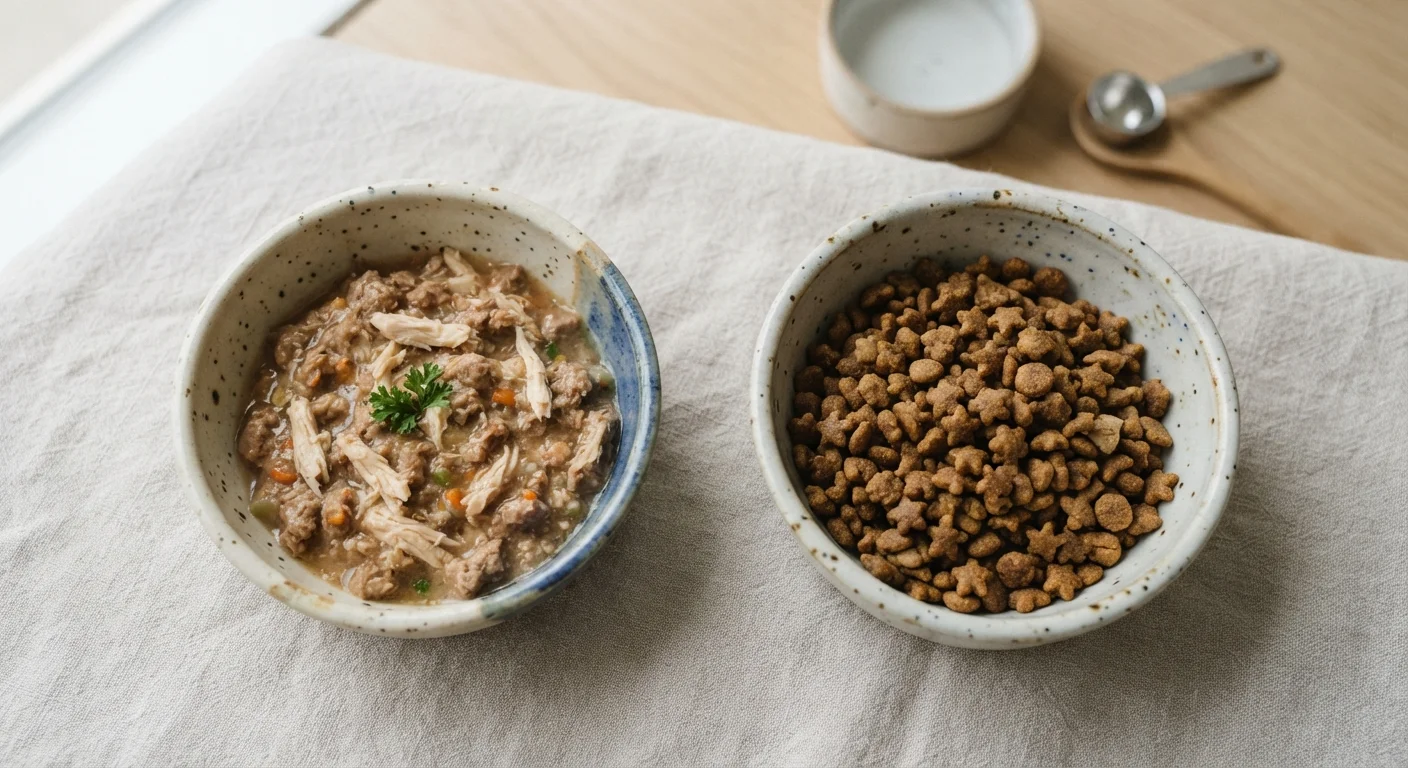
Option A
Wet food
The high-moisture, palatable option for hydration and appetite.
Best for: Pets with urinary concerns, picky eaters, seniors with dental pain, or any animal that struggles to stay hydrated.
Option B
Dry food (kibble)
The convenient, calorie-dense format suited to free feeding and dental texture.
Best for: Owners who need flexibility in feeding schedules and pets that graze throughout the day.
If your cat shows signs of urinary tract issues or chronic dehydration
Wet food
The high moisture content directly increases daily fluid intake, which veterinarians commonly recommend for feline urinary health.
If your pet is overweight and you need portion control
Wet food
Lower caloric density per gram means larger-feeling portions for fewer calories, making it easier to manage intake without leaving a pet hungry.
If your schedule requires leaving food out for extended periods
Dry food (kibble)
Kibble does not spoil at room temperature within a normal feeding window, making it practical for free feeding or busy households.
If your senior pet has lost interest in eating or has reduced smell sensitivity
Wet food
Wet food has a stronger aroma and softer texture, both of which can encourage appetite in older or convalescing animals.
If cost and storage are primary concerns
Dry food (kibble)
Dry food generally costs less per serving and stores for longer periods without refrigeration, reducing both expense and waste.
What moisture content actually does
The single biggest physical difference between wet and dry pet food is water. Wet food typically contains between 70 and 80 percent moisture. Dry kibble usually falls below 10 percent. That gap has real consequences for how a pet's body processes each meal.
Cats, in particular, evolved in arid environments and have a naturally low thirst drive. Many cats do not drink enough water on their own to compensate for the low moisture in an all-kibble diet. Research published in the Journal of Feline Medicine and Surgery has found that cats eating wet food maintain higher urine volume and lower urine concentration, both of which reduce the risk of feline lower urinary tract disease. Dogs are less vulnerable to this dynamic but still benefit from adequate fluid intake, especially those prone to kidney issues or bladder stones.
If your pet already manages a urinary condition, speak with a veterinarian before adjusting their diet. For a broader look at how nutrition intersects with life stage and health, see the overview of life stage nutrition.
| Criterion | Wet food | Dry food (kibble) |
|---|---|---|
| Moisture content | 70 to 80 percent | Below 10 percent |
| Caloric density | Lower per gram | Higher per gram |
| Palatability | Generally higher | Varies by formula |
| Dental abrasion | Minimal | Mild (limited evidence) |
| Storage after opening | Refrigerate; use within 2 to 3 days | Stable at room temperature |
| Cost per serving | Generally higher | Generally lower |
| Urinary health support | Strong (increases urine volume) | Weaker without extra water intake |
| Suitability for free feeding | Not recommended | Practical for most pets |
Dental health: what the evidence says
A common claim is that dry kibble cleans teeth because of its crunchy texture. The reality is more limited. Most kibble shatters and crumbles on contact rather than abrading the tooth surface the way a chew or dental treat might. The American Veterinary Dental College has stated that most dry foods provide minimal plaque-control benefit.
Some kibble formulas are specifically designed with larger pieces or textured coatings that create more mechanical contact, and products carrying the Veterinary Oral Health Council (VOHC) seal have met standards for plaque or tartar reduction. Without that certification, the dental argument for kibble is weak.
Wet food does not contribute to dental cleaning, and its softer texture leaves more residue on tooth surfaces. Neither format replaces tooth brushing or professional veterinary dental care. Dental health should be treated as its own maintenance routine, separate from food format decisions.
Palatability, digestion, and ingredient quality
Most pets find wet food more palatable. The higher moisture content carries aroma compounds more effectively, which matters because much of what animals perceive as flavor is detected through smell. For a picky eater or a pet recovering from illness, wet food is often the easier sell.
Digestibility depends more on ingredient quality than on format. A wet food made largely from by-product meal may be less digestible than a well-formulated kibble with whole protein sources. Owners sometimes confuse format with quality, but the ingredient list and nutritional adequacy statement on the label tell a more complete story.
If your pet has shown signs of food sensitivity, format is rarely the root cause. The distinction between food allergies and food intolerances in pets matters here, because the two conditions point toward different dietary adjustments. Similarly, if you are weighing more specialized diets, prescription diets versus standard pet food covers when therapeutic formulas become relevant.
70-80%
Moisture in typical wet pet food
Compared to below 10 percent in dry kibble, this difference directly affects daily fluid intake for cats and dogs.
~3x
Higher urine volume in cats fed wet food
Studies in the Journal of Feline Medicine and Surgery found cats on wet diets produced significantly more dilute urine than those on dry-only diets.
10 days
Recommended food transition period
Veterinary guidance generally advises a gradual switch over seven to ten days to reduce digestive upset when changing food format.
Mixing formats and making a practical choice
Many veterinarians suggest that a combination approach works well for pets without specific health restrictions. Wet food at one meal and kibble at another can balance hydration, palatability, and convenience without committing entirely to one format.
When making any switch, transition gradually over seven to ten days to avoid digestive upset. Introduce the new food in small proportions alongside the existing diet, increasing the ratio slowly. Abrupt changes can cause vomiting or loose stools even when both foods are nutritionally appropriate.
Portion size needs recalculating when you change formats, because caloric density differs. A cup of wet food delivers far fewer calories than a cup of kibble. Check the feeding guidelines on the specific product and, if your pet is a healthy adult, monitor body condition rather than relying on volume alone.
For senior pets with changing appetites or health conditions, the checklist for choosing a diet for an ageing pet offers a structured way to think through the decision before consulting a vet. If grain content is a separate concern, the evidence on grain-free diets is worth reviewing alongside format questions.
This article provides general information about pet nutrition and is not a substitute for veterinary advice. Always consult a qualified veterinarian before making significant changes to your pet's diet, especially if your pet has an existing health condition.