

Key Takeaways
- Pet loss is often a child's first direct encounter with death and deserves honest, age-appropriate conversation.
- Talking about a pet's declining health before death gives children time to prepare emotionally.
- Children grieve differently from adults and may cycle between sadness and play, which is normal.
- Avoiding euphemisms like 'went to sleep' protects children from confusion and misplaced fear.
- Most children benefit from rituals, memory-keeping, and consistent adult presence after a pet dies.
- Prolonged withdrawal, school refusal, or severe sleep disruption are signs to consult a professional.
Start here
Why pet loss hits children so hard
Next
Words that help: talking before a pet dies
Then
After the loss: what healthy grieving looks like in children
Apply it
How to support a grieving child at each age
When you're ready
When to seek additional support
Why pet loss hits children so hard
For many children, a pet is a constant. It is the creature that greets them after school, the warm body at the foot of the bed, the being that asks nothing complicated of them. When that animal dies, children often lose their first real experience of loving something completely and then having it gone.
Because pets are woven into daily routines, their absence is felt in specific, concrete ways: the empty food bowl, the leash hanging unused, the silence where there used to be barking. Children notice these gaps acutely. That concreteness is part of what makes pet grief so sharp, and also what makes honest conversation so important.
Pet loss also matters because it frequently arrives before other family deaths. It can shape how a child understands mortality, how they tolerate emotional pain, and whether they learn that grief is something to move through rather than hide. Grief takes many forms and does not follow a predictable path, even in adults. In children, that variability is even more pronounced.
Anticipatory grief
The grief a person feels before a death actually occurs, when a pet is aging or seriously ill. It is a normal response and can help children begin processing loss gradually.
Grief cycling
The way children (and adults) move in and out of intense grief rather than feeling it continuously. A child playing happily an hour after crying is not suppressing grief; they are cycling through it.
Euphemism
A softer word or phrase used in place of a direct one, such as 'went to sleep' instead of 'died.' With children, euphemisms can create confusion or unintended fears.
Regression
When a child temporarily returns to behaviors typical of a younger age, such as bedwetting or thumb-sucking, as a response to stress or loss. It usually resolves with time and support.
Memorial ritual
A deliberate, meaningful activity done to honor someone who has died, such as planting a tree or making a memory box. Rituals give grief a concrete shape and can be especially helpful for children.
Words that help: talking before a pet dies
When a pet is aging or seriously ill, many parents delay the conversation hoping to spare their child pain. This is understandable, but early, honest conversation usually produces better emotional outcomes than sudden news.
You do not need to have all the answers. A simple framing works well: explain that the pet is old or very sick, that the veterinarian is helping keep them comfortable, and that at some point the pet's body will stop working. Use the word 'die' or 'death' rather than softer substitutes. Phrases like 'went to sleep' or 'passed away' can confuse younger children and sometimes create fears around bedtime or anesthesia. For families navigating a senior pet's health changes, starting these conversations early gives children time to process gradually.
Invite the child to help care for the pet during this time, if that feels right. Offering water, sitting nearby, or simply being present can give children a sense of participation and reduce helplessness.
Let the child ask questions at their own pace
After you share news of a pet's illness or death, resist filling every silence with more explanation. Children often need a pause before questions surface. Letting them lead the conversation, and returning to it across multiple days, tends to produce more genuine understanding than a single long talk.
After the loss: what healthy grieving looks like in children
Children's grief does not follow adult patterns. A child may cry at breakfast and then ask to go to a friend's house an hour later. This is not indifference. Children regulate intense emotion in shorter cycles than adults do, moving in and out of grief as a natural protective mechanism.
Common expressions of grief in children include sadness, irritability, difficulty concentrating, changes in appetite, disrupted sleep, and regression to younger behaviors. Some children become unusually quiet; others talk about the pet constantly. Both responses are normal. Dogs in the household may show their own behavioral shifts after a companion animal dies, and explaining this honestly to a child can help them feel less alone. Dogs can grieve too, and children often find comfort in knowing that.
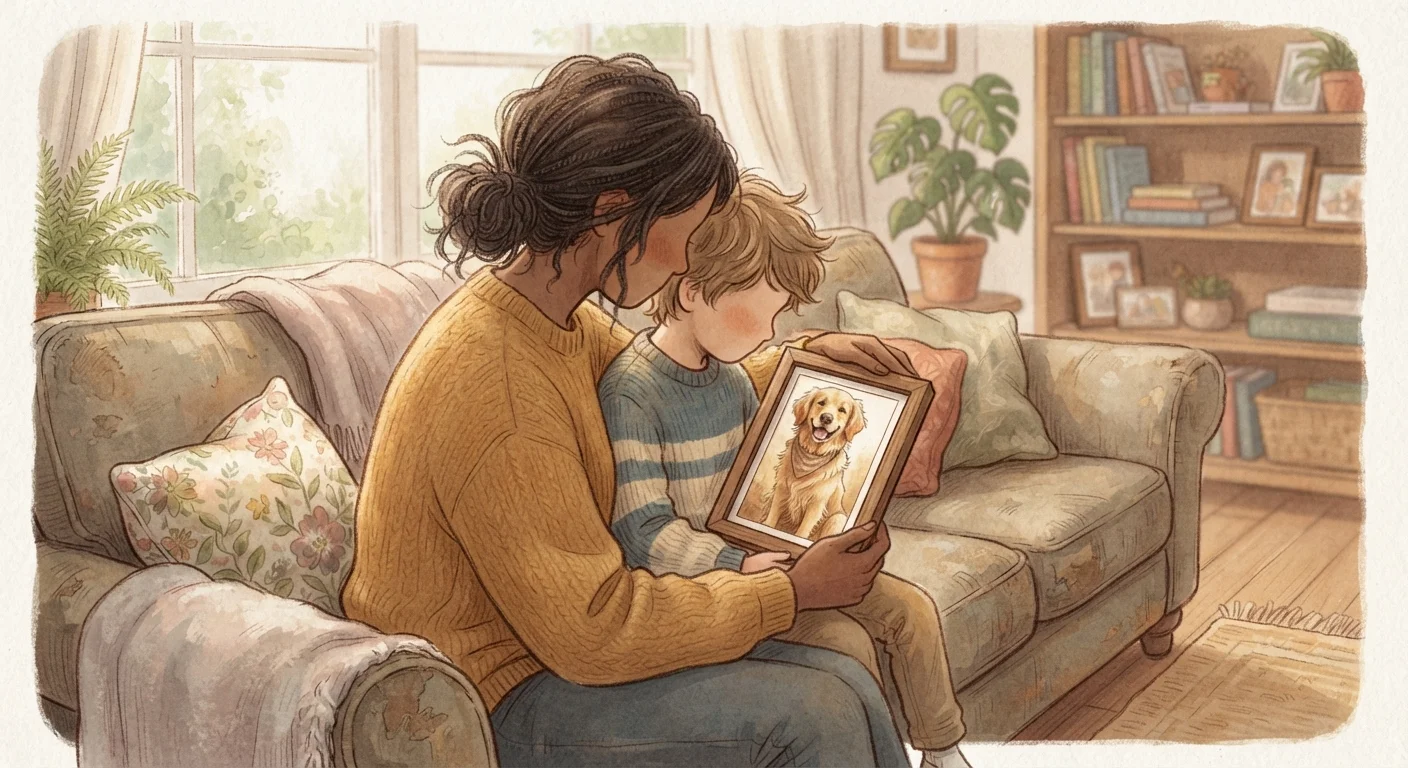
Rituals help. Holding a small ceremony, planting a flower, creating a memory box, or drawing a picture of the pet gives grief a physical outlet. These are not sentimental extras; they are concrete tools for processing loss.
How to support a grieving child at each age
Developmental stage shapes what a child understands about death and what kind of support reaches them.
Toddlers and preschoolers (ages 2 to 5)
Very young children understand death as a temporary absence rather than a permanent state. Expect repeated questions: 'When is the dog coming back?' Answer clearly each time without frustration. Keep routines stable, since predictability is their main source of security.
School-age children (ages 6 to 11)
Children in this range understand that death is permanent and universal. They may have questions about their own mortality or that of family members. Answer those questions plainly and calmly. Allow them to attend any memorial if they want to, and do not force participation if they decline. Encourage drawing, writing, or any creative expression.
Tweens and teenagers (ages 12 and up)
Older children may appear to minimize their grief around peers while feeling it intensely in private. They benefit from being treated as capable of handling honest information. Avoid dismissing their grief as trivial because 'it was just a pet.' A trusted adult who listens without rushing them toward feeling better is the most useful support.
Across all ages, the most consistent protective factor is a calm, available adult who does not pretend nothing happened and does not panic at tears.
When to seek additional support
Most children move through pet grief with family support and time. A smaller number may need professional help, and there is no shame in that. Consider reaching out to a school counselor, pediatrician, or child therapist if you notice:
- Persistent withdrawal lasting more than a few weeks with no improvement
- Refusal to attend school or participate in activities the child previously enjoyed
- Severe sleep disruption that does not ease over time
- Expressions of hopelessness, worthlessness, or statements that seem disconnected from the loss itself
- Physical complaints (stomachaches, headaches) with no medical cause that began after the pet died
These signs do not always indicate a serious problem, but they are worth discussing with a professional who can assess the child's specific situation. Building a relationship with a veterinarian early also means having a trusted partner who can help families navigate a pet's final days with as much clarity and compassion as possible.
This article is for general informational purposes only and does not constitute medical, psychological, or professional advice. If you have concerns about a child's mental health or wellbeing, please consult a qualified healthcare or mental health professional.