

Key Takeaways
- Walk the entire home before spending money on any improvement project.
- Safety and structural issues come before cosmetic upgrades, always.
- Many cosmetic tasks are manageable for beginners with basic tools and patience.
- Electrical, gas, and structural work typically requires licensed professionals and permits.
- A modest starter toolkit covers most everyday repairs and small improvements.
Start here
Start with a home walkthrough, not a wish list
Next
The difference between urgent fixes and improvements
Then
Projects worth doing yourself
When you're ready
When to hire a professional
Finally
Building a basic toolkit on a budget
Start with a home walkthrough, not a wish list
Before buying paint or browsing flooring samples, spend time getting to know the property you own. Walk every room with a notepad, looking at ceilings, walls, floors, windows, and doors. Go outside and check the foundation perimeter, gutters, siding, and any visible roof edges. Open every cabinet under sinks and look for staining, soft wood, or mold.
This walkthrough is not about finding problems to panic over. It gives you a factual picture of the home's condition so you can make decisions based on reality rather than impulse. Many first-time owners skip this step and spend money on cosmetic upgrades while a slow leak quietly damages the subfloor beneath them.
For a more structured inspection of areas that are easy to miss, see our guide to your home's hidden weak points. It covers the overlooked spots that commonly cause expensive problems later.
Load-bearing wall
A wall that supports the weight of the structure above it. Removing or modifying one without proper engineering assessment can compromise the building's stability.
Subfloor
The structural layer of flooring beneath the visible finish flooring. Water damage to the subfloor is often invisible from above until it becomes serious.
Permit
Official government approval required before starting certain types of construction or renovation work. A permit ensures a licensed inspector reviews the work for safety and code compliance.
Caulk
A flexible sealant applied along gaps between surfaces, such as where a tub meets a wall. It prevents water intrusion and helps with energy efficiency.
HVAC
Stands for heating, ventilation, and air conditioning. It refers to the system that controls your home's temperature and air quality.
The difference between urgent fixes and improvements
Once you have your notes, sort them into two categories. Urgent fixes address conditions that affect safety, prevent damage, or meet basic habitability standards. Improvements are changes that make the home more comfortable, functional, or attractive.
Urgent items include: a non-functioning smoke or CO detector, signs of active water intrusion, a failing water heater, gaps in weatherstripping that let in pests or cold air, and any wiring that looks improvised or scorched. These get attention before anything else.
Improvements include things like repainting rooms, replacing cabinet hardware, adding storage, or updating light fixtures. These have no hard deadline, so you can sequence them by budget and season rather than urgency.
There are also maintenance tasks that new owners often delay without realizing the consequences, such as flushing a water heater or testing HVAC filters. Our overview of tasks new homeowners often forget walks through those specifics.
Projects worth doing yourself
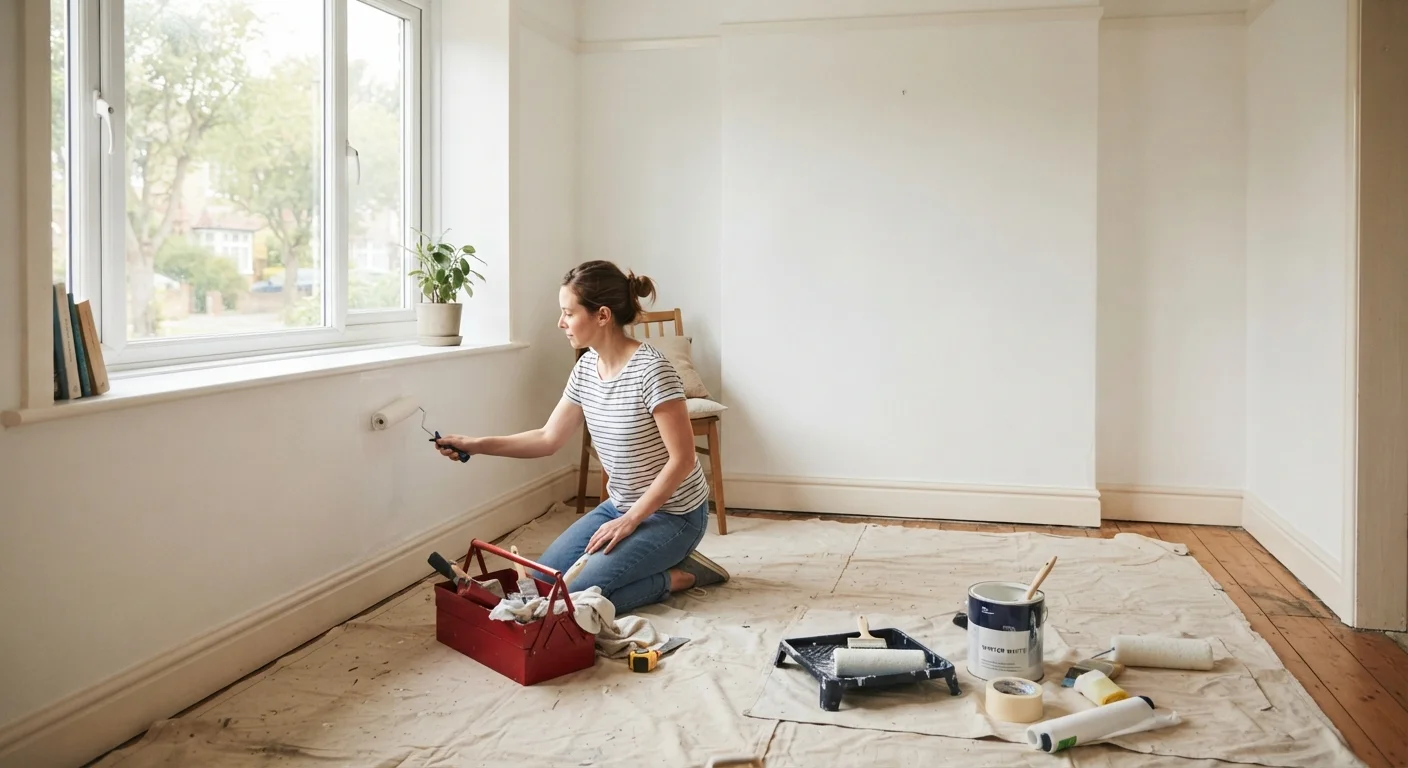
Cosmetic work is where most first-time owners build real skills and save meaningful money. Interior painting is the most accessible starting point. With proper wall preparation, quality materials, and patience between coats, results are often indistinguishable from professional work. The preparation step, which includes cleaning surfaces, filling holes, and taping trim, matters far more than the painting itself.
Other genuinely beginner-friendly projects include:
- Installing peel-and-stick or click-lock vinyl plank flooring over a clean, flat subfloor
- Replacing outlet covers, switch plates, and cabinet hardware
- Caulking around tubs, sinks, and window frames
- Installing a programmable or smart thermostat (check manufacturer instructions and your wiring type first)
- Hanging shelving using a stud finder and level
Each of these tasks rewards careful preparation over speed. If a project starts going wrong, stopping and researching is always better than pushing through.
Prepare surfaces before anything else
For painting, flooring, and caulking, surface preparation is where quality is actually determined. Clean, fill, sand, and dry every surface before applying any finish. Skipping prep to save time is the most common reason DIY results disappoint. Taking an extra hour at the start routinely saves a full redo later.
When to hire a professional
Some work is genuinely dangerous or legally restricted, and knowing where that line falls protects both your safety and your home's resale value. Electrical panel work, gas line modifications, structural wall removal, and connections to main plumbing supply lines are jobs that typically require licensed contractors and municipal permits in most US jurisdictions.
Attempting permitted work without permits creates problems when you sell: a buyer's inspector will flag unpermitted improvements, and lenders can require them to be remediated before closing. Our overview of home improvement permits explains which projects commonly trigger permit requirements and why.
For a practical framework on drawing the line between DIY and professional help, see DIY home repairs: where it makes sense. When hiring contractors, get at least two written estimates, verify licensing and insurance, and ask for references from comparable jobs.
Building a basic toolkit on a budget
You do not need a fully stocked workshop to handle most everyday repairs and beginner projects. A core set of tools covers a wide range of tasks, and you can add specialty items as specific jobs come up rather than buying everything at once.
A practical starter set includes:
- Hammer (16 oz. is a versatile size)
- Measuring tape (25 ft.)
- 4-ft. level
- Cordless drill with a basic bit set
- Phillips and flathead screwdrivers in multiple sizes
- Utility knife with spare blades
- Adjustable wrench and a pair of pliers
- Stud finder
- Putty knife for patching and surface prep
Buy tools as you need them for real projects rather than purchasing a large bundled set. That approach keeps costs down and means every tool in your kit gets used. When you're ready to plan a larger project from scratch, the home improvement planning and budgeting guide covers scoping, sequencing, and managing costs from start to finish.